Martial Arts PhilosophyTrace: misquotes and invented traditions
Zen in the Art of Archery: No Sign Its Master Trained in Zen
Source card
Texts this entry reads, by coordinate and edition.
- Yamada 2001, pp. 1–3 and 7–12, n. 4 (Awa Kenzō and Daishadōkyō)Japanese Journal of Religious Studies 28/1–2 (2001), English version translated by Earl HartmanSource [1] · open the text
- Yamada 2001, pp. 12–28, nn. 8, 10, 11 (Herrigel, the interpreter, the target in darkness, It shoots)Japanese Journal of Religious Studies 28/1–2 (2001), English version translated by Earl HartmanSource [1] · open the text
- Herrigel, Zen in the Art of Archery, pp. 76–77 and 85R. F. C. Hull translation (Pantheon, 1953), as quoted in Yamada 2001, pp. 22–24Source [1] · open the text
- Komachiya Sōzō, Herigeru-kun to yumi (1940)1982 reprint, as quoted in Yamada 2001, pp. 15 and 18–21Source [1] · open the text
- Sakurai Yasunosuke, Awa Kenzō (1981), pp. 223, 238, 266as summarized in Yamada 2001, pp. 7–12, and quoted on pp. 11 and 26Source [1] · open the text
Show 2 more, VI–VIIHide VI–VII
- Hori 2010, pp. 153–159Japanese Journal of Religious Studies 37/1 (2010), review of Yamada's Shots in the Dark (2009)Source [2] · open the text
- Herrigel, Zen in the Art of Archery, pp. 58, 59, 65, 67, 68, 69R. F. C. Hull translation (Vintage Books, 1971), as cited in Hori 2010, p. 157the six passages on ItSource [2] · open the text
In the dark, a teacher's second arrow split the nock of his first. That night scene is one of two key scenes in Zen in the Art of Archery, Eugen Herrigel's 1948 account of the archery lessons he took in Sendai, Japan, in the late 1920s. His teacher was Awa Kenzō. The book presents the lessons as a way into Zen.
A 2001 study by Yamada Shōji in the Japanese Journal of Religious Studies finds no sign that Awa ever trained in Zen. Awa was then building a religion of archery of his own. Herrigel knew no Japanese, so a colleague interpreted; that colleague was absent on the night of the two arrows, and Awa later called the second one a coincidence. This entry sets the book's two key scenes beside the study and beside a published objection; it judges one book, not kyūdō or Zen.
What does Herrigel's book describe?
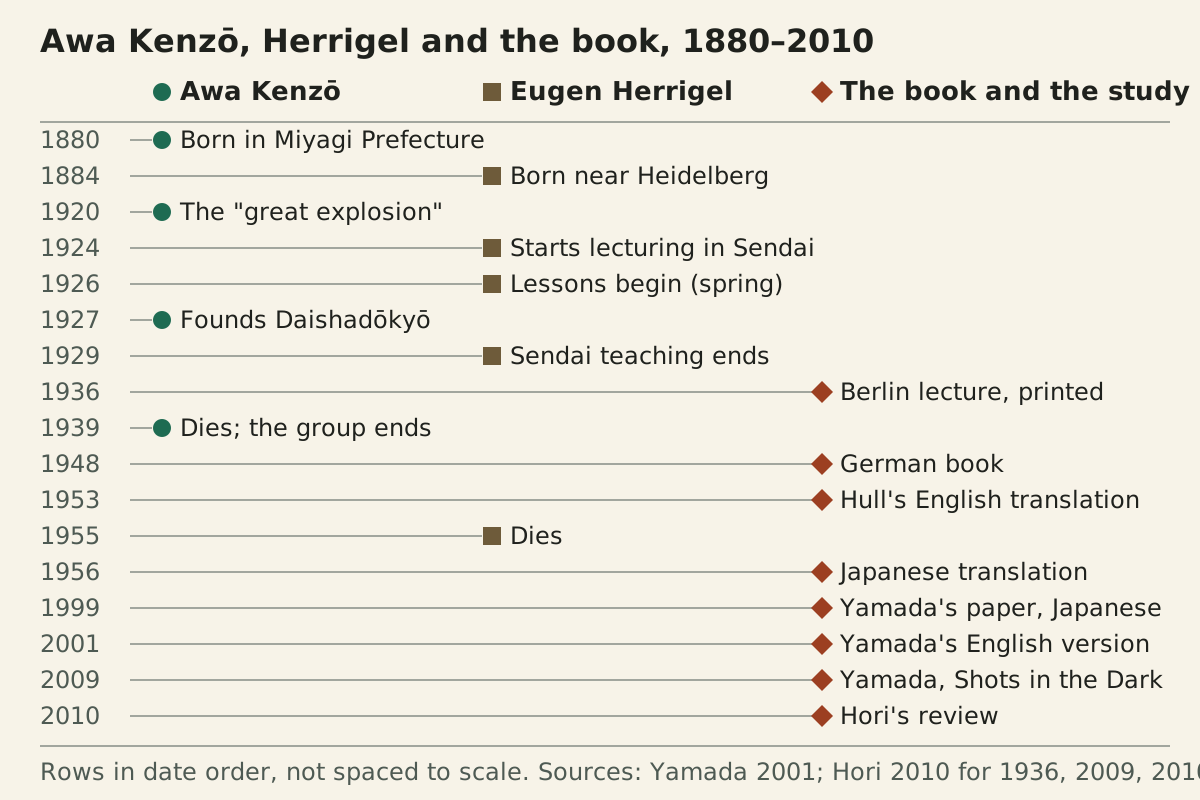
Herrigel (1884–1955) was a German philosopher who lectured at Tōhoku Imperial University in Sendai from 1924 to 1929 (Yamada 2001, p. 12). Awa Kenzō (1880–1939) taught archery there, and Herrigel took lessons from him once a week (pp. 14–15). Back in Germany, Herrigel gave his first account as a lecture in Berlin in 1936 (Hori 2010, p. 153). It was printed that year in the journal Nippon (Yamada, p. 29).
The book came out in 1948 as Zen in der Kunst des Bogenschiessens. R. F. C. Hull's English translation, with an introduction by D. T. Suzuki, followed in 1953, and a Japanese one, Yumi to Zen, in 1956 (Yamada, p. 29). In the book's framing, the Japanese arts share a root in Zen, a view Herrigel credited to Suzuki's essays (pp. 12–13).
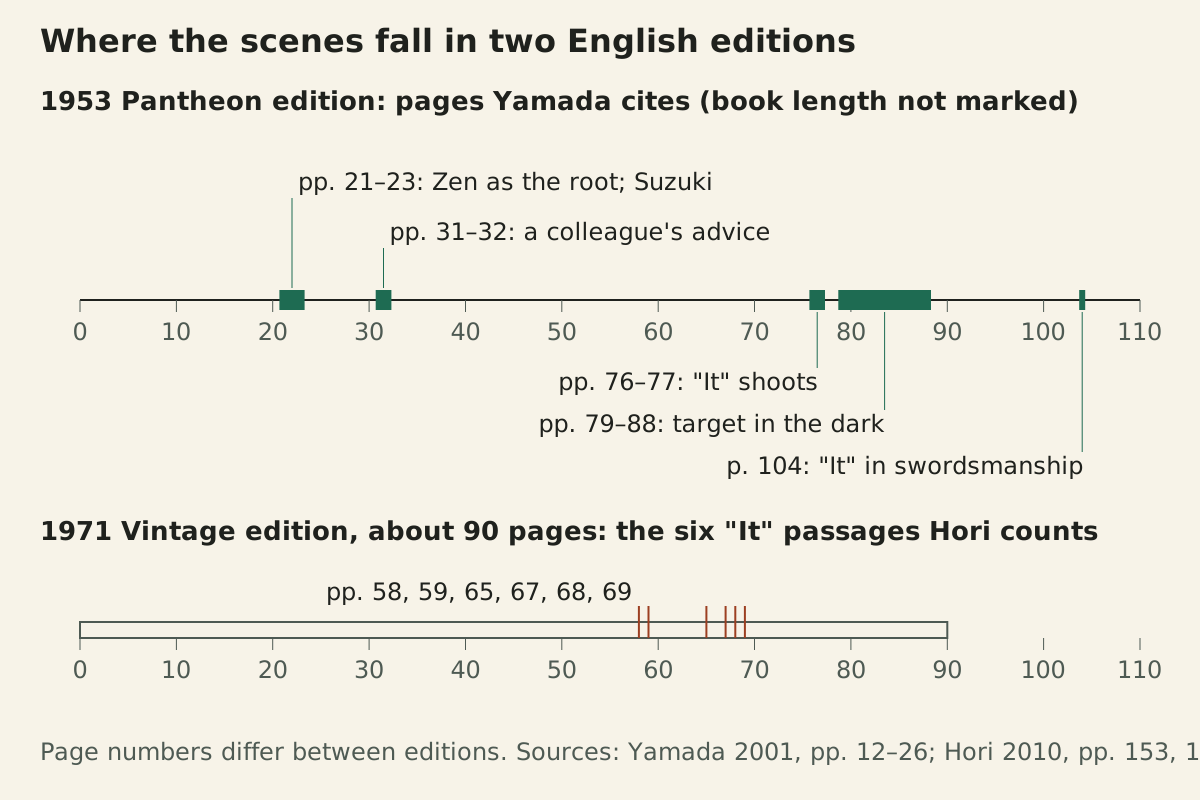
Two scenes carry the story. In one, Awa teaches that "It" shoots, not Herrigel himself; Yamada calls this the central episode (p. 22). In the other, Awa shoots twice at a target he cannot see, and the second arrow splits the first. The chart below places both in two English editions, and the table of claims and findings (CSV, zen-art-archery-claims.csv) lists twelve claims made in or about the book beside the findings, with pages.
Who was Awa Kenzō?
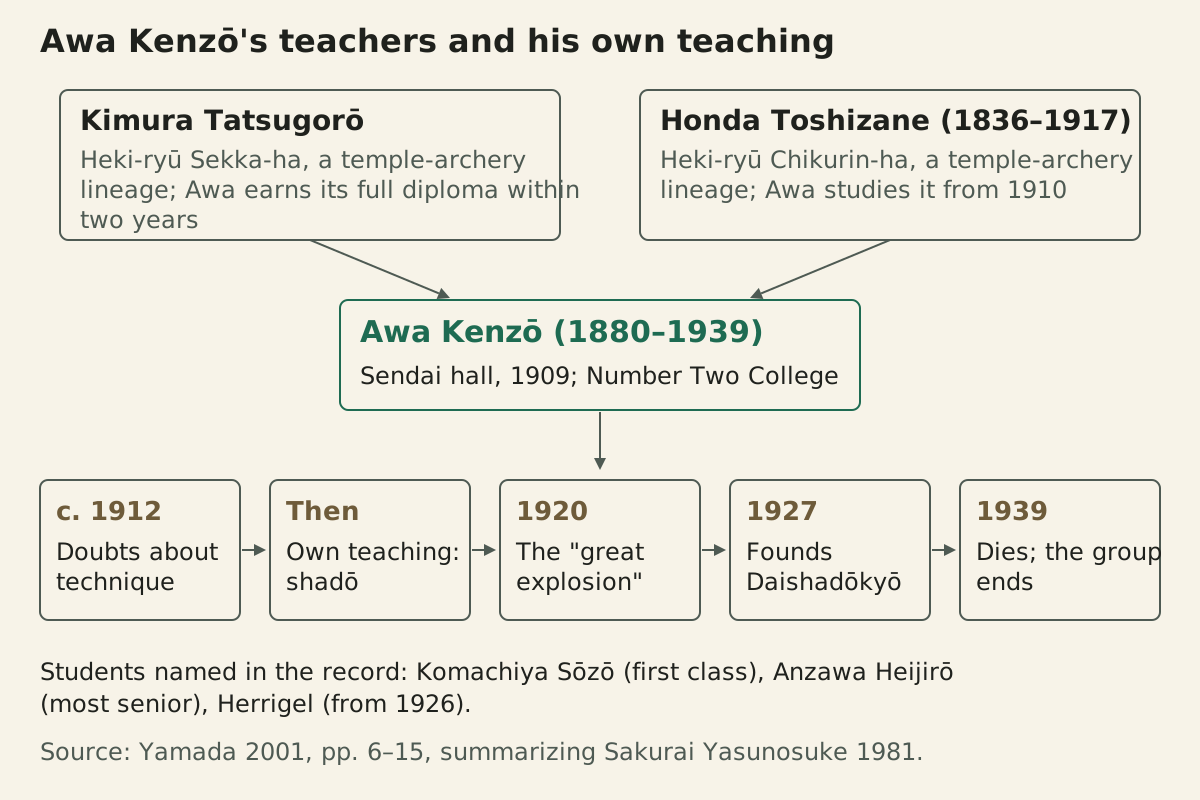
Yamada's main source on Awa is a 1981 memorial volume by Sakurai Yasunosuke, rich in sources but, Yamada warns, to be used with caution (p. 7). Awa was born in 1880 in Miyagi Prefecture to a family that made malted rice, and he left school after the primary grades (p. 7). He earned the full diploma of the Heki-ryū Sekka-ha style under Kimura Tatsugorō within two years. After moving to Sendai in 1909, he also studied the Heki-ryū Chikurin-ha under Honda Toshizane from 1910 (p. 8).
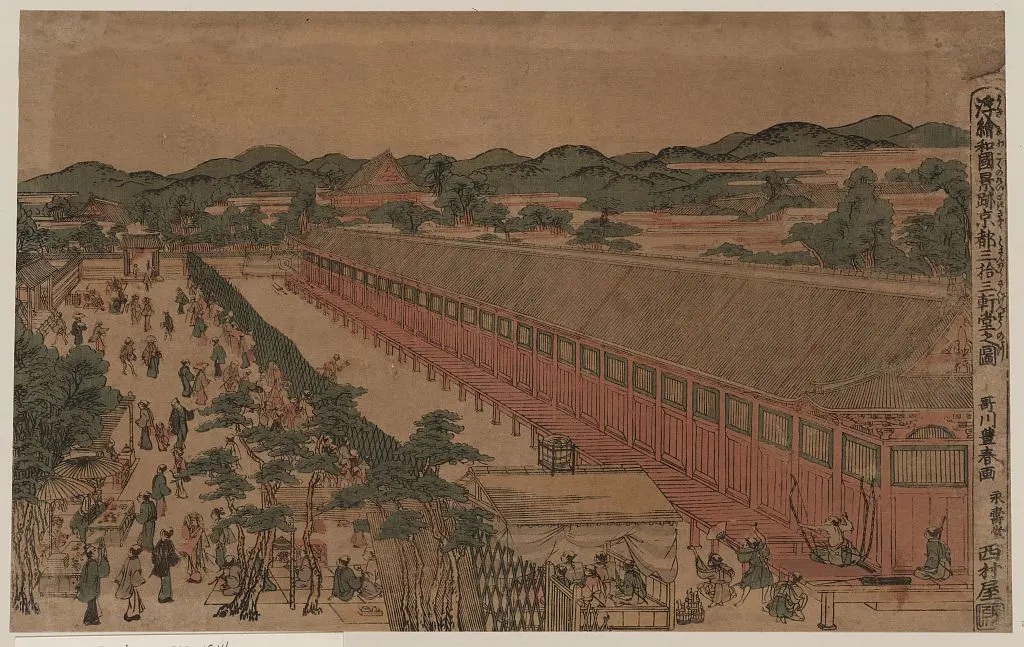
Both teachers came from lineages known for temple archery: long contests shot down the veranda of the Sanjūsangendō hall in Kyoto. The contests ended after the fall of the Tokugawa regime (pp. 6–7).

Around the start of the Taishō era (1912–1926), Awa began to have doubts about his own archery (p. 8). A Sekka-ha manual says that none of the standard techniques is needed (nanni mo iranu), then adds that a beginner must learn the basics first. Awa took the line to mean that technique is useless from the start, a reading Yamada calls a misunderstanding (pp. 8–9). He started teaching a shadō, a way of shooting, of his own, and much of the archery world treated him as a crank (p. 9).
In 1920 Awa had an experience that Sakurai calls a "great explosion", after which he taught issha zetsumei, sometimes rendered "one shot, one life" (pp. 9–10). In 1927 he founded Daishadōkyō, which his students described as archery turned into a religion, with Awa as founder (p. 11). He fell ill the next year and died in 1939. Daishadōkyō ended with him as a religious body, though when Yamada wrote, many archers in the lines of his students still shot in his style (p. 12).
Did Awa Kenzō train in Zen?
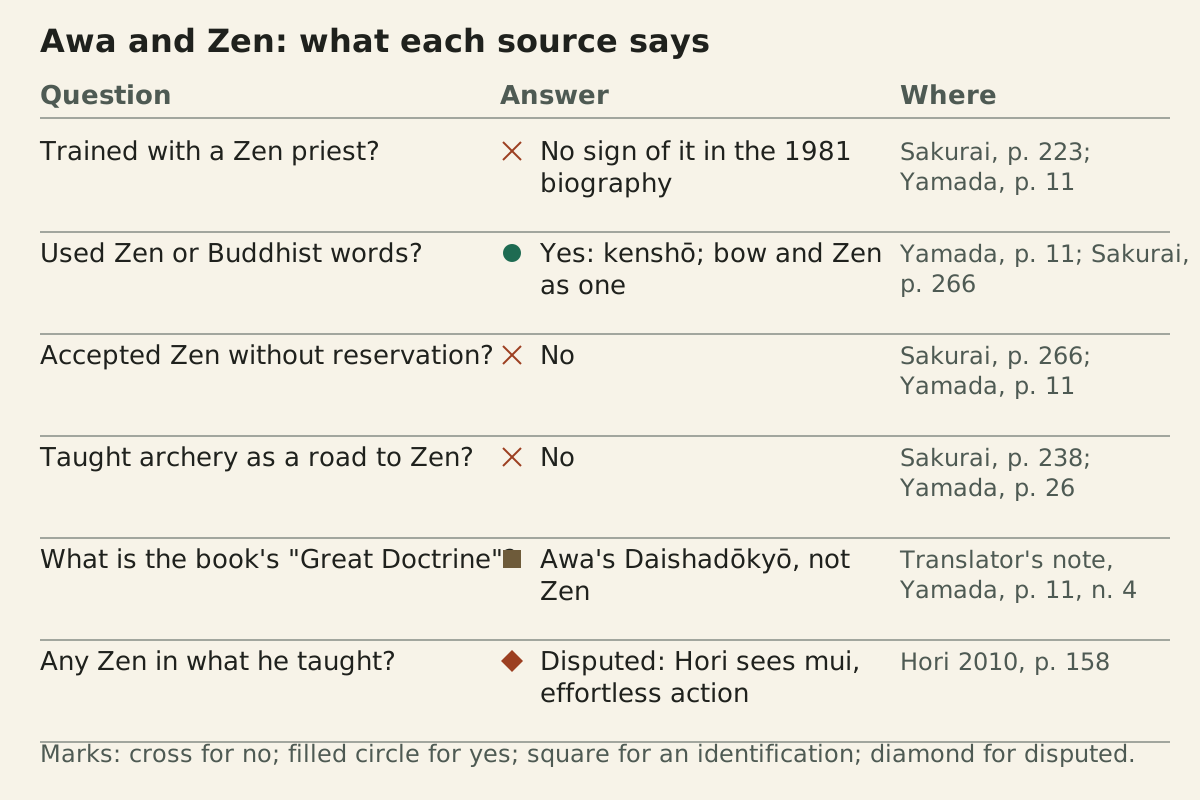
Yamada says no, but how firmly depends on where you look. The summary at the head of his paper says plainly that Awa had no experience of Zen and did not accept it without conditions (p. 1). The body is more careful. Awa used kenshō, a Zen word for seeing into one's true nature, yet Yamada finds Zen almost impossible to detect in his teaching and judges that, as far as the record shows, Awa never practiced it (p. 11).
That record is Sakurai's biography, which found no trace of Awa training under a Zen priest (Sakurai 1981, p. 223, as cited by Yamada, p. 11). Sakurai adds that Awa spoke of kyūzen ichimi, bow and Zen as one, yet did not accept Zen without reservation and did not teach archery as a road to it (pp. 238 and 266, as cited by Yamada, pp. 11 and 26). A translator's note in Yamada's English version says the "Great Doctrine" in Herrigel's book refers to Awa's own Daishadōkyō rather than to Zen (p. 11, n. 4).
Victor Sōgen Hori of McGill University, who discloses that he is an ordained Rinzai Zen monk, grants that Awa might never have studied under a traditional Zen teacher. He argues that the teaching could still hold Zen (Hori 2010, pp. 157–158). These claims differ in kind. The first is about training and rests on a biography; the second, about what the teaching resembled, is a matter of interpretation.
Lessons through an interpreter
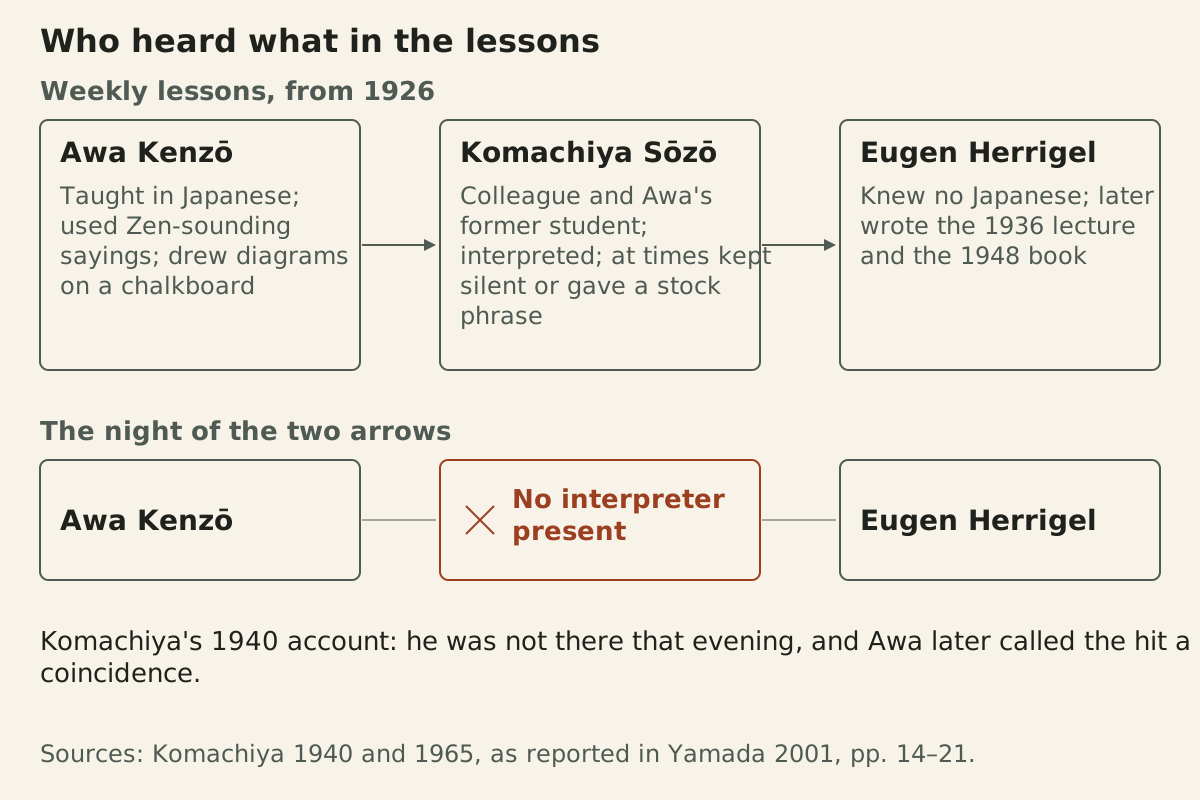
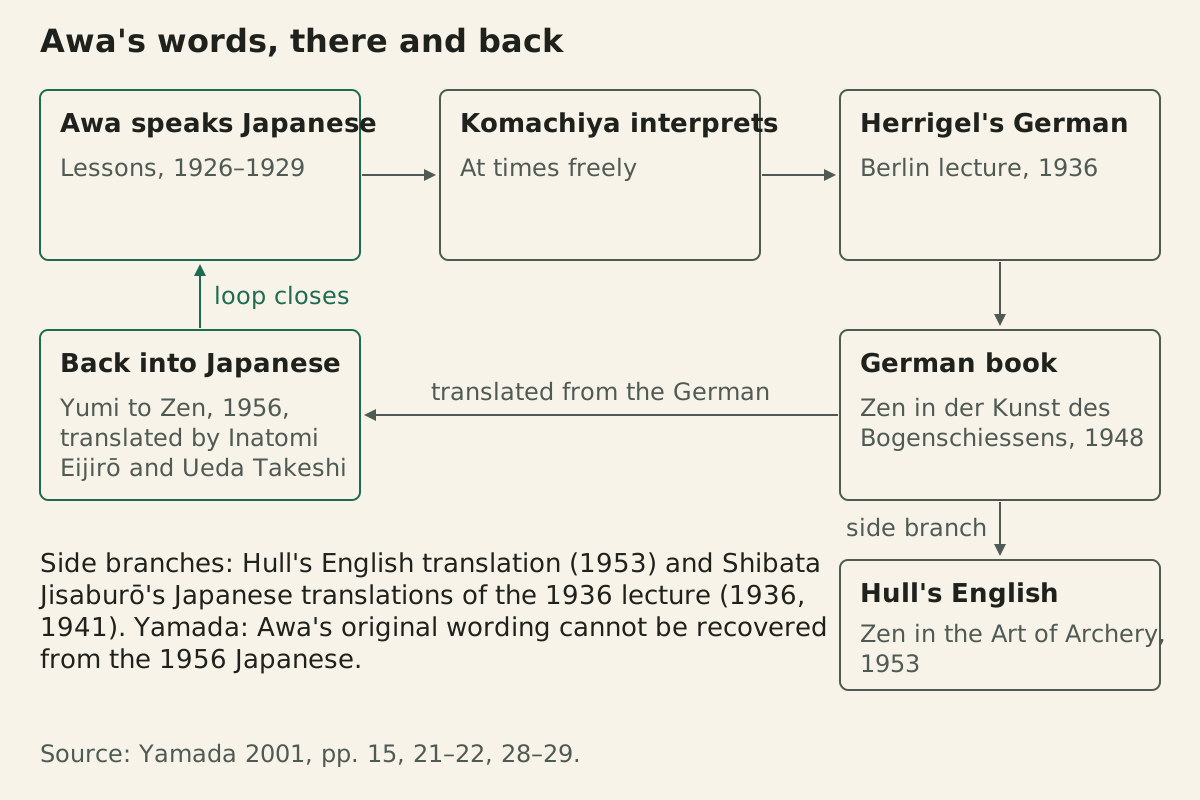
Herrigel came to Japan with no Japanese (Yamada, p. 14). He asked for lessons through Komachiya Sōzō (1893–1979), a colleague on the law and literature faculty who had been in Awa's first archery class (p. 15). Writing in 1940, Komachiya thought the request came in the spring of 1926. Awa refused at first, then agreed on condition that Komachiya interpret (p. 15).
 Generated illustration
Yamada elsewhere puts the start one year after Awa's 1920 experience (p. 11), which does not fit Herrigel's arrival in 1924. This entry follows Komachiya, who arranged the lessons himself and names the season and year.
Komachiya was frank about his method. When Awa seemed to contradict his own earlier teaching, Komachiya kept silent, and when Herrigel pressed him, said that Awa was repeating his usual line about one shot, one life (p. 21). He believed both men knew and let it pass, and Yamada sees tact in this, not bad faith (pp. 21–22). Yamada also suspects that Herrigel's phrase "an unmoved center", which archery teachers in Japan do not use, was Komachiya's word for an ordinary technical term (p. 20, n. 10).
Was the arrow in the dark a coincidence?
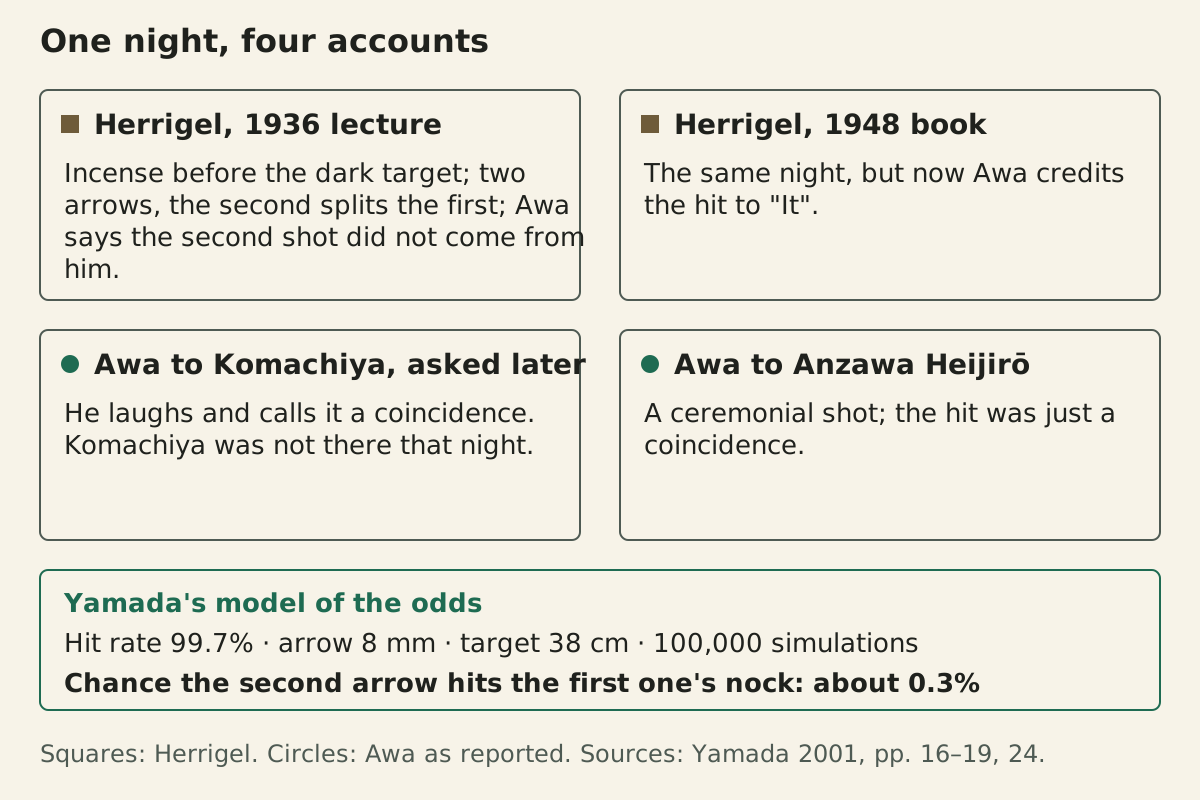
In Herrigel's 1936 version, he had shot at a straw bale from about two meters for three years; at the full 28-meter range his arrows fell short, and Awa told him not to aim (Yamada, p. 16). One evening Awa set a lit stick of incense in front of the dark target and shot twice. The first arrow struck the center. The second hit the nock, the notched end, of the first and split it (pp. 16–17).
 Generated illustration
The 1948 book has Awa sum up the second shot this way (Hull translation, 1953, p. 85, as quoted in Yamada 2001, p. 24): "'It' shot and 'It' made the hit." No interpreter was there: Komachiya wrote in 1940 that he was absent, and that when he later asked Awa about the shot, Awa laughed and called it a coincidence (pp. 18–19).
According to Yamada, Awa told the story to only one student: his most senior, Anzawa Heijirō (1888–1970). To Anzawa it had been a ceremonial shot, and the hit was just a coincidence (p. 18, citing a 1965 roundtable with Komachiya). Japanese archers count splitting your own nock as a failure, Yamada adds, since it ruins an arrow (p. 17).
Yamada also put a number on the odds. He assumed a hit rate of 99.7%, an arrow 8 millimeters across and a target 38 centimeters wide. On those terms, 100,000 computer simulations gave the second arrow about a 0.3% chance of striking the first one's nock (p. 17). The figure describes a model archer built on his assumptions, not a record of Awa's shooting.
Did Awa say "It shoots"?
In the book, Herrigel asks how a shot can be loosed if he does not loose it; Awa answers that "It" shoots. Later, after one of Herrigel's shots, Awa bows and says "It" has just shot (Hull translation, 1953, pp. 76–77, as cited by Yamada, p. 22). Yamada has two doubts. Sakurai's biography gives no sign that Awa taught "It shoots" to anyone but Herrigel (pp. 22–23).
The second doubt changed between versions. Yamada's 1999 Japanese paper said the idea was missing from the 1936 lecture, but a note in the 2001 English version corrects this, since the German text uses es, "it", twice in passing and unexplained (pp. 22–23, n. 11).
Yamada sets aside the idea that Herrigel invented the doctrine, partly because Herrigel's foreword says every word came from his teacher (p. 24). He backs a reading by Feliks Hoff, a past president of the German Kyudo Federation: Awa may have said sore deshita, everyday Japanese for "that's it", to praise a good shot, and it reached Herrigel as "It shot" (pp. 24–25). Reading the book's sequence, Yamada infers that Awa first said it while Herrigel was still a beginner at the straw bale (p. 25).
Hori is not convinced. He counts six passages on "It" in the 1971 English edition, too many, he argues, for one mistranslation repeated over years (Hori 2010, p. 157). He reads "It" as Awa's version of mui, natural action without intention, an old East Asian idea. He notes that the Zen teacher Shibayama Zenkei used "it" much the same way, so Awa may have meant it as Herrigel heard it (pp. 158–159).
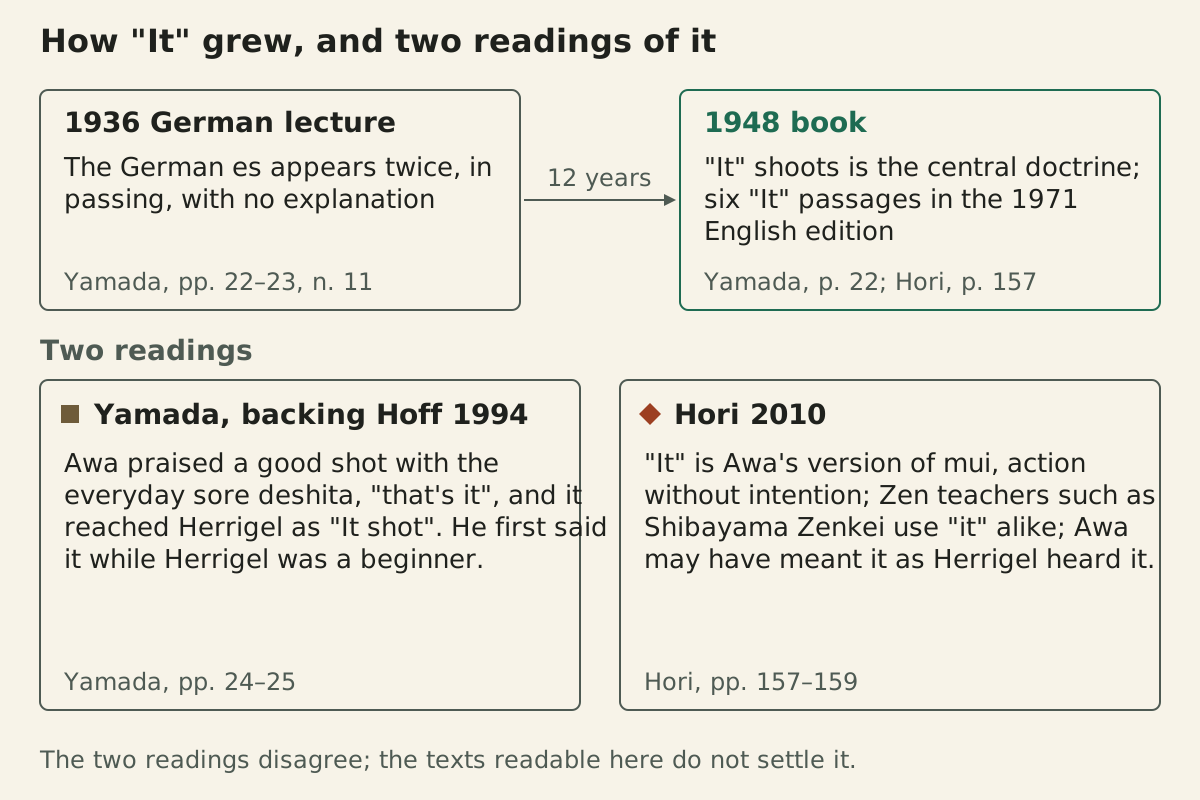
The texts this entry could read do not settle the dispute. When sources of equal standing conflict, this site sets them side by side, as How Claims Are Tested explains.
Where did the book's Zen come from?
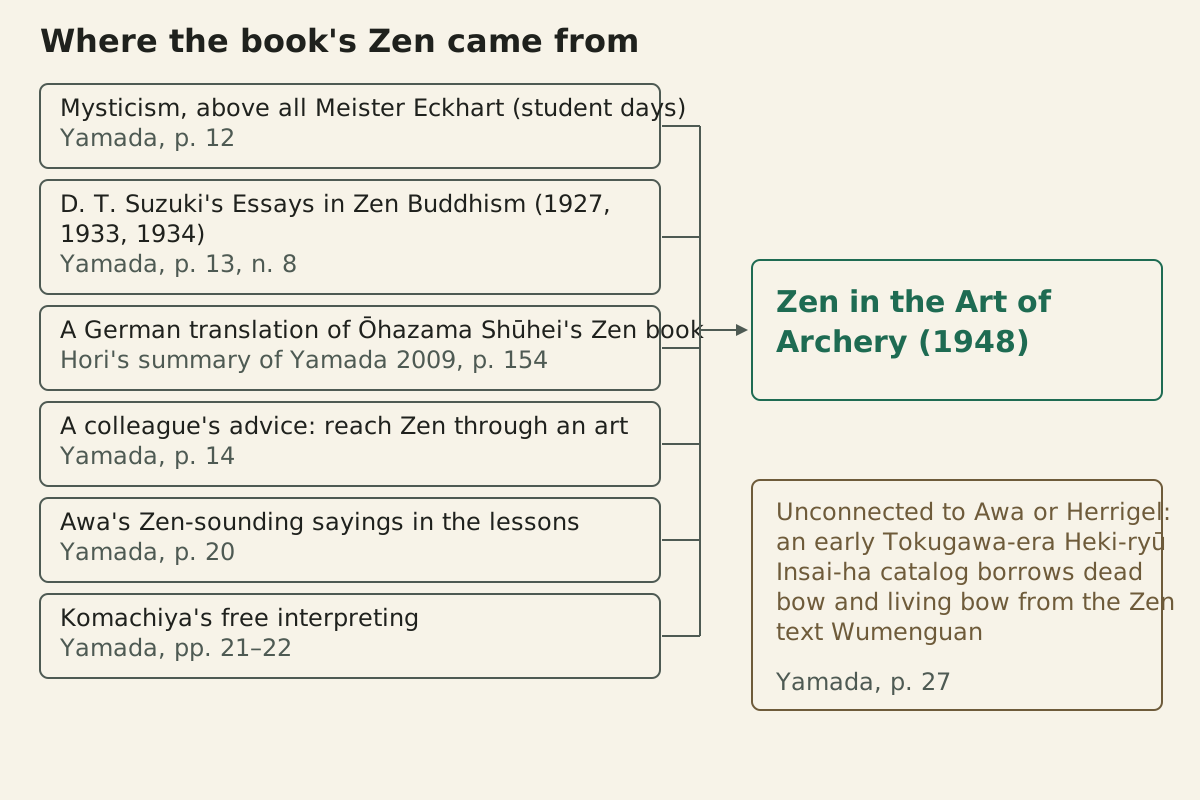
Herrigel arrived in Japan already looking for Zen. Since his student days he had been drawn to mysticism, above all to Meister Eckhart, and through it to Zen (Yamada, p. 12). He credited D. T. Suzuki's Essays in Zen Buddhism for linking Zen to Japanese culture (p. 13). Hori's summary of Yamada's 2009 book adds that, before leaving Germany, Herrigel helped publish a German translation of a Zen book by Ōhazama Shūhei, a lay Zen teacher (Hori 2010, p. 154).
In Japan, a colleague told him to approach Zen through an art. He chose archery partly because he had shot at targets with firearms (Yamada, p. 14). Yamada found no evidence that Herrigel practiced Zen in Japan, though essays collected after his death show wide reading about it (p. 15). In the lessons, Komachiya recalled, Awa freely used sayings that sounded like Zen (p. 20).
Nor does Yamada claim that Japanese archery was untouched by Zen. An early Tokugawa-era catalog of the Heki-ryū Insai-ha borrows terms from the Zen text Wumenguan (Mumonkan in Japanese) to speak of a dead bow and a living bow. Yamada calls this a definite Zen influence on a warrior's frame of mind, with no link to Awa or Herrigel (p. 27). On this site's approach, a claim that a martial art carries an old philosophy is checked case by case against dated texts, without assuming it true or false.
How is the book read now?
Yamada dates the popular link between Zen and kyūdō, the modern "way of the bow", to the years after the Second World War, and above all to the 1956 Japanese translation (pp. 2–3). Before the war he finds little or no talk of Zen in writing on Japanese archery, apart from a few isolated religious groups (p. 2). In 1953, D. T. Suzuki went from New York to Germany to see Herrigel (p. 27).
Outside Japan, a 1983 survey by the Kyūdō Research Project at Tsukuba University asked 131 kyūdō practitioners in West Germany why they had started. Yamada reports that 84% named spiritual training, about 61% an interest in Zen and about 49% Herrigel's book, with more than one answer allowed (pp. 2–3). No similar poll had been run in Japan when Yamada wrote, but his impression is that Japanese archers who treat kyūdō as Zen training are very unusual (p. 2). Hori, summarizing Yamada's 2009 book, calls Herrigel's book the first of the Zen-and-the-art titles, which numbered several hundred by 2010 (Hori 2010, pp. 153–154).
The 1956 translation also closed a loop. Awa's spoken Japanese passed into German, then back into Japanese, and Yamada judges that his original words can no longer be recovered (p. 28). He calls the result a modern myth and his own paper a preliminary analysis (pp. 27–28). He returned to the subject in Shots in the Dark: Japan, Zen and the West (University of Chicago Press, 2009), the book Hori reviewed (Hori 2010, p. 153).
The same method, a popular account set against dated sources, runs through the Stoic Quote Ledger. To test this book yourself, take one scene and ask who was in the room.
Practice
Off the page:
Treat this as a drill in weighing witnesses: no bow and no shooting, only the book and the record.
- Find the night scene with the two arrows in any edition of Zen in the Art of Archery, and write down the edition and the page.
- In two lines, write what the book says happened and who it says was present.
- Beside them, write what Komachiya and Anzawa reported, using Yamada 2001, pages 16 to 19, or the table of claims and findings (CSV, zen-art-archery-claims.csv).
- Label each line by its witness: Herrigel alone, Awa as reported later, or the interpreter.
- Run the same check on one chapter of Nitobe's Bushido with Seven Virtues of Bushido, or on the sutras behind modern posture yoga with Yoga Sutras on Postures.
Sources
- [1] Yamada Shōji, "The Myth of Zen in the Art of Archery," translated by Earl Hartman and edited by William M. Bodiford, Japanese Journal of Religious Studies 28, no. 1–2 (2001): 1–30, doi:10.18874/jjrs.28.1-2.2001.1-30; a revised English version of "Shinwa to shite no yumi to Zen," Nihon kenkyū 19 (1999): 15–34. nirc.nanzan-u.ac.jp/journal/6/issue/162/article/1043 Consulted: full text, pp. 1–30, including the notes and references
- [2] Victor Sōgen Hori, review of Shots in the Dark: Japan, Zen and the West, by Shoji Yamada (Chicago: University of Chicago Press, 2009), Japanese Journal of Religious Studies 37, no. 1 (2010): 153–160, doi:10.18874/jjrs.37.1.2010.153-160. doi.org/10.18874/jjrs.37.1.2010.153-160 Consulted: full text, pp. 153–160
Cite this page
Virtue & Paradox. “Zen in the Art of Archery: No Sign Its Master Trained in Zen.” Published 2026-10-17; last substantive revision 2026-10-17. https://virtueandparadox.com/martial-philosophy/zen-art-archery/. Accessed (the date you read it).