StoicismTrace: misquotes and invented traditions
Stoic Quote Ledger: 3 of 15 Lines Match a 1634–1928 Text
Source card
Texts this entry reads, by coordinate and edition.
- Meditations 2.15, 5.20, 6.6, 8.47, 10.16, 12.22Greek text ed. J. H. Leopold (1908)Source [1] · open the text · Text licence: CC BY-SA 4.0
- Meditations 5.20 and 6.6Meric Casaubon translation, Everyman text (1906)sections 5.17 and 6.5 in this textSource [2] · open the text
- Meditations 2.15, 8.47, 12.22George Long translation (1862)Source [3] · open the text
- Meditations 10.16C. R. Haines translation (1916)Source [4] · open the text
- Epistulae Morales 13.4 and 19.6Latin text of the Loeb edition (1917)Source [5] · open the text · Text licence: CC BY-SA 4.0
Show 7 more, VI–XIIHide VI–XII
- De Brevitate Vitae 2.1Latin text ed. J. W. Basore (1932)Source [6] · open the text
- De Providentia 2.4 and 2.6; De Brevitate Vitae 2.1; De Ira 3.36Aubrey Stewart translation (1889)Stewart numbers the dialogues as books: De Providentia is Book 1, De Ira 3 is Book 5 and De Brevitate Vitae is Book 10Source [7] · open the text
- Letters to Lucilius 13.1–4 and 19.6R. M. Gummere translation (1917)Source [8] · open the text
- Fragment 35Greek text ed. Heinrich Schenkl (1916)Source [10] · open the text · Text licence: CC BY-SA 4.0
- Discourses 3.23.1; fragments ascribed jointly to Epictetus and other authors, no. 6Elizabeth Carter translation (1758; Dublin printing of 1759)Source [11] · open the text
- Arrian's letter to Lucius Gellius; Discourses 3.23.1; Encheiridion 5; Fragments 114 and 172George Long translation (1877)Source [12] · open the text
- Diogenes Laertius 7.5 and 7.23R. D. Hicks translation (1925)Source [16] · open the text · Text licence: CC BY-SA 4.0
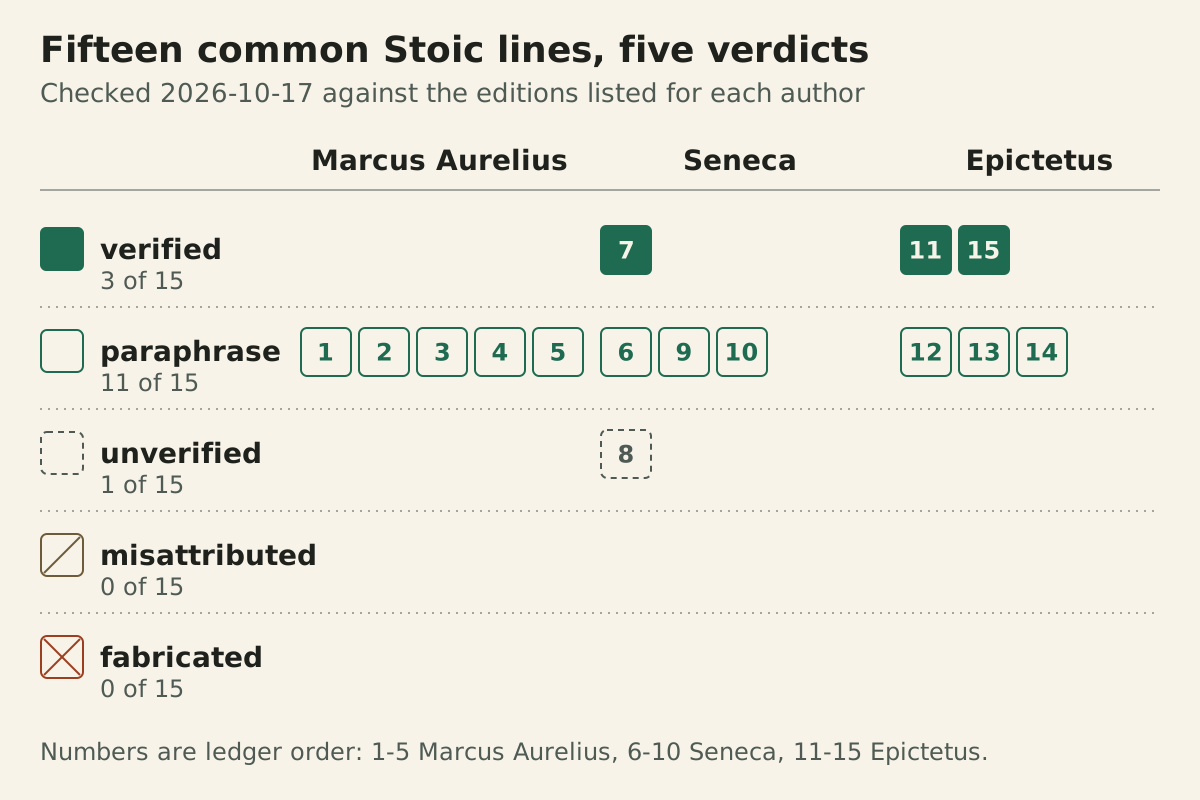
Only three of fifteen common Stoic quotes match an old translation word for word. This ledger took five lines each credited to Marcus Aurelius, Seneca and Epictetus and compared them with named editions of the Greek and Latin and with English translations first printed between 1634 and 1928. Three lines are a translator's exact sentence, eleven paraphrase a real passage, and one turned up nowhere in those editions. None reached misattributed or fabricated, the two verdicts that need dated documentary evidence.
How this ledger grades a quote
Each line is checked in its common wording, the form that turns up in search queries. By this site's Keyword Planner query (US, 2026-10-16), each draws between 10–100 and 1K–10K searches a month. The figures are ranges, so the ledger does not rank lines that share one.
The wording is compared with the full text of every listed edition, ignoring capital letters, punctuation and British spellings such as "labour." Exact and fuzzy string matching only point to candidate passages. Each verdict comes from reading those passages in context, under the five verdicts used across this site. The flowchart shows the order of the questions.
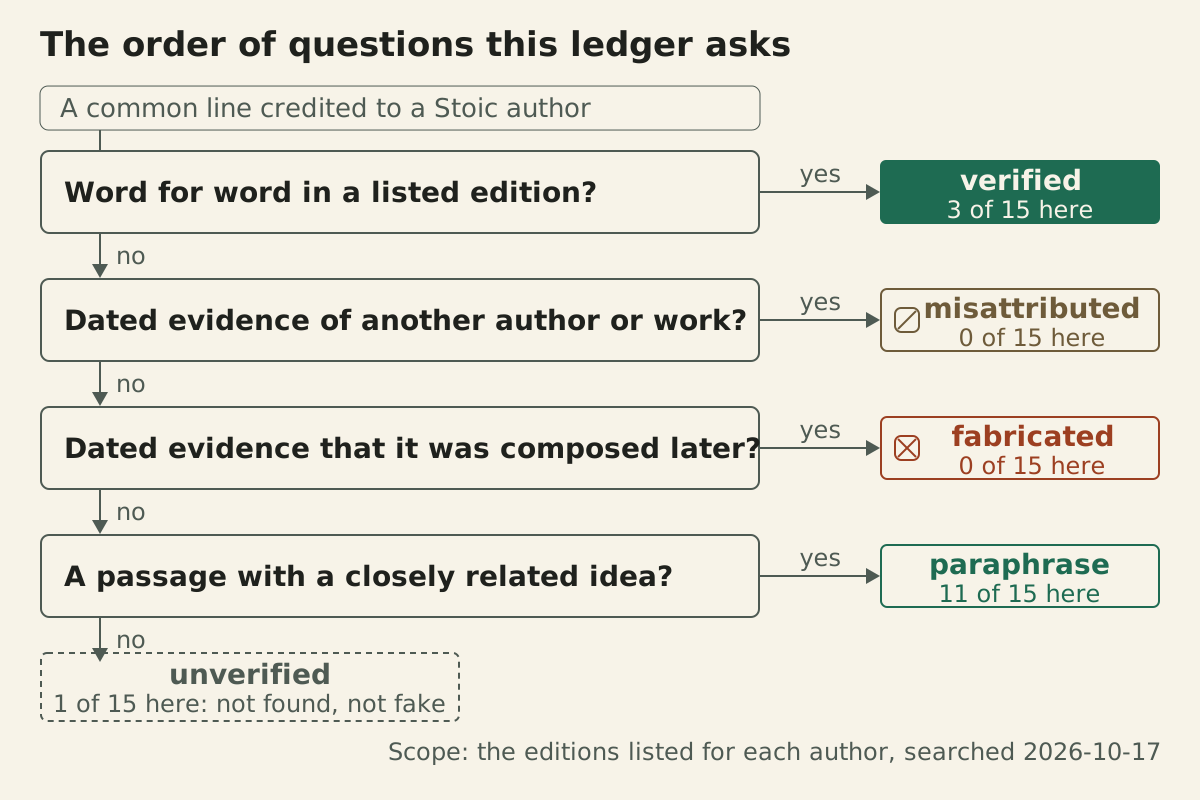
A verdict covers only the editions named on its card, as of the search date. Every card also names Diogenes Laertius (Hicks, 1925); for Marcus Aurelius the others are J. H. Leopold's Greek (1908) and the translations of Meric Casaubon (1634, in the Everyman text of 1906), George Long (1862) and C. R. Haines (1916). For Seneca they are Aubrey Stewart's dialogues (1889), R. M. Gummere's letters (1917–25), J. W. Basore's first Loeb volume of Moral Essays (1928) and the Latin of the letters and of De Brevitate Vitae. For Epictetus they are Heinrich Schenkl's Greek (1916) and the translations of Elizabeth Carter (1758; Dublin printing, 1759), Long (1877), T. W. Higginson (1890 edition) and W. A. Oldfather (1925–28; reprinted 1956 and 1959).
The modern translations by Hays and Hammond are outside that list, so a paraphrase or unverified verdict here does not mean a wording is in no translation at all. Quote laundering is the existing name for the way a fake or misattributed line gains credit as it passes along a chain of reposts. This ledger uses the term only where that chain can be documented with dated appearances, and none of these fifteen lines has such a chain on this page.
Marcus Aurelius: lines 1 and 2
All five Marcus Aurelius lines are paraphrases. Each points to a real passage of the Meditations, and none matches the wording of Casaubon, Long or Haines.

"You have power over your mind, not outside events" (line 1) is a paraphrase; its closest passage is Meditations 8.47. In Long's version, "it is not this thing that disturbs thee, but thy own judgment about it", the last words render Leopold's Greek "τὸ σὸν περὶ αὐτοῦ κρῖμα" (Meditations 8.47, Long translation and Leopold text — verified). The idea is the same. But only one of the line's nine words appears in the closest sentence of any of the three translations, and that word is "not."
Circulating line You have power over your mind, not outside events.
Keyword Planner, US, 2026-10-16: 100–1K average monthly searches
Verdict paraphrase this page's reading, 2026-10-17
- Coordinate in the original
- Meditations 8.47 Greek text ed. Leopold 1908; Long 1862
- Public-domain translation
- "If thou art pained by any external thing, it is not this thing that disturbs thee, but thy own judgment about it." (George Long, 1862) Long 1862, 8.47 (Project Gutenberg #15877)
- Search scope (editions compared)
- Searched 2026-10-17 in the Greek text ed. Leopold (1908) and the translations of Casaubon (Everyman 1906 text), Long (1862) and Haines (1916); also Diogenes Laertius, trans. Hicks (1925) this page's search record, 2026-10-17
This card as CSV: stoic-quote-ledger-card-01.csv
"The impediment to action advances action. What stands in the way becomes the way" (line 2) is a paraphrase of Meditations 5.20. Casaubon's version, numbered 5.17 in the Everyman text, ends "that which before was in her way, is now her readiest way" (Meditations 5.20, Casaubon translation — verified). The circulating line turns the two clauses of Casaubon's sentence into two short sentences and keeps five of its own fourteen words in order.
Circulating line The impediment to action advances action. What stands in the way becomes the way.
Keyword Planner, US, 2026-10-16: 100–1K average monthly searches
Verdict paraphrase this page's reading, 2026-10-17
- Coordinate in the original
- Meditations 5.20 Greek text ed. Leopold 1908; Casaubon, Everyman 1906
- Public-domain translation
- "So that what before was the impediment, is now the principal object of her working; and that which before was in her way, is now her readiest way." (Meric Casaubon, Everyman 1906 text) Casaubon, Book 5, section 17 in the Everyman text, standard 5.20 (Project Gutenberg #2680)
- Search scope (editions compared)
- Searched 2026-10-17 in the Greek text ed. Leopold (1908) and the translations of Casaubon (Everyman 1906 text), Long (1862) and Haines (1916); also Diogenes Laertius, trans. Hicks (1925) this page's search record, 2026-10-17
This card as CSV: stoic-quote-ledger-card-02.csv
Marcus Aurelius: lines 3 to 5
"The best revenge is not to be like your enemy" (line 3) is a paraphrase of Meditations 6.6. Casaubon has "The best kind of revenge is, not to become like unto them," and Leopold's Greek, "Ἄριστος τρόπος τοῦ ἀμύνεσθαι τὸ μὴ ἐξομοιοῦσθαι", names no person at all (Meditations 6.6, Casaubon translation and Leopold text — verified). Long fills the gap with "[the wrong-doer]" in square brackets, and the circulating line fills it with "your enemy."
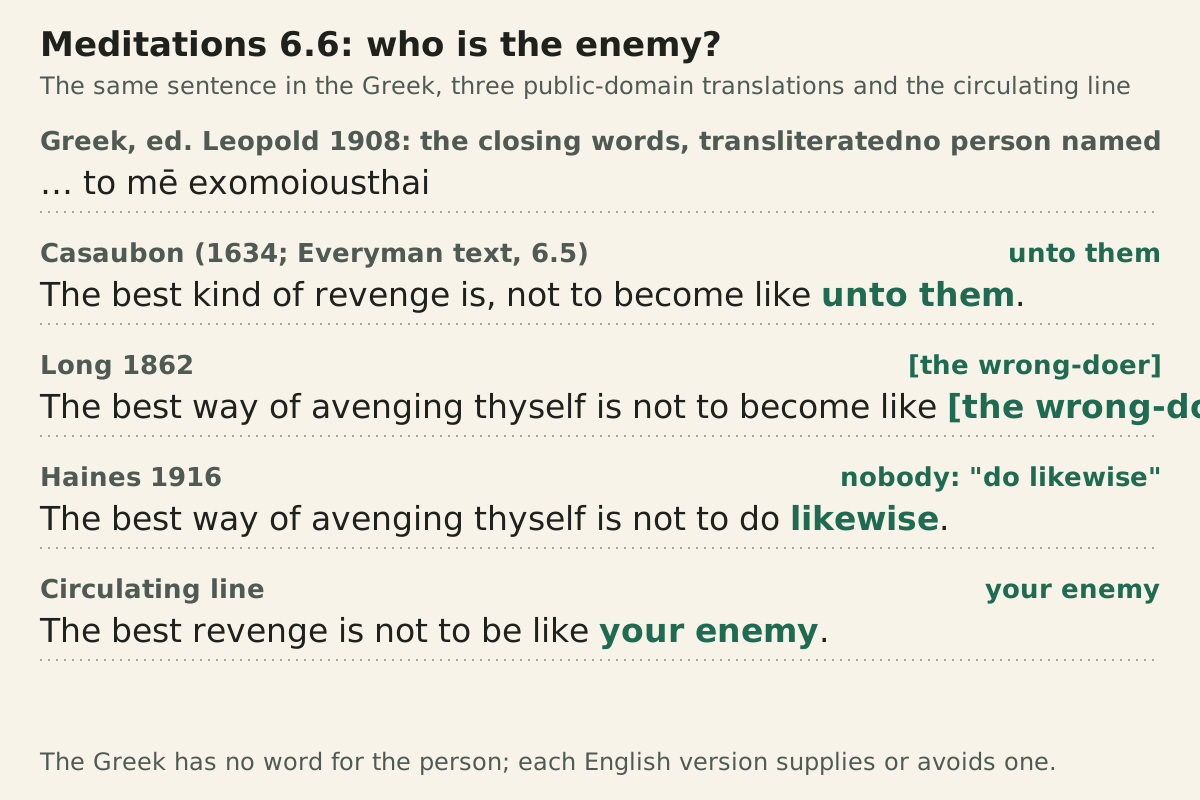
Circulating line The best revenge is not to be like your enemy.
Keyword Planner, US, 2026-10-16: 100–1K average monthly searches
Verdict paraphrase this page's reading, 2026-10-17
- Coordinate in the original
- Meditations 6.6 Greek text ed. Leopold 1908; Casaubon, Everyman 1906
- Public-domain translation
- "The best kind of revenge is, not to become like unto them." (Meric Casaubon, Everyman 1906 text) Casaubon, Book 6, section 5 in the Everyman text, standard 6.6 (Project Gutenberg #2680)
- Search scope (editions compared)
- Searched 2026-10-17 in the Greek text ed. Leopold (1908) and the translations of Casaubon (Everyman 1906 text), Long (1862) and Haines (1916); also Diogenes Laertius, trans. Hicks (1925) this page's search record, 2026-10-17
This card as CSV: stoic-quote-ledger-card-03.csv
"Everything we hear is an opinion, not a fact. Everything we see is a perspective, not the truth" (line 4) is a paraphrase of its first sentence only. Long's 2.15 opens with a five-word sentence: "Remember that all is opinion." (Meditations 2.15, Long translation — verified). His 12.22 again says that everything is opinion, but nothing in the listed editions matches the second sentence about perspective and truth.
Circulating line Everything we hear is an opinion, not a fact. Everything we see is a perspective, not the truth.
Keyword Planner, US, 2026-10-16: 100–1K average monthly searches
Verdict paraphrase this page's reading, 2026-10-17
- Coordinate in the original
- Meditations 2.15 and 12.22 (first sentence only) Greek text ed. Leopold 1908; Long 1862
- Public-domain translation
- "Remember that all is opinion." (George Long, 1862, 2.15) Long 1862, 2.15; 12.22 reads "everything is opinion" (Project Gutenberg #15877)
- Search scope (editions compared)
- Searched 2026-10-17 in the Greek text ed. Leopold (1908) and the translations of Casaubon (Everyman 1906 text), Long (1862) and Haines (1916); also Diogenes Laertius, trans. Hicks (1925) this page's search record, 2026-10-17
This card as CSV: stoic-quote-ledger-card-04.csv
"Waste no more time arguing what a good man should be. Be one" (line 5) is a paraphrase of Meditations 10.16. Haines comes nearest: "Put an end once for all to this discussion of what a good man should be, and be one." (Meditations 10.16, Haines translation — verified). The circulating line keeps Haines's "what a good man should be" and "be one," eight of its thirteen words in order.
Circulating line Waste no more time arguing what a good man should be. Be one.
Keyword Planner, US, 2026-10-16: 10–100 average monthly searches
Verdict paraphrase this page's reading, 2026-10-17
- Coordinate in the original
- Meditations 10.16 Greek text ed. Leopold 1908; Haines 1916
- Public-domain translation
- "Put an end once for all to this discussion of what a good man should be, and be one." (C. R. Haines, 1916) Haines 1916, 10.16 (Wikisource)
- Search scope (editions compared)
- Searched 2026-10-17 in the Greek text ed. Leopold (1908) and the translations of Casaubon (Everyman 1906 text), Long (1862) and Haines (1916); also Diogenes Laertius, trans. Hicks (1925) this page's search record, 2026-10-17
This card as CSV: stoic-quote-ledger-card-05.csv
Seneca: lines 6 to 8
Seneca's five lines split three ways: one verified, three paraphrases and one that was not found. The verified one turned out to be a 20th-century translator's English.
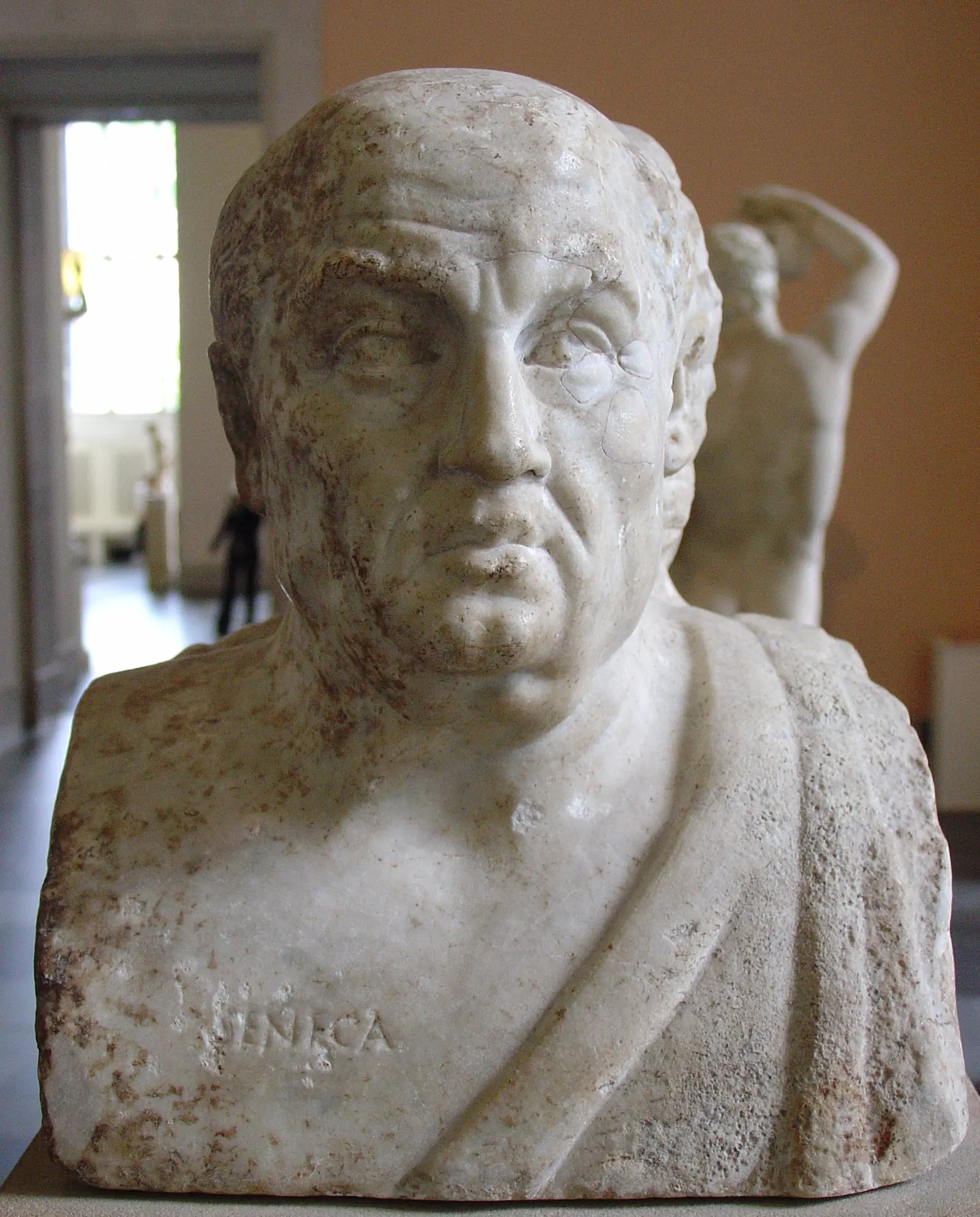

"Every new beginning comes from some other beginning's end" (line 6) is a paraphrase of a remark about desires in Letter 19.6. Seneca says that desires come in a succession and that "one begins where its predecessor ends," Gummere's English for the Latin "altera ex fine alterius nascitur" (Letters to Lucilius 19.6, Gummere translation and Loeb Latin text — verified). His point is a warning that Lucilius will never reach a day with nothing left to want. The circulating line keeps the shape, one thing starting where another ends, and drops the desires.
Circulating line Every new beginning comes from some other beginning's end.
Keyword Planner, US, 2026-10-16: 1K–10K average monthly searches
Verdict paraphrase this page's reading, 2026-10-17
- Coordinate in the original
- Letters to Lucilius 19.6 Latin text of the Loeb edition; Gummere 1917
- Public-domain translation
- R. M. Gummere, Loeb Classical Library, Letters vol. 1 (1917) Wikisource, Moral letters to Lucilius, Letter 19
- Search scope (editions compared)
- Searched 2026-10-17 in Stewart's translation of the dialogues (1889), Gummere's translation of the letters (1917-25), Basore's Moral Essays vol. 1 (1928), and the Latin of the letters (Loeb text) and of De Brevitate Vitae (ed. Basore, 1932); also Diogenes Laertius, trans. Hicks (1925) this page's search record, 2026-10-17
This card as CSV: stoic-quote-ledger-card-06.csv
"We suffer more often in imagination than in reality" (line 7) is verified, because it is R. M. Gummere's own sentence, his 1917 rendering of the Latin "saepius opinione quam re laboramus" (Letters to Lucilius 13.4, Gummere translation and Loeb Latin text — verified). The card names Gummere's edition but does not reprint his text.
Circulating line We suffer more often in imagination than in reality.
Keyword Planner, US, 2026-10-16: 100–1K average monthly searches
Verdict verified this page's reading, 2026-10-17
- Coordinate in the original
- Letters to Lucilius 13.4 Latin text of the Loeb edition; Gummere 1917
- Public-domain translation
- R. M. Gummere, Loeb Classical Library, Letters vol. 1 (1917) Wikisource, Moral letters to Lucilius, Letter 13
- Search scope (editions compared)
- Searched 2026-10-17 in Stewart's translation of the dialogues (1889), Gummere's translation of the letters (1917-25), Basore's Moral Essays vol. 1 (1928), and the Latin of the letters (Loeb text) and of De Brevitate Vitae (ed. Basore, 1932); also Diogenes Laertius, trans. Hicks (1925) this page's search record, 2026-10-17
This card as CSV: stoic-quote-ledger-card-07.csv
"Luck is what happens when preparation meets opportunity" (line 8) is unverified. No passage in Stewart, Gummere, Basore or the Latin joins luck, preparation and opportunity in this way. This page has no dated source for the modern wording.
Circulating line Luck is what happens when preparation meets opportunity.
Keyword Planner, US, 2026-10-16: 100–1K average monthly searches
Verdict unverified this page's reading, 2026-10-17
- Search scope (editions compared)
- Searched 2026-10-17 in Stewart's translation of the dialogues (1889), Gummere's translation of the letters (1917-25), Basore's Moral Essays vol. 1 (1928), and the Latin of the letters (Loeb text) and of De Brevitate Vitae (ed. Basore, 1932); also Diogenes Laertius, trans. Hicks (1925) this page's search record, 2026-10-17
This card as CSV: stoic-quote-ledger-card-08.csv
Seneca: lines 9 and 10
"Difficulties strengthen the mind, as labor does the body" (line 9) is a paraphrase of De Providentia 2.3–2.6, where Seneca sets wrestlers who seek the strongest opponents beside good men. God then says, in Stewart's English, "Let them … be exercised by labours, sufferings, and losses, that so they may gather true strength." (De Providentia 2.6, Stewart translation — verified). Letter 13.1–3 makes the same point with a prizefighter who has taken blows. Counted word for word, Stewart's sentence shares none of the line's nine words; the nearest are its "labours" and "strength."
Circulating line Difficulties strengthen the mind, as labor does the body.
Keyword Planner, US, 2026-10-16: 10–100 average monthly searches
Verdict paraphrase this page's reading, 2026-10-17
- Coordinate in the original
- De Providentia 2.3-2.6; also Letters to Lucilius 13.1-3 Basore 1928 (Latin and English); Stewart 1889
- Public-domain translation
- "Let them … be exercised by labours, sufferings, and losses, that so they may gather true strength." (Aubrey Stewart, 1889) Stewart 1889, Of Providence ch. 2 (Project Gutenberg #64576)
- Search scope (editions compared)
- Searched 2026-10-17 in Stewart's translation of the dialogues (1889), Gummere's translation of the letters (1917-25), Basore's Moral Essays vol. 1 (1928), and the Latin of the letters (Loeb text) and of De Brevitate Vitae (ed. Basore, 1932); also Diogenes Laertius, trans. Hicks (1925) this page's search record, 2026-10-17
This card as CSV: stoic-quote-ledger-card-09.csv
"Life is long if you know how to use it" (line 10) is a paraphrase of De Brevitate Vitae 2.1. Stewart's 1889 sentence is one word longer, "Life is long enough, if you know how to use it," and the Latin, "vita, si uti scias, longa est", has no word for "enough" (De Brevitate Vitae 2.1, Stewart translation and Basore's Latin text — verified). The circulating line sits closer to the Latin than Stewart does, but it is not the wording of a listed translation.
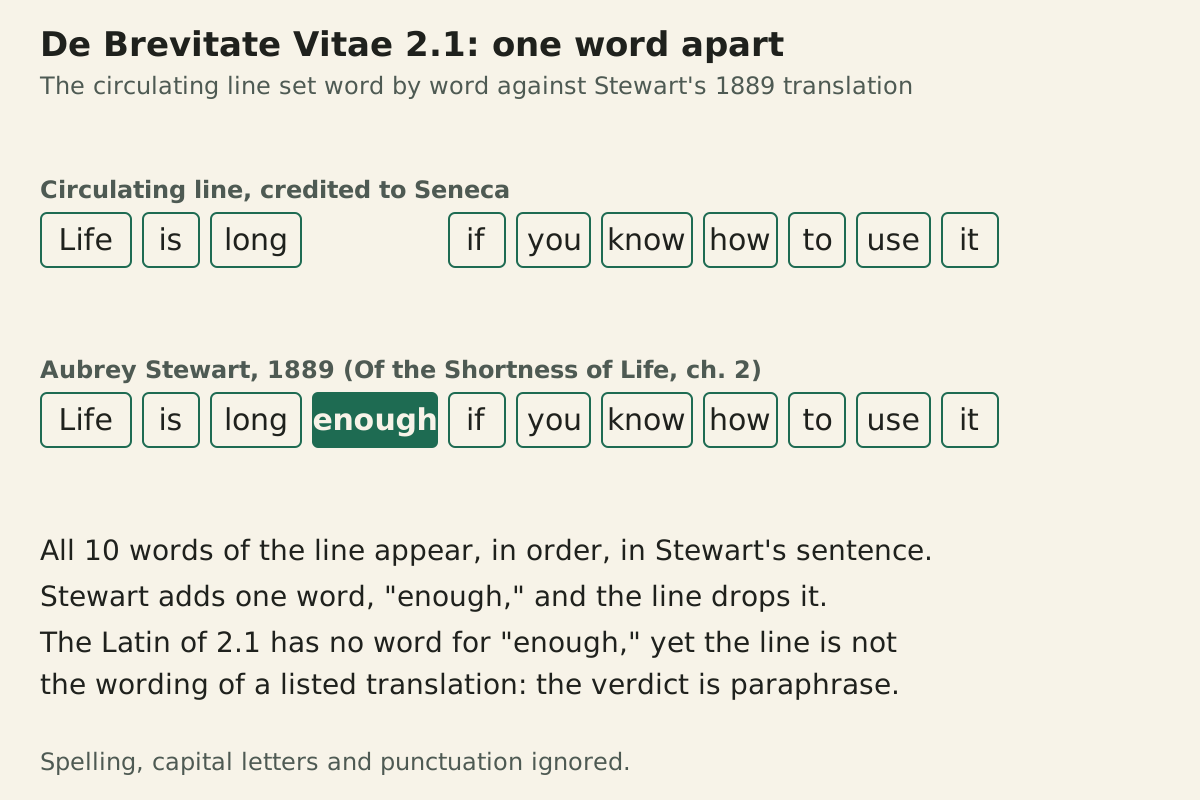
Circulating line Life is long if you know how to use it.
Keyword Planner, US, 2026-10-16: 10–100 average monthly searches
Verdict paraphrase this page's reading, 2026-10-17
- Coordinate in the original
- De Brevitate Vitae 2.1 Latin text ed. Basore 1932; Stewart 1889
- Public-domain translation
- "Life is long enough, if you know how to use it." (Aubrey Stewart, 1889) Stewart 1889, Of the Shortness of Life ch. 2 (Project Gutenberg #64576)
- Search scope (editions compared)
- Searched 2026-10-17 in Stewart's translation of the dialogues (1889), Gummere's translation of the letters (1917-25), Basore's Moral Essays vol. 1 (1928), and the Latin of the letters (Loeb text) and of De Brevitate Vitae (ed. Basore, 1932); also Diogenes Laertius, trans. Hicks (1925) this page's search record, 2026-10-17
This card as CSV: stoic-quote-ledger-card-10.csv
In De Ira 3.36 (Book 5, chapter 36 in Stewart's numbering of the dialogues), Seneca describes how Sextius questioned himself at the end of each day; the Stoic evening routine reads that passage closely.
Epictetus: lines 11 and 12
Epictetus is the trickiest of the three to quote, because the texts credited to him were written down by other hands. Arrian, who recorded the Discourses, says in Long's translation, "whatever I heard him say, the same I attempted to write down in his own words as nearly as possible" (Arrian's letter to Lucius Gellius, Long translation — verified).
The fragments come from later anthologies. Long places Stobaeus, the earliest compiler he names, after the middle of the fifth century AD. His introduction warns, "Some of the Fragments contained in the edition of Schweighaeuser are certainly not from Epictetus." Three of the five Epictetus lines here rest on fragments.
 Generated illustration
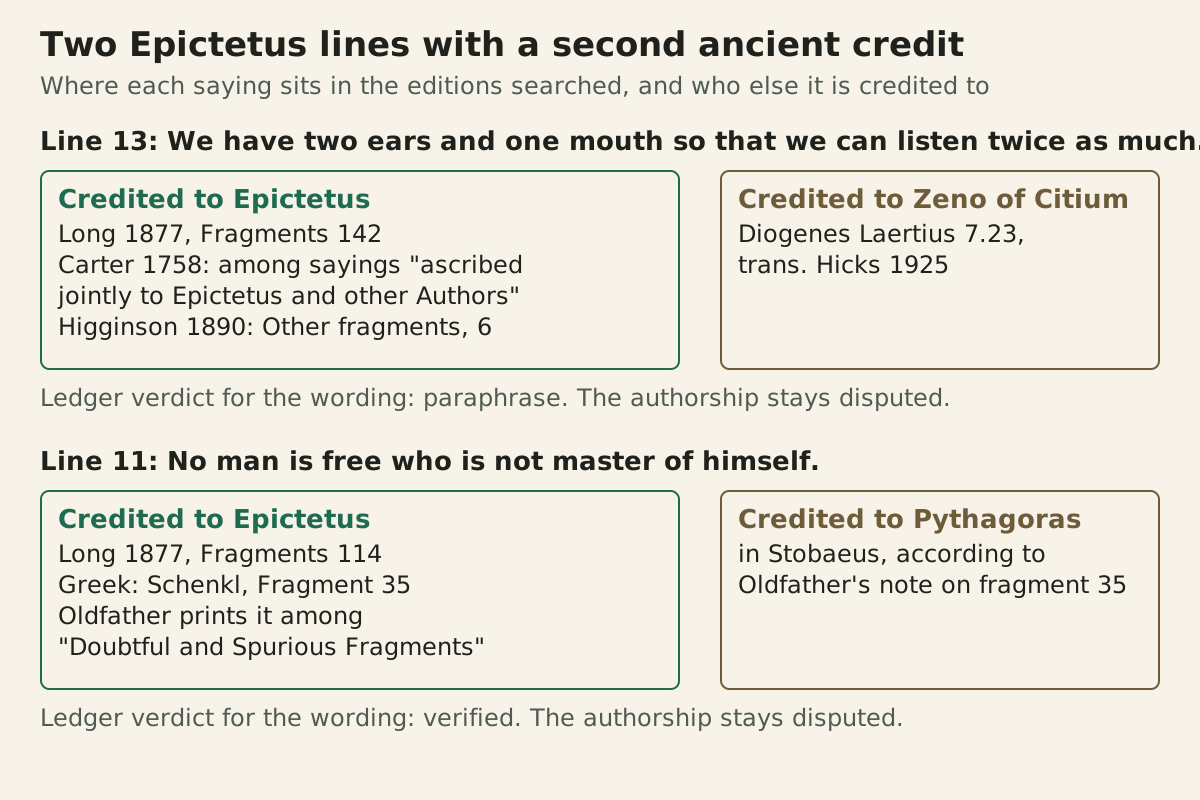
"No man is free who is not master of himself" (line 11) is verified as George Long's wording, and the Greek is Schenkl's Fragment 35, "οὐδεὶς ἐλεύθερος ἑαυτοῦ μὴ κρατῶν" (Fragments 114 in Long's translation and Fragment 35 in Schenkl's text — verified). Oldfather's English is the same, but he prints the saying among "Doubtful and Spurious Fragments," with the note "In Stobaeus the maxim is ascribed to Pythagoras." The wording is verified; the authorship is in doubt in the Loeb edition itself.
Circulating line No man is free who is not master of himself.
Keyword Planner, US, 2026-10-16: 100–1K average monthly searches
Verdict verified this page's reading, 2026-10-17
- Coordinate in the original
- Fragment 35 in Schenkl's numbering; no. 114 in Long's Greek text ed. Schenkl 1916; Long 1877
- Public-domain translation
- "No man is free who is not master of himself." (George Long, 1877) Long 1877, Fragments 114 (Wikisource)
- Search scope (editions compared)
- Searched 2026-10-17 in the Greek text ed. Schenkl (1916) and the translations of Carter (1758; Dublin 1759 printing), Long (1877), Higginson (Nelson 1890 edition) and Oldfather (Loeb 1925-28; 1956 and 1959 reprints); also Diogenes Laertius, trans. Hicks (1925) this page's search record, 2026-10-17
This card as CSV: stoic-quote-ledger-card-11.csv
"It's not what happens to you, but how you react to it that matters" (line 12) is a paraphrase of Encheiridion 5. Long's version opens "Men are disturbed not by the things which happen, but by the opinions about the things" (Encheiridion 5, Long translation — verified). Epictetus locates the trouble in opinions about events, not in reactions to them, four chapters after Encheiridion 1, the passage behind the dichotomy of control.
The closest sentence shape in this search came from Seneca, not Epictetus: "It does not matter what you bear, but how you bear it." (De Providentia 2.4, Stewart translation — verified). A similar shape in another author does not make the line misattributed.
Circulating line It's not what happens to you, but how you react to it that matters.
Keyword Planner, US, 2026-10-16: 10–100 average monthly searches
Verdict paraphrase this page's reading, 2026-10-17
- Coordinate in the original
- Encheiridion 5 Greek text ed. Schenkl 1916; Long 1877
- Public-domain translation
- "Men are disturbed not by the things which happen, but by the opinions about the things" (George Long, 1877) Long 1877, Encheiridion 5 (Wikisource)
- Search scope (editions compared)
- Searched 2026-10-17 in the Greek text ed. Schenkl (1916) and the translations of Carter (1758; Dublin 1759 printing), Long (1877), Higginson (Nelson 1890 edition) and Oldfather (Loeb 1925-28; 1956 and 1959 reprints); also Diogenes Laertius, trans. Hicks (1925) this page's search record, 2026-10-17
This card as CSV: stoic-quote-ledger-card-12.csv
Epictetus: lines 13 to 15
"We have two ears and one mouth so that we can listen twice as much as we speak" (line 13) is a paraphrase of a fragment. Carter lists "Nature hath given Man one Tongue, but two Ears, that we may hear twice as much as we speak" among the sayings "ascribed jointly to Epictetus and other Authors" (Fragments, Carter translation — verified).
Diogenes Laertius gives a similar saying to Zeno of Citium, whose hearers at the painted colonnade gave the Stoics their name (7.5). In Hicks's translation it reads "The reason why we have two ears and only one mouth is that we may listen the more and talk the less." (Diogenes Laertius 7.23, Hicks translation — verified).
Circulating line We have two ears and one mouth so that we can listen twice as much as we speak.
Keyword Planner, US, 2026-10-16: 10–100 average monthly searches
Verdict paraphrase this page's reading, 2026-10-17
- Coordinate in the original
- Fragments: no. 142 in Long's numbering; no. 6 of the sayings Carter lists as ascribed jointly to Epictetus and other authors Long 1877; Carter 1758
- Public-domain translation
- "Nature hath given Man one Tongue, but two Ears, that we may hear twice as much as we speak." (Elizabeth Carter, 1758) Carter, Dublin 1759 printing, Fragments ascribed jointly to Epictetus and other authors, no. 6 (Wikisource)
- Search scope (editions compared)
- Searched 2026-10-17 in the Greek text ed. Schenkl (1916) and the translations of Carter (1758; Dublin 1759 printing), Long (1877), Higginson (Nelson 1890 edition) and Oldfather (Loeb 1925-28; 1956 and 1959 reprints); also Diogenes Laertius, trans. Hicks (1925) this page's search record, 2026-10-17
This card as CSV: stoic-quote-ledger-card-13.csv
"Wealth consists not in having great possessions, but in having few wants" (line 14) is a paraphrase of a fragment found only in Long's collection among the listed editions. It reads: "Epictetus being asked, What man is rich, answered, He who is content (who has enough)." (Fragments 172, Long translation — verified). The idea matches, and none of the line's twelve words appears in that sentence.
Circulating line Wealth consists not in having great possessions, but in having few wants.
Keyword Planner, US, 2026-10-16: 10–100 average monthly searches
Verdict paraphrase this page's reading, 2026-10-17
- Coordinate in the original
- Fragments: no. 172 in Long's numbering Long 1877
- Public-domain translation
- "Epictetus being asked, What man is rich, answered, He who is content (who has enough)." (George Long, 1877) Long 1877, Fragments 172 (Wikisource)
- Search scope (editions compared)
- Searched 2026-10-17 in the Greek text ed. Schenkl (1916) and the translations of Carter (1758; Dublin 1759 printing), Long (1877), Higginson (Nelson 1890 edition) and Oldfather (Loeb 1925-28; 1956 and 1959 reprints); also Diogenes Laertius, trans. Hicks (1925) this page's search record, 2026-10-17
This card as CSV: stoic-quote-ledger-card-14.csv
"First say to yourself what you would be; and then do what you have to do" (line 15) is verified as Elizabeth Carter's sentence in Discourses 3.23.1 (Carter translation — verified). Higginson's 1890 text keeps it word for word. His 1865 title page describes his version as based on Carter's.
Long's 1877 version of the same sentence, on the page below, reads "First say to yourself Who you wish to be: then do accordingly what you are doing" (Discourses 3.23.1, Long translation — verified).
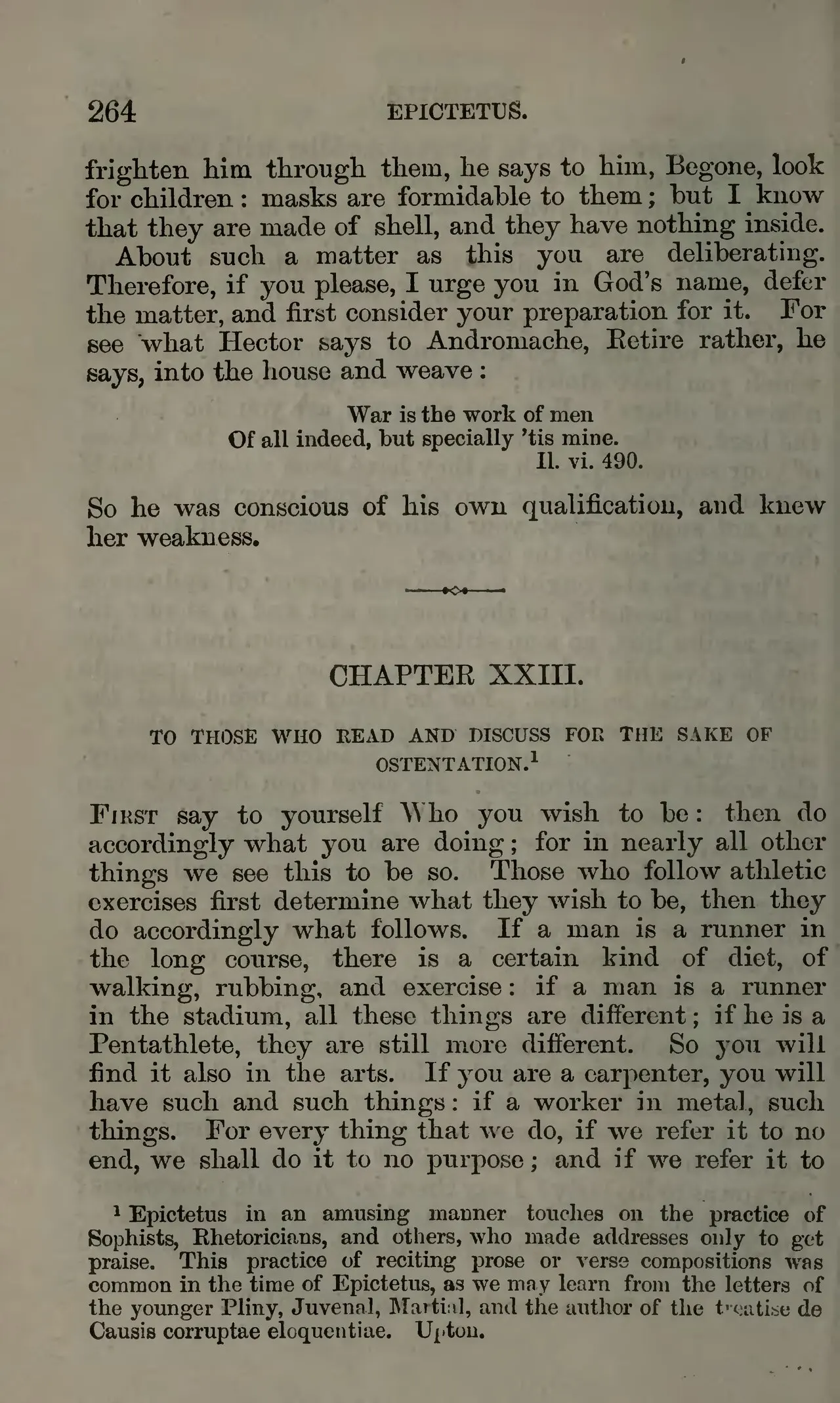
Circulating line First say to yourself what you would be; and then do what you have to do.
Keyword Planner, US, 2026-10-16: 10–100 average monthly searches
Verdict verified this page's reading, 2026-10-17
- Coordinate in the original
- Discourses 3.23.1 Greek text ed. Schenkl 1916; Carter 1758
- Public-domain translation
- "First say to yourself, what you would be; and then do, what you have to do." (Elizabeth Carter, 1758) Carter, Dublin 1759 printing, Discourses 3.23 (Wikisource); Higginson's 1890 text has the same words
- Search scope (editions compared)
- Searched 2026-10-17 in the Greek text ed. Schenkl (1916) and the translations of Carter (1758; Dublin 1759 printing), Long (1877), Higginson (Nelson 1890 edition) and Oldfather (Loeb 1925-28; 1956 and 1959 reprints); also Diogenes Laertius, trans. Hicks (1925) this page's search record, 2026-10-17
This card as CSV: stoic-quote-ledger-card-15.csv
Where do the other wordings come from?
The chart below counts how many words of each line appear, in the same order, in the closest sentence of a listed translation. The three verified lines use every word. Nine of the eleven paraphrases keep fewer than two thirds of their words, and two of those nine keep none at all.
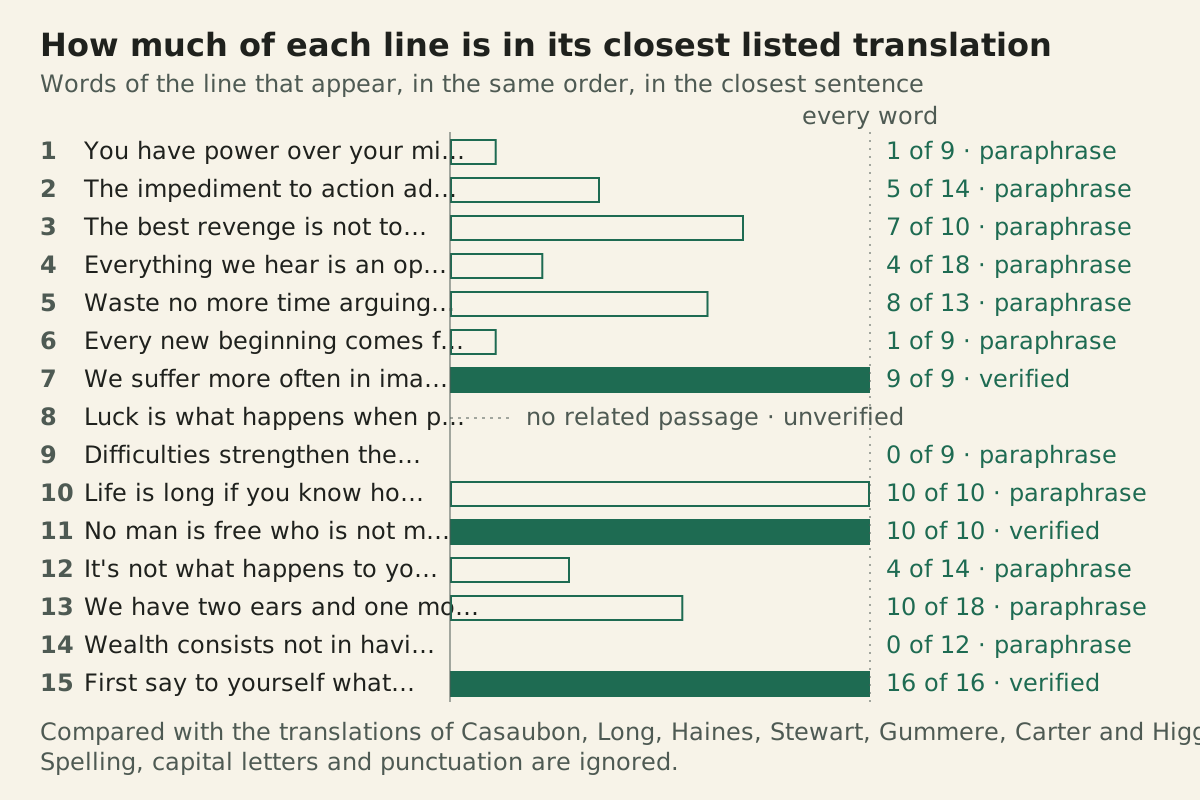
For the eleven paraphrases and the unverified line, this page has no dated printing that shows where the modern wording began, so the ledger names no origin. The paraphrases read like retellings in present-day English: "thee" and "thy" become "you," and long clauses shrink to a short sentence.
No line reached misattributed. The closest cases are the two-ears saying (line 13), which Diogenes Laertius gives to Zeno while the anthologies give a similar saying to Epictetus, and "No man is free who is not master of himself" (line 11), which Oldfather's note says Stobaeus ascribes to Pythagoras. Competing ancient credits show that authorship was disputed; they do not show which credit is right.
The same test of a famous name against a dated source runs through the seven virtues of bushido, a circulating list set beside the book it is credited to. It runs through the Zebra Puzzle too, often called Einstein's riddle.
Check a quote yourself
Three of these fifteen lines each turned out to be one translator's sentence: Carter's in 1758, Long's in 1877 and Gummere's in 1917. To check a line, find the passage it points to. Open two public-domain translations at that place and compare them word for word. Then write down which editions you searched and on what date, because a line you cannot find is unverified for your search, not fake.
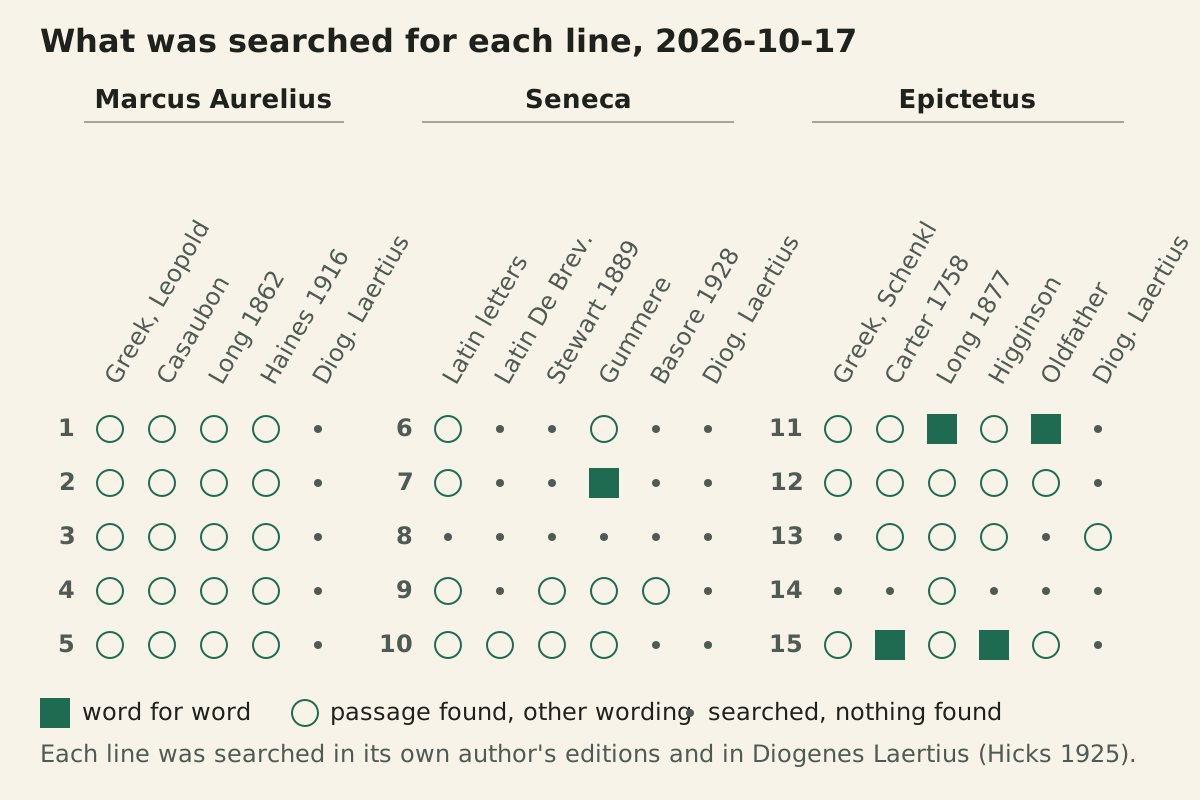
The translations used here are free to read online: Long, Casaubon and Stewart on Project Gutenberg, and Haines, Carter, Long's Epictetus and Gummere on Wikisource. Most of the Greek and Latin comes from the open texts of the Perseus Digital Library. The full ledger is available as a CSV file (CSV, stoic-quote-ledger-ledger.csv), with every verdict, coordinate and search scope, plus the edition and coordinate of the sentence behind each word count.
 Generated illustration
Next, run one line of your own through the same four questions.
Practice
Off the page:
Take one Stoic quote you have seen this week and treat it as a drill: one line, one full set of reps through the ledger's four questions.
- Write the line down exactly as you saw it, with where and when you saw it.
- Pick two public-domain translations from the editions named above and search each for the line's two or three rarest words. For an Epictetus line, start with the Encheiridion, whose opening passage is read in the dichotomy of control.
- Write down the coordinate of the closest passage, or "none found."
- Count how many words of the line appear, in order, in that passage's closest sentence.
- Write your verdict with its scope and date, for example: "paraphrase, closest Encheiridion 5, searched Long 1877 and Carter 1758 on (date)."
If you would rather practice the same check on a famous name, take the Zebra Puzzle and write down what dated source, if any, ties it to Einstein.
Sources
- [1] Marcus Aurelius, Ad Se Ipsum (Meditations), ed. J. H. Leopold (Leipzig: Teubner, 1908); digital edition urn:cts:greekLit:tlg0562.tlg001.perseus-grc2, Perseus Digital Library, PerseusDL/canonical-greekLit (GitHub, commit 0189b9c) github.com/PerseusDL/canonical-greekLit/blob/0189b9c8d8d1f148133f2f0af309b4ee90ea4332/data/tlg0562/tlg001/tlg0562.tlg001.perseus-grc2.xml Consulted: full Greek text, Books 1–12 Text licence: CC BY-SA 4.0
- [2] Marcus Aurelius, Meditations, trans. Meric Casaubon (1634), introduction by W. H. D. Rouse, Everyman's Library No. 9 (1906); Project Gutenberg eBook #2680 www.gutenberg.org/ebooks/2680 Consulted: full text, Books 1–12
- [3] Marcus Aurelius, Thoughts of Marcus Aurelius Antoninus, trans. George Long (1862); Project Gutenberg eBook #15877 www.gutenberg.org/ebooks/15877 Consulted: full text of the translation, Books 1–12
- [4] Marcus Aurelius, The Communings with Himself of Marcus Aurelius Antoninus, trans. C. R. Haines, Loeb Classical Library (1916); Wikisource en.wikisource.org/wiki/Marcus_Aurelius_(Haines_1916) Consulted: Books 1–12, English text
- [5] Seneca, Ad Lucilium Epistulae Morales, Latin text of the Loeb edition, ed. and trans. R. M. Gummere (London: Heinemann; Cambridge, MA: Harvard University Press, 1917–1925); digital edition urn:cts:latinLit:phi1017.phi015.perseus-lat2, Perseus Digital Library, PerseusDL/canonical-latinLit (GitHub, commit 128a05a) github.com/PerseusDL/canonical-latinLit/blob/128a05afa9cc7179ab18f8d05f78a9f1dd50e415/data/phi1017/phi015/phi1017.phi015.perseus-lat2.xml Consulted: full Latin text, Letters 1–124 Text licence: CC BY-SA 4.0
- [6] Seneca, De Brevitate Vitae, Latin text as edited by J. W. Basore (Loeb Moral Essays, vol. 2, 1932); Latin Wikisource la.wikisource.org/wiki/De_brevitate_vitae Consulted: full Latin text, chapters 1–20
- [7] Seneca, Minor Dialogues, together with the Dialogue on Clemency, trans. Aubrey Stewart (London: George Bell, 1889); Project Gutenberg eBook #64576 www.gutenberg.org/ebooks/64576 Consulted: full text
- [8] Seneca, Moral Letters to Lucilius, trans. R. M. Gummere, Loeb Classical Library, 3 vols. (1917–1925); Wikisource en.wikisource.org/wiki/Moral_letters_to_Lucilius Consulted: Letters 1–124, English text
- [9] Seneca, Moral Essays, vol. 1, trans. John W. Basore, Loeb Classical Library (London: Heinemann, 1928) archive.org/details/moralessayswithe01seneuoft Consulted: full text searched; On Providence, chapter 2, Latin and English
- [10] Epictetus, Dissertationes ab Arriano digestae, Enchiridion and fragments, ed. Heinrich Schenkl, editio maior (Leipzig: Teubner, 1916); digital editions urn:cts:greekLit:tlg0557.tlg001.perseus-grc2, tlg0557.tlg002.perseus-grc2 and tlg0557.tlg003.perseus-grc2, Perseus Digital Library, PerseusDL/canonical-greekLit (GitHub, commit 0189b9c) github.com/PerseusDL/canonical-greekLit/tree/0189b9c8d8d1f148133f2f0af309b4ee90ea4332/data/tlg0557 Consulted: full Greek text of the Discourses, the Encheiridion and fragments 1–36 Text licence: CC BY-SA 4.0
- [11] Epictetus, All the Works of Epictetus, Which Are Now Extant, trans. Elizabeth Carter (first published 1758; Dublin: Hulton Bradley, 1759); Wikisource en.wikisource.org/wiki/All_the_Works_of_Epictetus,_Which_Are_Now_Extant Consulted: Discourses, Books 1–4, the Encheiridion and the Fragments, with Carter's notes
- [12] Epictetus, The Discourses of Epictetus; with the Encheiridion and Fragments, trans. George Long (London: G. Bell, 1877); Wikisource en.wikisource.org/wiki/The_Discourses_of_Epictetus;_with_the_Encheiridion_and_Fragments Consulted: Arrian's letter to Lucius Gellius, Discourses Books 1–4, the Encheiridion and the Fragments with Long's introduction
- [13] Epictetus, The Works of Epictetus: His Discourses, in Four Books, the Enchiridion, and Fragments, trans. Thomas Wentworth Higginson (New York: Thomas Nelson and Sons, 1890); digital editions urn:cts:greekLit:tlg0557.tlg001.perseus-eng4, tlg0557.tlg002.perseus-eng4 and tlg0557.tlg003a.perseus-eng4, Perseus Digital Library, PerseusDL/canonical-greekLit (GitHub, commit 0189b9c) github.com/PerseusDL/canonical-greekLit/blob/0189b9c8d8d1f148133f2f0af309b4ee90ea4332/data/tlg0557/tlg001/tlg0557.tlg001.perseus-eng4.xml Consulted: full text of the Discourses, the Enchiridion and the Fragments Text licence: CC BY-SA 4.0
- [14] Epictetus, The Works of Epictetus, trans. Thomas Wentworth Higginson, a translation based on that of Elizabeth Carter (Boston: Little, Brown, 1865) archive.org/details/worksepictetusc03epicgoog Consulted: title page and the opening of the preface
- [15] Epictetus, The Discourses as Reported by Arrian, the Manual, and Fragments, trans. W. A. Oldfather, Loeb Classical Library, 2 vols. (London: Heinemann, 1925 and 1928; reprinted 1956 and 1959) archive.org/details/epictetusdiscour02epicuoft Consulted: full text of both volumes searched; vol. 2, Doubtful and Spurious Fragments, fragment 35 and its note
- [16] Diogenes Laertius, Lives of Eminent Philosophers, trans. R. D. Hicks, Loeb Classical Library, 2 vols. (London: Heinemann; Cambridge, MA: Harvard University Press, 1925); digital edition urn:cts:greekLit:tlg0004.tlg001.perseus-eng2, Perseus Digital Library, PerseusDL/canonical-greekLit (GitHub, commit 0189b9c) github.com/PerseusDL/canonical-greekLit/blob/0189b9c8d8d1f148133f2f0af309b4ee90ea4332/data/tlg0004/tlg001/tlg0004.tlg001.perseus-eng2.xml Consulted: full English text searched; Book 7, sections 1–23 read Text licence: CC BY-SA 4.0
Cite this page
Virtue & Paradox. “Stoic Quote Ledger: 3 of 15 Lines Match a 1634–1928 Text.” Published 2026-10-17; last substantive revision 2026-10-17. https://virtueandparadox.com/stoicism/stoic-quote-ledger/. Accessed (the date you read it).