Logic & ParadoxesPuzzle solution
Zebra Puzzle: Drop Any One of Its 14 Clues and It Breaks
Source card
Texts this entry reads, by coordinate and edition.
- Life International, December 17, 1962, statements 1–15as given in English Wikipedia, "Zebra Puzzle", revision 1380618066the 1962 issue itself not seen; restated on this page with jobs and hobbiesSource [1] · open the text
- "Énigme d'Einstein", section Énoncé, clues 1–15French Wikipedia, revision 235310543the 15-clue version that asks who keeps the fishSource [2] · open the text
- "Zebrarätsel", opening paragraphGerman Wikipedia, revision 264366780the Einstein credit and the 2 percent claimSource [3] · open the text
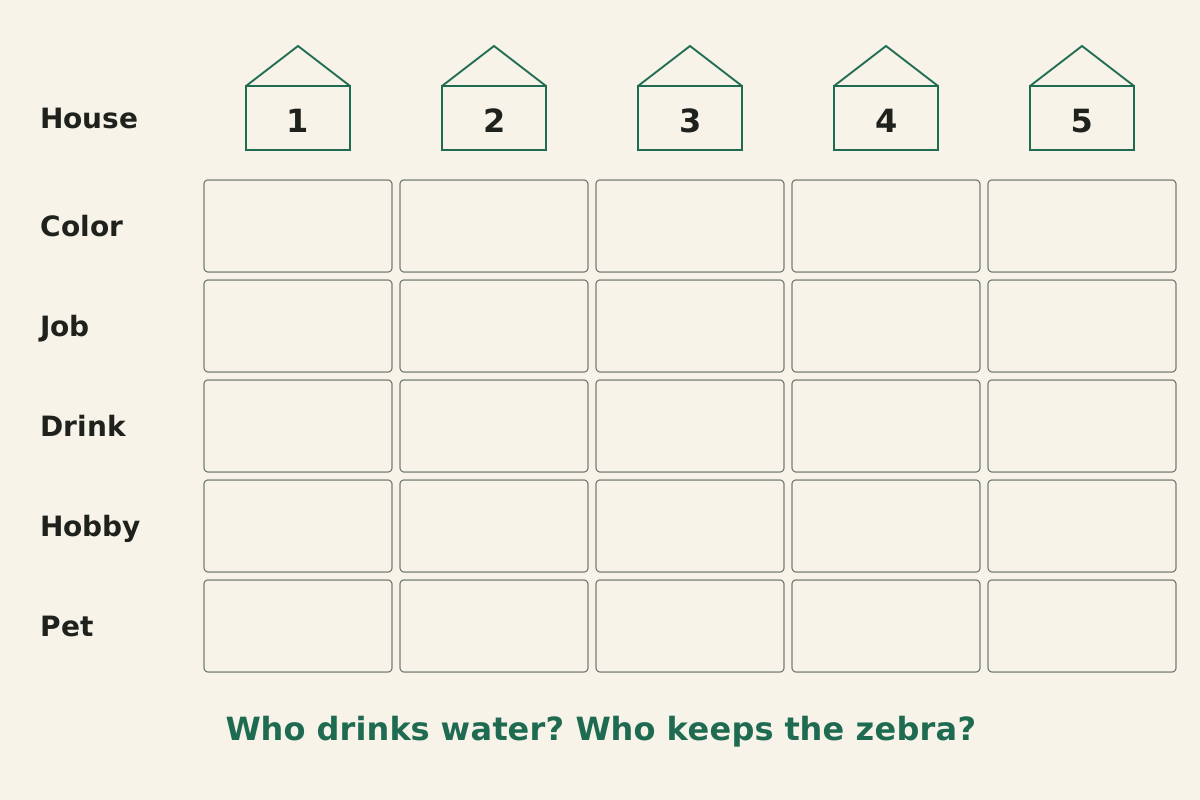
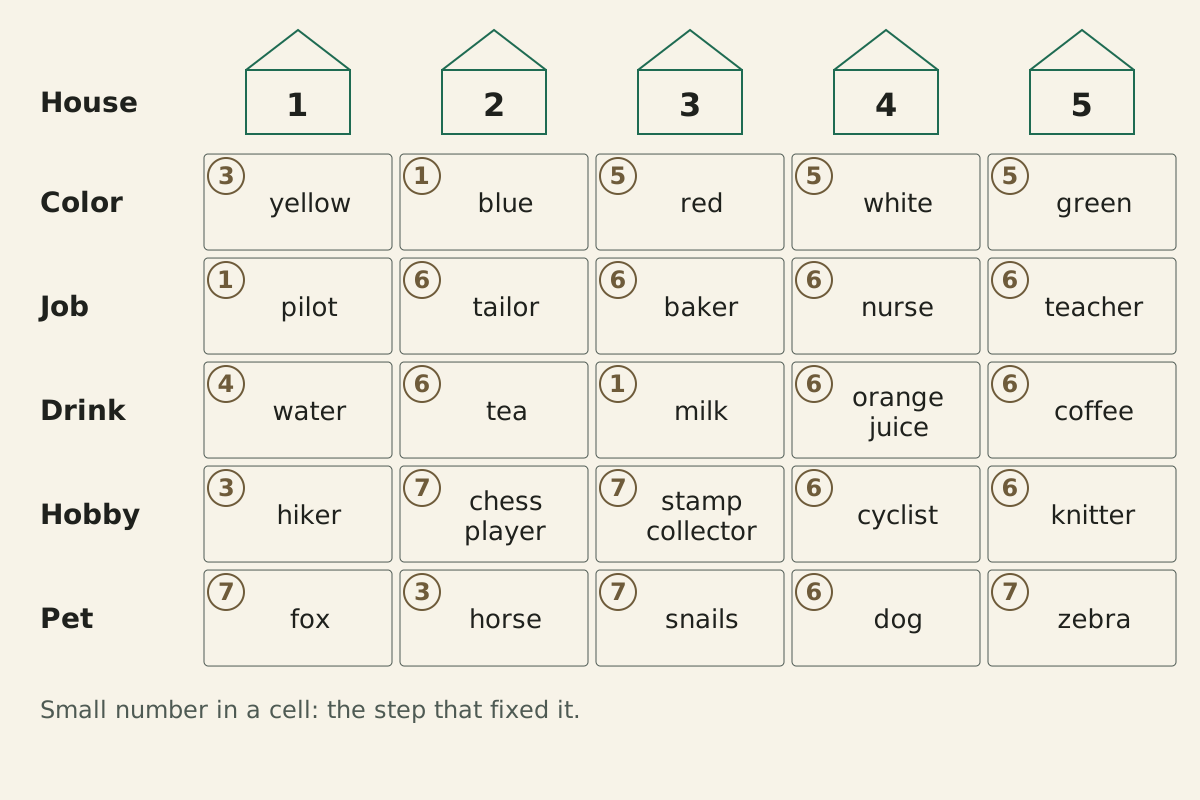
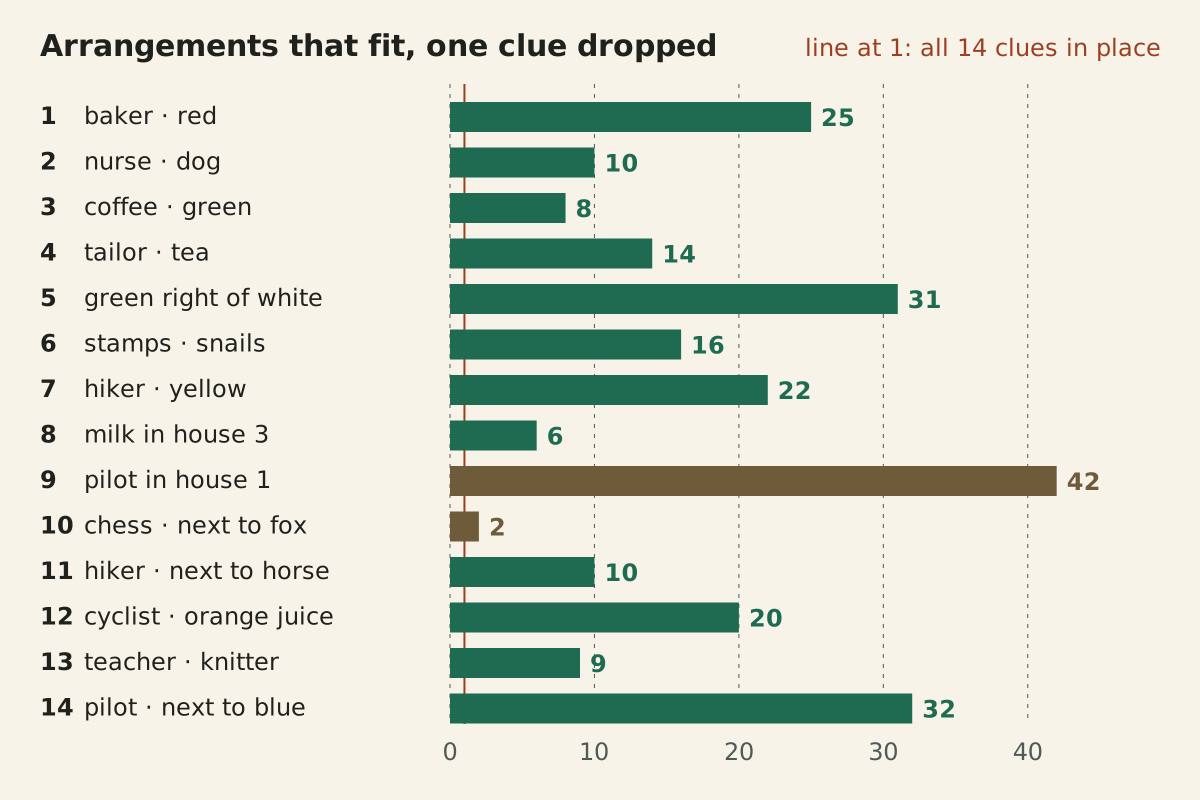
Remove any one of the Zebra Puzzle's 14 clues, and the puzzle no longer has a single answer. It sets five houses in a row and asks who drinks water and who keeps the zebra. With all 14 clues, exactly one arrangement fits, and when a program removed one clue at a time and checked every possible arrangement, between 2 and 42 fit each time. To solve it by hand, draw a five-by-five grid and begin with the clues that fix something to one particular house; the folded solution below takes seven steps.
The puzzle, restated
This page states the puzzle in its own words. English Wikipedia gives a 15-statement text as the version printed in Life International on December 17, 1962, and its first statement only says there are five houses, so 14 statements do the actual work. In the restatement below, the five nationalities become occupations and the five brands of American cigarettes become hobbies, while every clue keeps its logical structure: clue 1 here corresponds to statement 2 there, and so on.
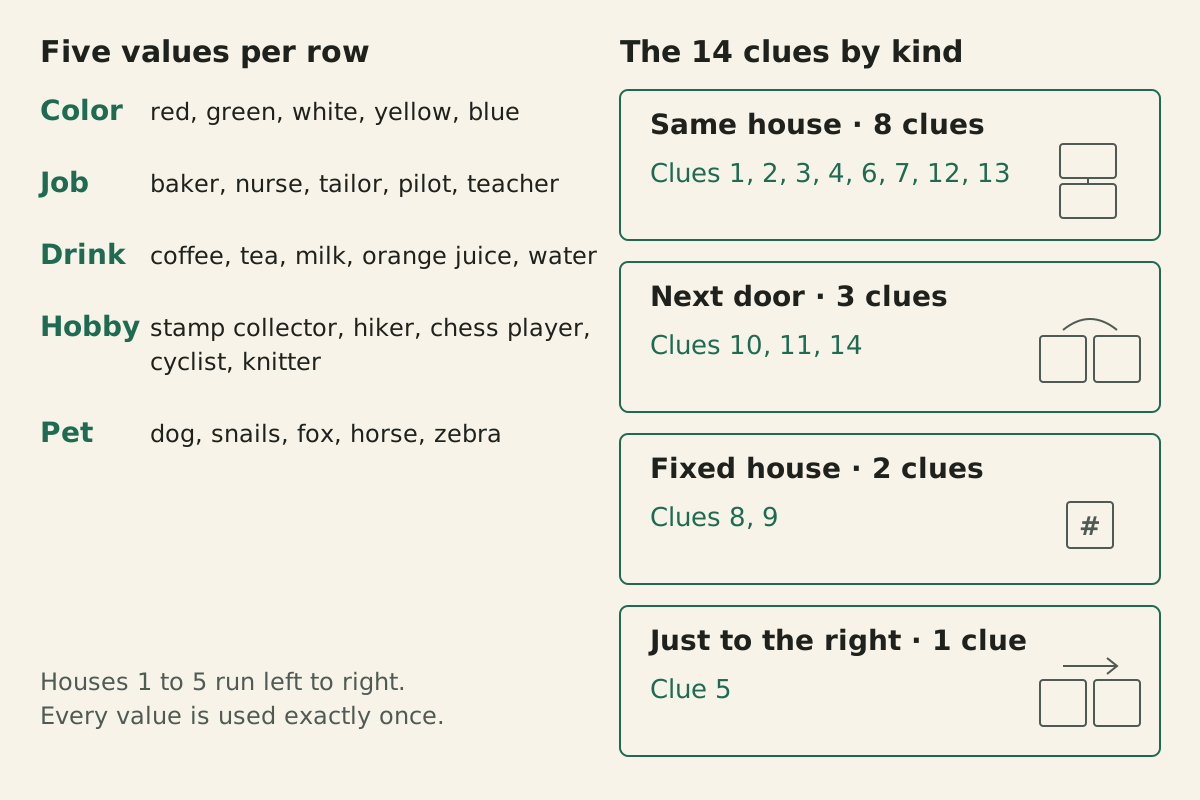
Five houses stand in a row, numbered 1 to 5 from left to right as you face them. Each house has a different color, and each resident has a different job, drink, hobby and pet, so every value appears exactly once. Water is one of the five drinks, and a zebra is one of the five pets.
- The baker lives in the red house.
- The nurse keeps the dog.
- The resident of the green house drinks coffee.
- The tailor drinks tea.
- The green house is the next house to the right of the white house.
- The stamp collector keeps the snails.
- The hiker lives in the yellow house.
- The resident of house 3, the middle house, drinks milk.
- The pilot lives in house 1.
- The chess player lives next door to the house with the fox.
- The hiker lives next door to the house with the horse.
- The cyclist drinks orange juice.
- The teacher is the knitter.
- The pilot lives next door to the blue house.
Who drinks water, and who keeps the zebra? Try the puzzle on the empty grid at the top of this page first. The solution stays folded until you choose to read it.

Puzzle card
Zebra Puzzle (also called Einstein's riddle) English Wikipedia, revision 1380618066
- Type
- constraint this site's classification
- Earliest known source
- Life International, December 17, 1962, as reported in English Wikipedia (revision 1380618066) and German Wikipedia (revision 264366780); French Wikipedia (revision 235310543) gives the same date and names the magazine as Life. This page has not seen that issue, and the clues here are this site's restatement Wikipedia (English, German, French), read 2026-10-17
- Difficulty (1–5)
- 3 this site's rating
- Tools needed
- Pen and paper, or code this page
- How the answer is checked
- A program checked every arrangement against all 14 clues, then again with each clue dropped in turn, and counted the arrangements that fit this page's enumeration
This card as CSV: zebra-puzzle-puzzle-card.csv
Show the solutionHide the solutionTry the puzzle first: this opens the full working.
The solution, step by step
Each step below names the clues it uses. For every cell a step fills, a program searched for an arrangement that obeys the clues used so far but puts something different in that cell, without finding one.
- Clue 9 puts the pilot in house 1 and clue 8 puts milk in house 3, and since house 2 is the pilot's only neighbor, clue 14 makes it the blue house.
- Clue 5 places white immediately left of green, so green cannot be house 1, which has nothing to its left, or house 2, which is blue. Green cannot be house 3 either, because that resident drinks milk while the green house's resident drinks coffee (clue 3), so green must be house 4 or 5.
- House 1 cannot be blue, green or white, and it cannot be red, because the baker lives in the red house (clue 1) while house 1 belongs to the pilot. House 1 is therefore yellow, its resident is the hiker (clue 7), and the horse lives next door in house 2 (clue 11).
- The pilot cannot drink milk, the green house's coffee or the tailor's tea (clue 4), and orange juice belongs to the cyclist (clue 12), whereas the pilot is the hiker, so the pilot drinks water.
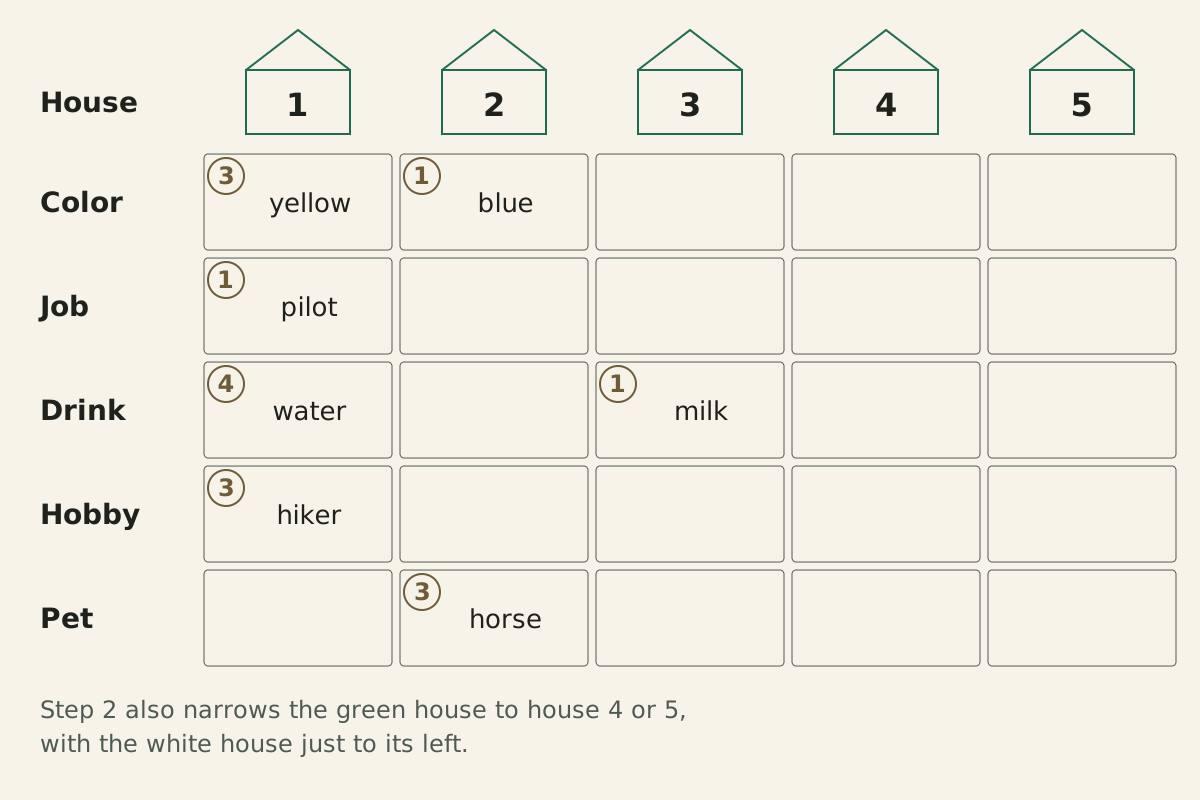
Steps 5 to 7
- Test green in house 4: white would then be house 3 and red would be house 5, the baker's house. With water, milk and coffee in houses 1, 3 and 4, tea and orange juice would go to houses 2 and 5, so the tailor would take house 2, and the baker, drinking orange juice, would be the cyclist (clue 12). The tailor keeps the horse and therefore is not the stamp collector (clue 6), and the teacher knits (clue 13), so the stamps would fall to the nurse, who would then need the snails as well as the dog (clue 2). That contradiction places green in house 5, white in house 4 and red in house 3.
- The baker therefore lives in red house 3 and drinks milk, coffee goes to green house 5, and houses 2 and 4 share tea and orange juice. The teacher cannot drink the tailor's tea and, being the knitter, is not the cyclist who drinks orange juice, which leaves the coffee in house 5. The nurse keeps the dog and so cannot live in house 2 with the horse, which puts the nurse in house 4 with orange juice and cycling, and the tailor in house 2 with tea.
- The tailor's horse again rules out the stamps (clue 6), so the tailor plays chess, and the baker collects stamps and keeps the snails. The chess player's neighbor has the fox (clue 10), and house 3 already holds the snails, so the fox belongs to house 1, and the zebra, the only pet left, belongs to house 5.
In this restatement the pilot drinks water and the teacher keeps the zebra. In the text English Wikipedia gives, the same two houses belong to the Norwegian and the Japanese.
Is the answer unique?
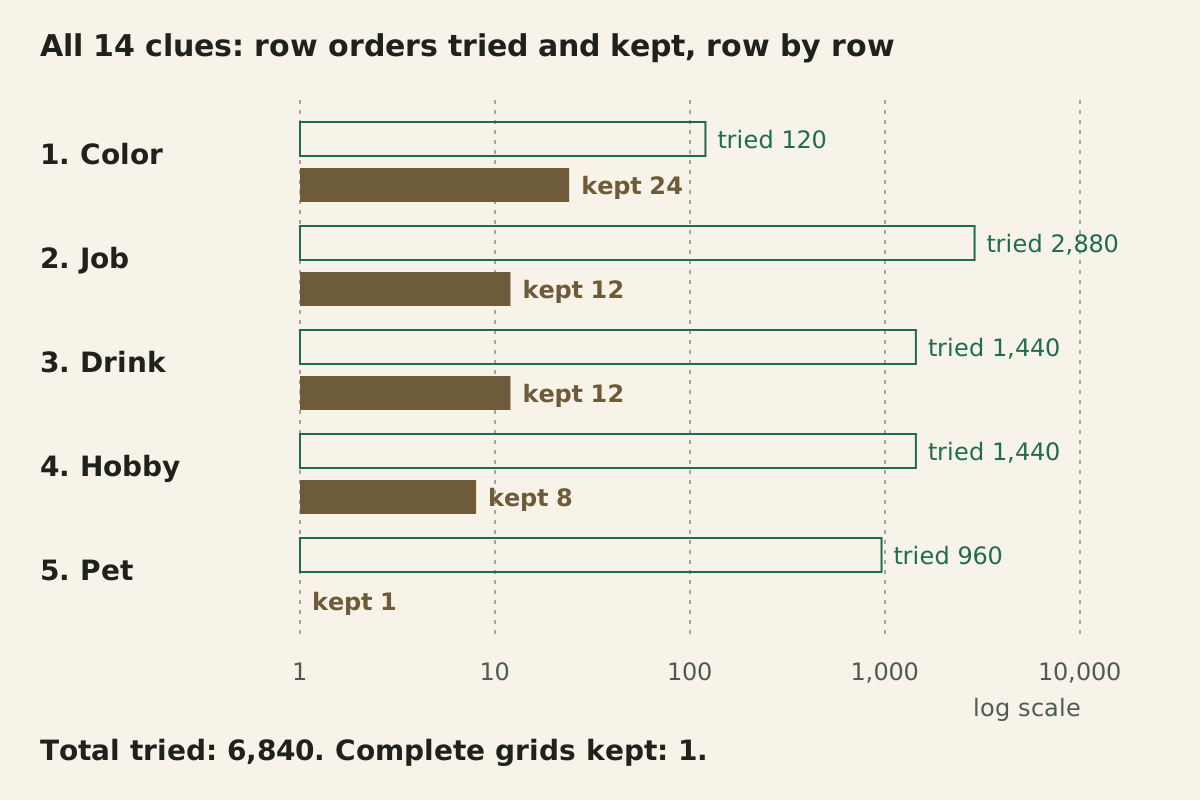
Yes: under all 14 clues, the Zebra Puzzle has exactly one solution. A program filled the grid one row at a time, tried all 120 possible orders of each row's five values, and abandoned a partial grid as soon as it violated a clue; it tried 6,840 row orders in all and kept one complete grid. A second run, with the rows in reverse order, agreed. Run on the text English Wikipedia gives, with its nationalities and cigarette brands, the program finds the identical arrangement under the original names.
Check record cardHow the answer on this page is tested
- Method
- A program filled the grid one row at a time (color, job, drink, hobby, pet), trying all 120 orders of each row's five values, and cut a branch as soon as a clue whose rows were all filled failed. It ran with all 14 clues, then once with each clue removed, and repeated every run with the rows in reverse order. this page's enumeration
- Cases enumerated
- 6,840 row orders tried with all 14 clues (295,560 across the 15 runs); the cut branches account for the rest of the 24,883,200,000 complete arrangements this page's enumeration
- Output summary
- Exactly 1 arrangement fits all 14 clues. With any one clue removed, 2 to 42 arrangements fit, so every clue is needed. The reverse row order gives the same counts. this page's enumeration
This card as CSV: zebra-puzzle-check-record.csv
Direction matters to the puzzle. The 1962 text, as English Wikipedia gives it, adds a note that right means the solver's right, which is why the houses on this page are numbered as you face them. English Wikipedia also reports versions that put the green house on the left of the ivory one; read as immediately to the left, that change still leaves exactly one arrangement, in which two neighboring houses swap everything they hold.
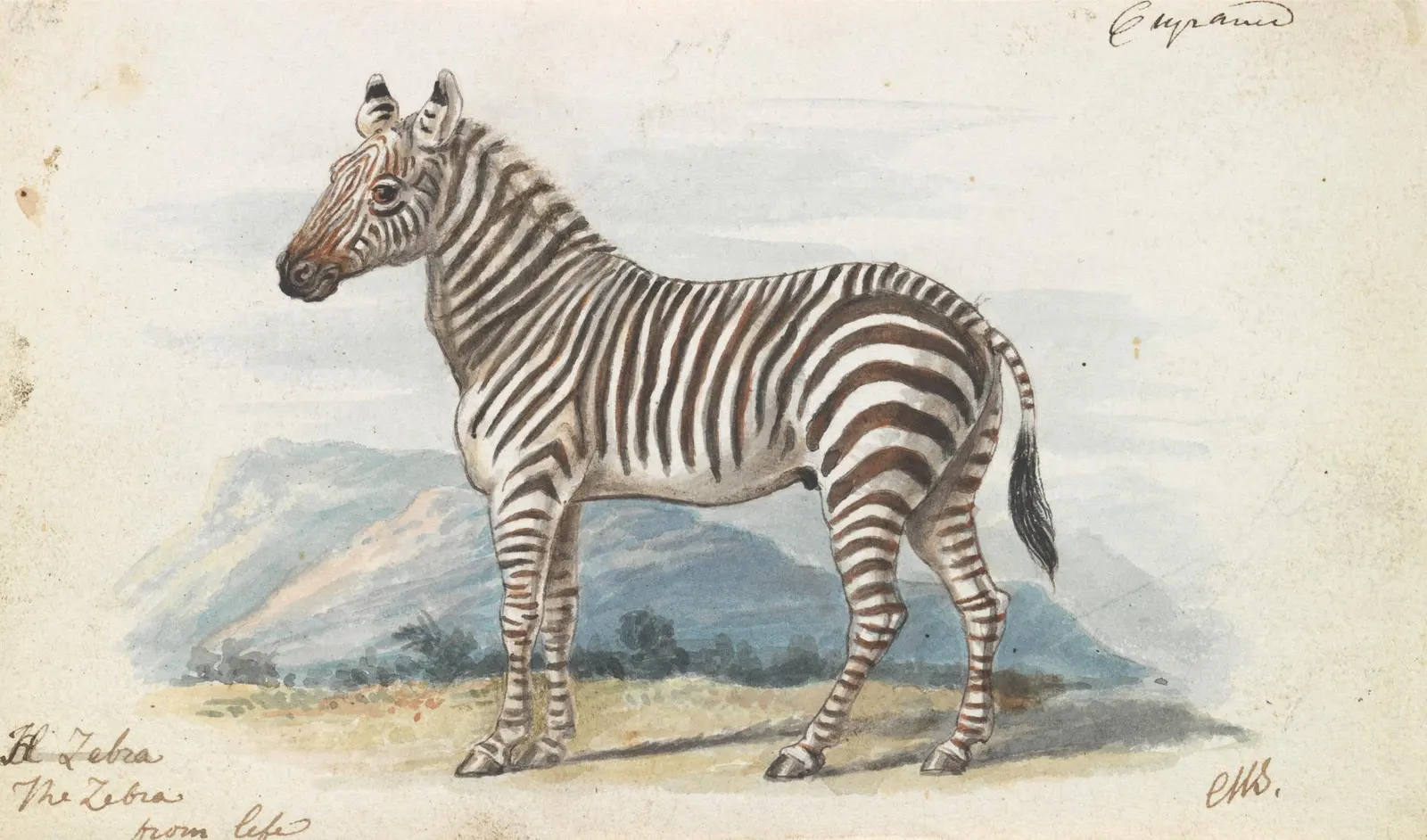
 Generated illustration
Unlike the open rows in the Paradox Index, a puzzle of this kind can be settled completely by checking every case. How this site checks puzzles describes the method and the yearly rerun.
Which clues can you drop?
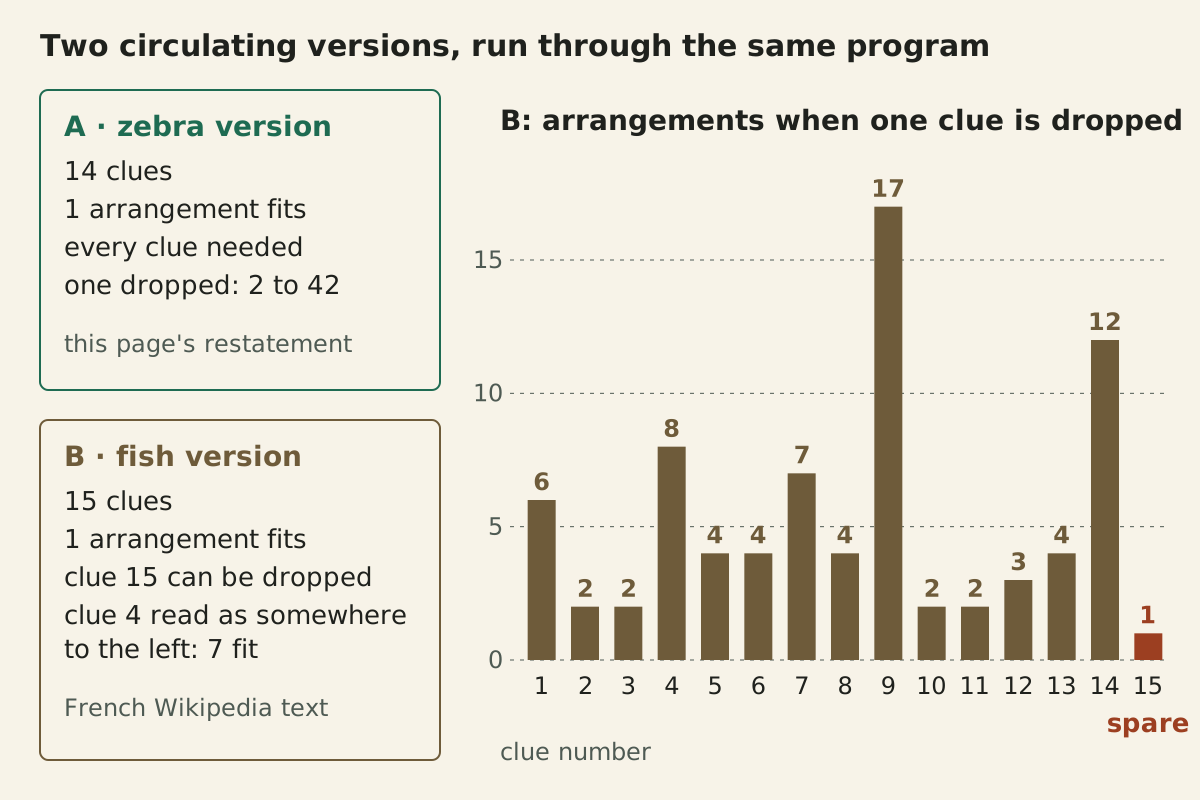
None of the 14 clues can go. Removing clue 9, which puts the pilot in house 1, lets 42 arrangements fit, the largest number for any single clue. Removing clue 10, about the chess player and the fox, lets only 2 fit, and those two differ only in where two of the pets live. Every other clue falls between those two counts, as the chart below shows.
Download the drop-one counts for both versions (CSV) (CSV, zebra-puzzle-drop-one.csv). The same one-change check runs through trolley problem variations, where each case alters a single detail of a scene and asks whether the verdict still holds.
Is Einstein's riddle the same puzzle?
The name covers more than one version. English Wikipedia says the Zebra Puzzle itself is often called Einstein's riddle, but the version French Wikipedia gives as Énigme d'Einstein asks who keeps the fish, and its 15 clues concern a Brit, a Swede, a Dane, a Norwegian and a German. Run through the same program, it also has exactly one arrangement, but its last clue, which puts the water drinker next door to the Blend smoker, is unnecessary: remove it and one arrangement still fits. That text also places the green house immediately to the left of the white one; read the clue as anywhere to the left, and 7 arrangements fit.
The credit to Einstein for the Zebra Puzzle has no dated support in the sources consulted for this page. English Wikipedia calls the Einstein story an urban legend, citing a 2009 puzzle book by Jeremy Stangroom, and its sentence saying there is no evidence for his authorship carries a citation-needed tag. The earliest dated printing in the three Wikipedia articles is the Life International issue of December 17, 1962 (French Wikipedia names the magazine as Life), which French Wikipedia notes appeared seven years after Einstein's death in 1955; this page has not seen that issue.
German and French Wikipedia also report a claim, credited to Einstein by the people who publish the puzzle, that only 2 percent of people can solve it. Neither article cites a study for the figure, and none of the sources listed on this page gives one. The Stoic Quote Ledger applies the same test to famous quotations: a famous name needs a dated source.
Practice
Off the page:
One drill, with pencil and paper, sometime in the next 24 hours:
- Copy the 14 clues and an empty five-by-five grid, and solve the puzzle before you open the folded solution.
- Mark the first step, if any, where you tested a possibility and then abandoned it.
- Cross out clue 10 and find both arrangements that still fit.
- Write one new clue, of a different kind from clue 10, that keeps only one of those two arrangements, and check it against both by hand.
- Then try the hardest logic puzzle ever, whose answer is also checked case by case, or set the one-change method beside trolley problem variations.
Sources
- [1] Wikipedia contributors, "Zebra Puzzle," Wikipedia, revision 1380618066 (last edited October 16, 2026). en.wikipedia.org/w/index.php?title=Zebra_Puzzle&oldid=1380618066 Consulted: the lead and the Description, Solution and Other versions sections; facts only, restated in this site's words
- [2] Wikipedia contributors, "Énigme d'Einstein," Wikipédia (French Wikipedia), revision 235310543 (last edited April 18, 2026). fr.wikipedia.org/w/index.php?title=%C3%89nigme_d%27Einstein&oldid=235310543 Consulted: the lead and the Énoncé section; facts only, restated in this site's words
- [3] Wikipedia contributors, "Zebrarätsel," Wikipedia (German Wikipedia), revision 264366780 (last edited February 17, 2026). de.wikipedia.org/w/index.php?title=Zebrar%C3%A4tsel&oldid=264366780 Consulted: the lead and the section Das Rätsel; facts only, restated in this site's words
Cite this page
Virtue & Paradox. “Zebra Puzzle: Drop Any One of Its 14 Clues and It Breaks.” Published 2026-10-17; last substantive revision 2026-10-17. https://virtueandparadox.com/puzzles/zebra-puzzle/. Accessed (the date you read it).