StoicismClose reading of a source text
Dichotomy of Control: Your Body Is on Epictetus's Other List
Source card
Texts this entry reads, by coordinate and edition.
- Encheiridion 1.1; Discourses 1.1.7–25 and 2.5.6–8Greek text ed. Heinrich Schenkl (1916)Source [1] · open the text · Text licence: CC BY-SA 4.0
- Encheiridion 1.1–1.4; Discourses 1.1 and 2.5.6–8George Long translation (1877)Source [2] · open the text
- Encheiridion 1.1; Discourses 1.1.23Elizabeth Carter translation (1758; Dublin printing of 1759)Source [3] · open the text
- Encheiridion 1.1Thomas Wentworth Higginson translation (1865; New York printing of 1890)Source [4] · open the text · Text licence: CC BY-SA 4.0
- Manual 1, the same passage as Encheiridion 1.1P. E. Matheson translation (1916)Source [6] · open the text
Show 4 more, VI–IXHide VI–IX
- Encheiridion 1.1W. A. Oldfather, Loeb translation (vol. 2, 1928; 1959 reprint)Source [7] · open the text
- Meditations 5.5, 5.8, 5.33, 6.41, 7.2, 7.54, 8.7, 8.17, 8.29, 8.47, 9.40, 10.32, 11.37, 12.3, 12.22Greek text ed. J. H. Leopold (1908)Source [8] · open the text · Text licence: CC BY-SA 4.0
- Meditations 5.5, 5.8, 5.33, 6.41, 7.2, 7.54, 8.7, 8.17, 8.29, 8.47, 9.40, 10.32, 11.37, 12.3, 12.22George Long translation (1862)Source [9] · open the text
- Sections 1, 4.4 and 4.8Margaret Graver, Epictetus, Stanford Encyclopedia of Philosophy (revised 2025-07-16)Source [10] · open the text
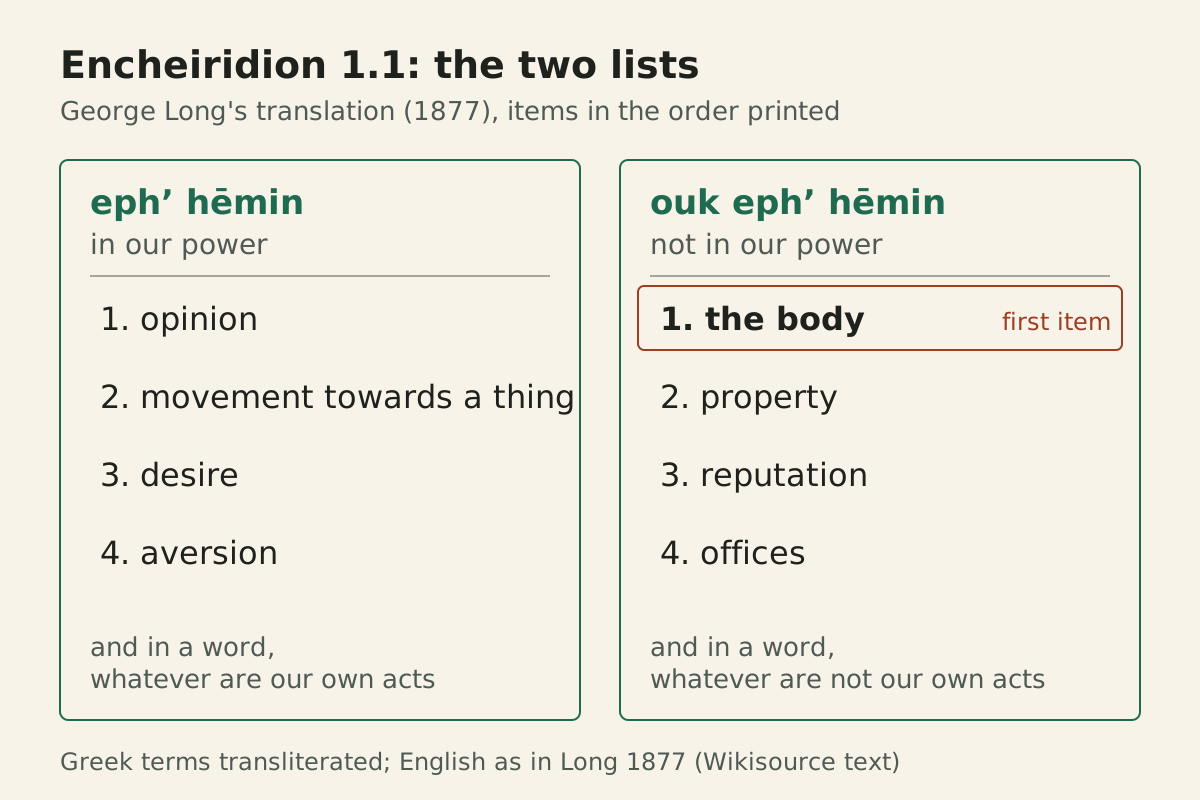
Epictetus's list of things not up to you begins with your own body. The dichotomy of control is the split between what is up to you and what is not, and Epictetus states it in the opening lines of the Encheiridion (also spelled Enchiridion), or Handbook. The first list holds opinion, impulse, desire and aversion, the acts that are your own. The second list, in George Long's 1877 translation, reads "the body, property, reputation, offices (magisterial power), and in a word, whatever are not our own acts" (Encheiridion 1.1, Long translation — verified).
If your working version of the idea files your body among the things you control, Epictetus's list disagrees. This page sets his Greek beside five public-domain translations from 1758 to 1928. It then follows the split into Discourses 1.1, where the body is called clay, and into the Meditations of Marcus Aurelius.
What does Enchiridion 1.1 say, item by item?
In Heinrich Schenkl's 1916 edition of the Greek, the chapter opens "τῶν ὄντων τὰ μέν ἐστιν ἐφʼ ἡμῖν, τὰ δὲ οὐκ ἐφʼ ἡμῖν" (Encheiridion 1.1, Schenkl's Greek text — verified). Long renders that sentence "Of things some are in our power, and others are not" (Encheiridion 1.1, Long translation — verified). Each list names four items and closes with a catch-all phrase. The second list opens with to sōma, which all five translations below render as body.
The next section, Encheiridion 1.2, describes the two lists. In Long's words, the things on the first list "are by nature free, not subject to restraint nor hindrance," while those on the second "are weak, slavish, subject to restraint, in the power of others" (Encheiridion 1.2, Long translation — verified). The body falls under that second description.
The chart below lines up the eight Greek items against five translations: Elizabeth Carter (1758), Thomas Wentworth Higginson (1865), Long (1877), P. E. Matheson (1916) and W. A. Oldfather (1928). On the first list the translators part ways. For hormē, Carter has "Pursuit," Higginson "aim," Long "movement towards a thing," Matheson "impulse" and Oldfather "choice." On the second list all five keep the Greek order and put the body first.
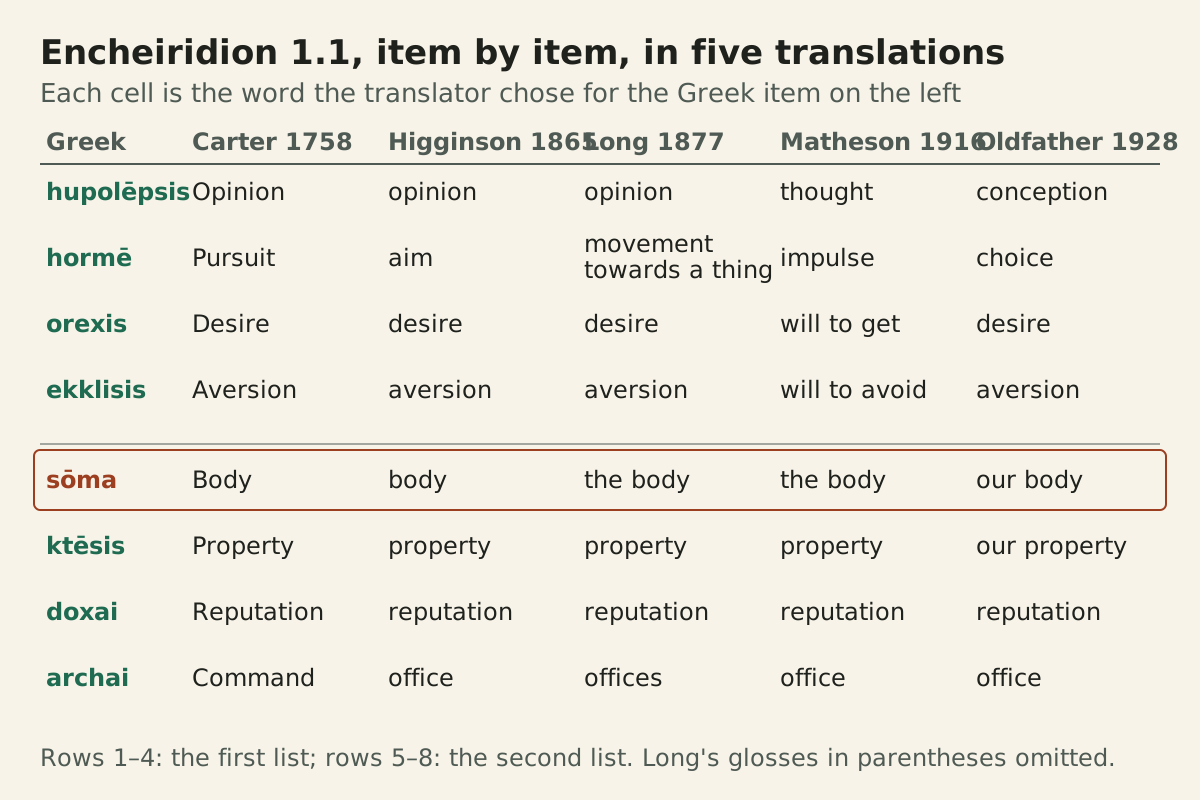
Reading one short passage item by item across translations is the same method used for the posture sutras of the Yoga Sutras. The passage table (CSV, dichotomy-control-passages.csv) gives Long's and Carter's full wording for each coordinate quoted on this page, with its source.
Why is the body on the other list?
In Discourses 1.1, the reason comes in a speech Epictetus gives to Zeus. Zeus would have made "your little body and your little property free and not exposed to hindrance," but could not: "this body is not yours, but it is clay finely tempered" (Discourses 1.1.10–11, Long translation — verified). The body sits on the second list because it can be hindered, not because it is worthless. In the words of Margaret Graver's Stanford Encyclopedia of Philosophy entry, "Our bodies do not in fact belong to us, since we cannot always decide what will happen to them."
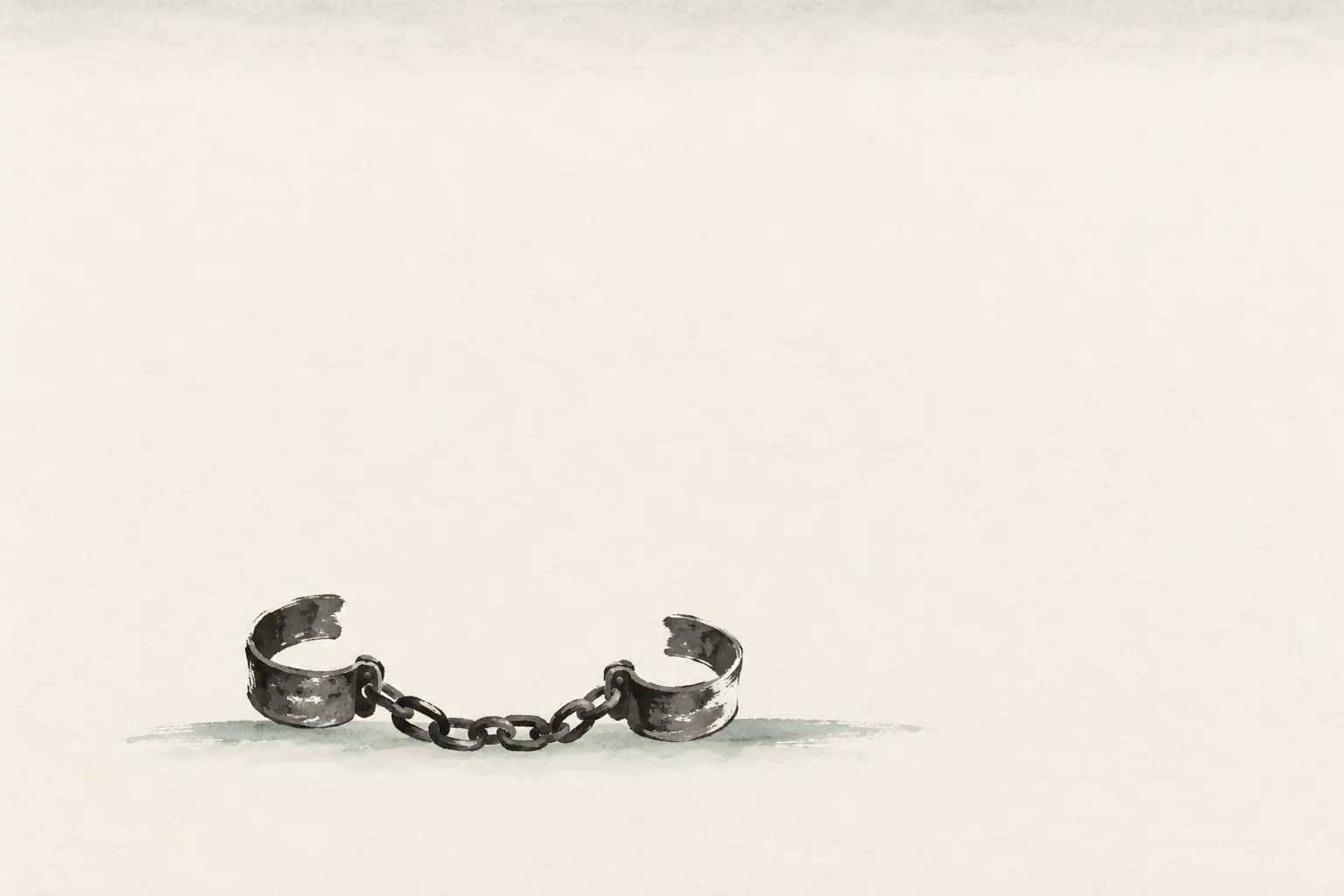
The same chapter makes the point with chains. "You may fetter my leg, but my will not even Zeus himself can overpower" (Discourses 1.1.23, Long translation — verified). Long notes that "will" stands for prohairesis, which Carter renders as "Choice." The leg is on one list and the faculty of choosing on the other.
 Generated illustration
Does that mean you should stop caring for your body? Discourses 2.5 says no: it asks "Should we use such things carelessly?" and answers "In no way," because "the use is not indifferent" (Discourses 2.5.6–7, Long translation — verified). Getting such things is not in your power, Epictetus says, but using them is (2.5.8). Caring for the body is an act on the first list, then, while the body stays on the second.
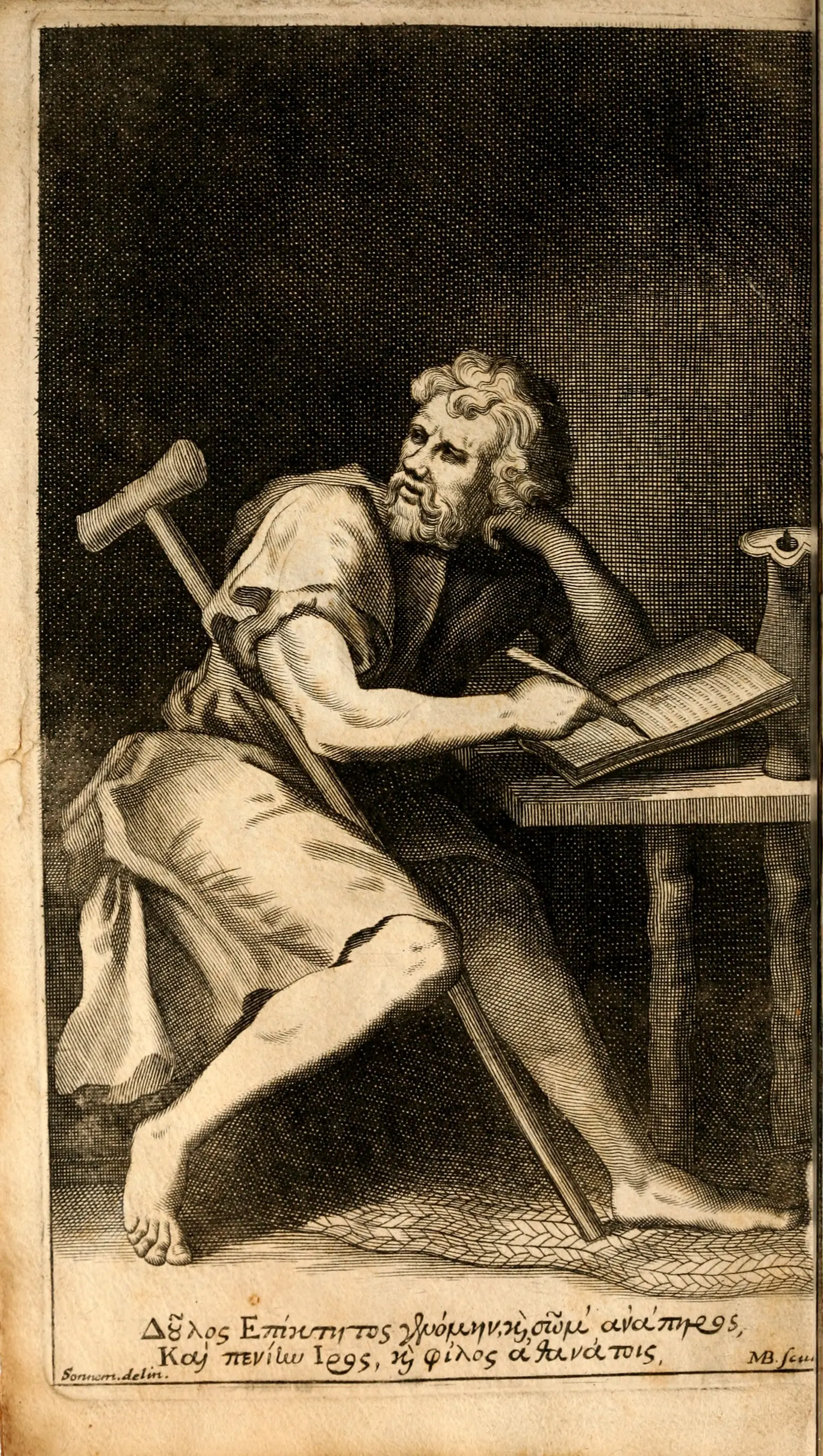
Graver's entry says that by the time of the Discourses Epictetus walked with a limp, "attributed variously to arthritis or to physical abuse during his time of slavery." Long's 1877 introduction prefers the report of the commentator Simplicius that he "was weak in body and lame from an early age." The two accounts differ on the cause, and this page does not choose between them.
_frontispiece.jpg)
How did translators render eph' hēmin?
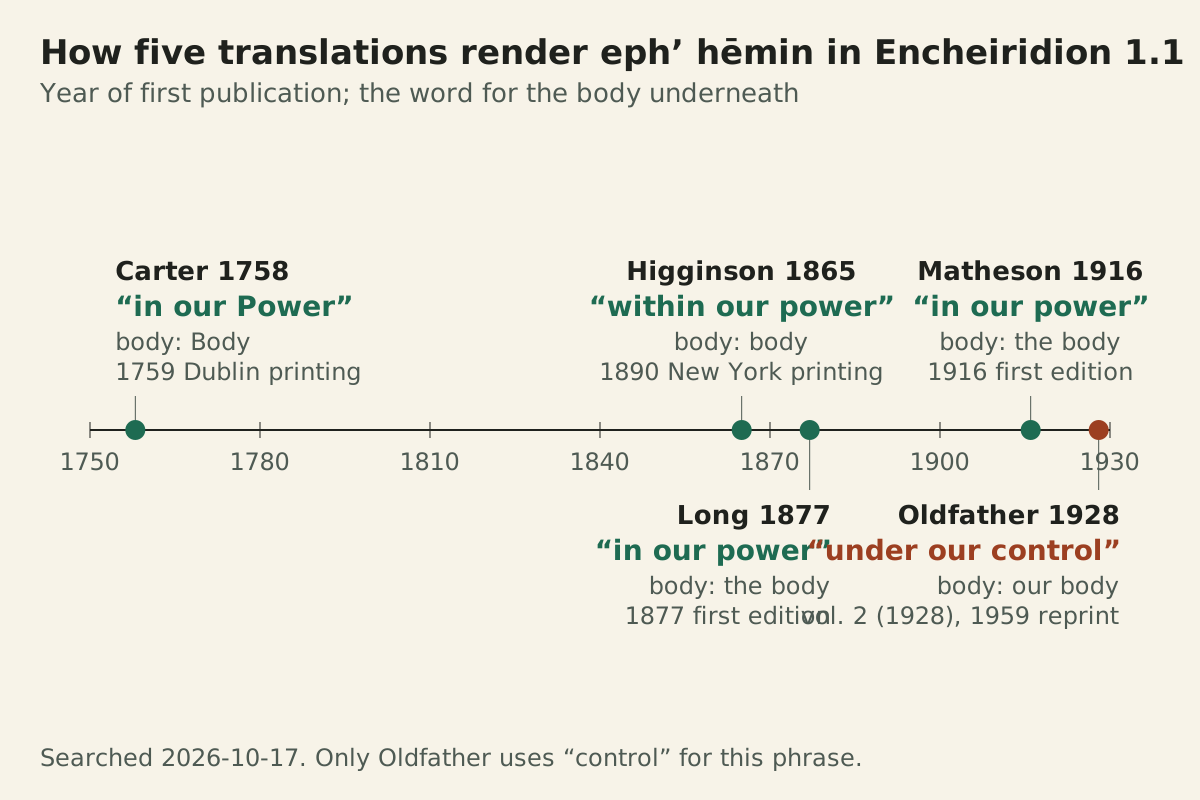
The Greek phrase eph' hēmin became "in our Power" for Carter, "within our power" for Higginson and "in our power" for Long and Matheson. Of the five, only Oldfather's Loeb volume of 1928 uses the word control here: "not under our control are our body, our property, reputation, office" (Encheiridion 1.1, Oldfather translation — verified). By this page's count of the digitized texts, his two volumes use "under our control," or the same phrase with another pronoun, 94 times. Long has it once, in a translator's note, and Carter, Higginson and Matheson 0 times, though Higginson and Matheson write "within your own control," "in your control" and similar phrases 6 and 12 times.
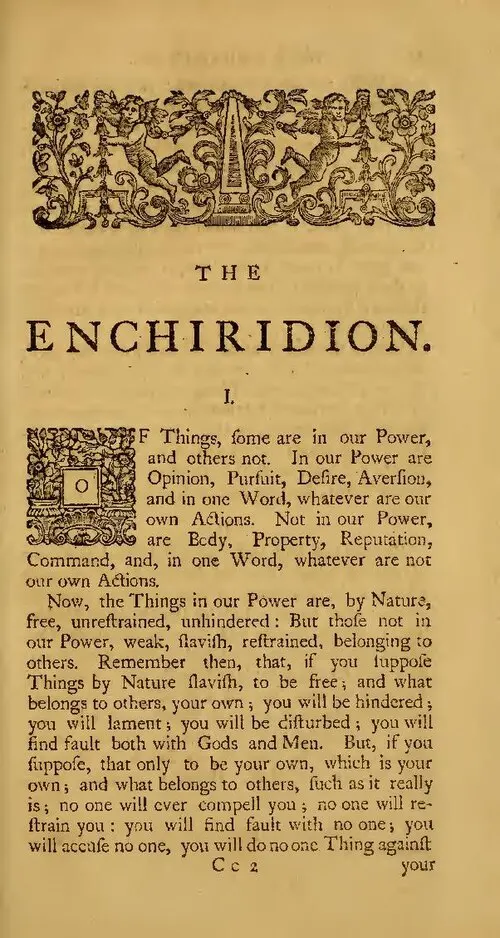
Did Epictetus use the phrase "dichotomy of control"? The word dichotomy does not occur in any of the five translations searched for this page on 2026-10-17. The search covered Carter's whole volume (1759 printing), Higginson's and Long's Discourses and Encheiridion (both in 1890 printings), and both volumes of Matheson and of Oldfather.
Epictetus's own terms are eph' hēmin and ouk eph' hēmin. This page has no readable, dated source for the first use of the English label, so it names none.
How does Discourses 1.1 argue the split?
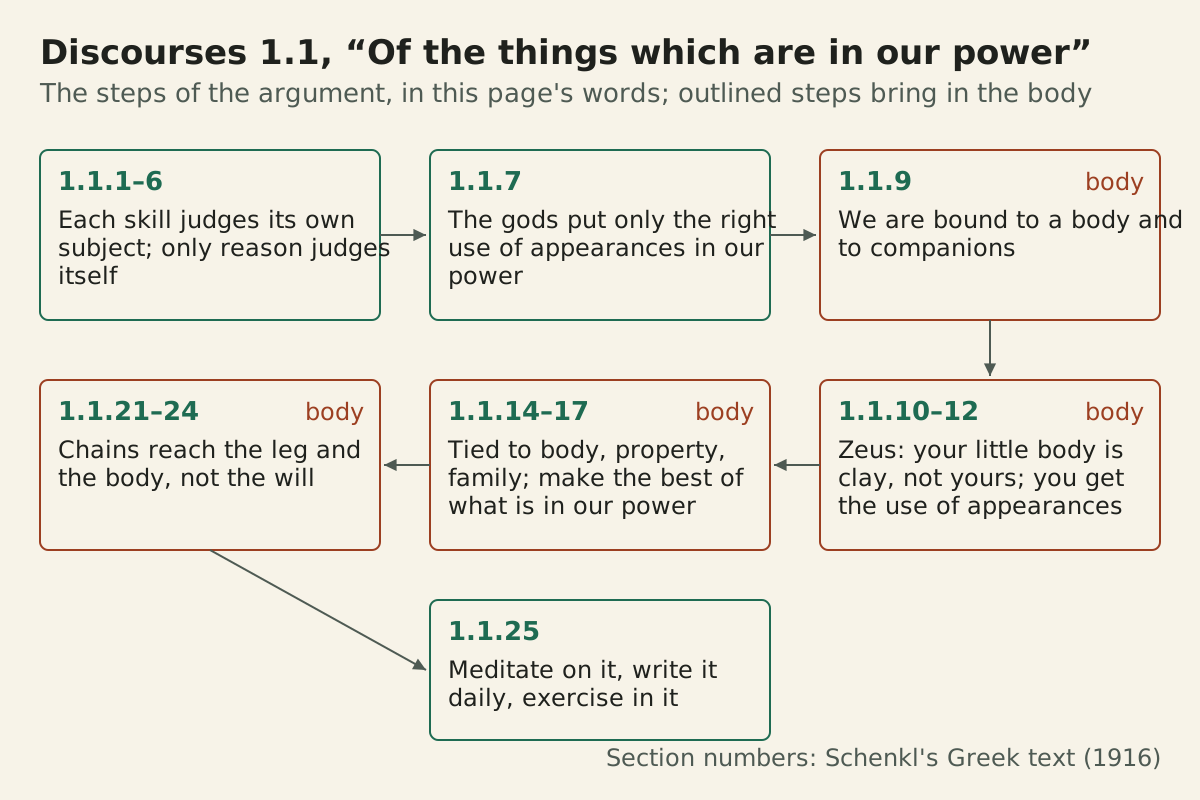
The first chapter of the Discourses carries the split in its title: "of the things which are in our power, and not in our power" (Discourses 1.1, Long translation — verified). The argument starts from skills. Each one judges its own subject, only the reasoning faculty judges itself, and the gods put only "the right use of appearances" in human power (Discourses 1.1.7, Long translation — verified). After the body, Zeus's speech and the chains comes an instruction: "These are the things which philosophers should meditate on, which they should write daily, in which they should exercise themselves" (Discourses 1.1.25, Long translation — verified).
By this page's count in Schenkl's Greek, the Encheiridion has 4,986 words and uses eph' hēmin 21 times. The four surviving books of the Discourses are about fifteen times as long, at 74,980 words counting Arrian's opening letter, and use it 25 times. The noun prohairesis occurs in them 69 times, counting its case forms but not related adjectives, against those 25 for eph' hēmin. Graver's entry calls the Encheiridion "a brief abridgment of the Discourses" that "at some points gives a misleading impression of his philosophical motivations."
Where does Marcus Aurelius use the same split?
J. H. Leopold's 1908 Greek text of the Meditations has the phrases that Long usually renders "in our power," "in thy power" and "in my power" in 14 chapters, by this page's search. Read in Long's 1862 translation, 13 of them use the split, from 5.5 to 12.22. The remaining chapter uses the phrase only as an idiom: "as far as it is in thy power" (Meditations 5.8, Long translation — verified). Long's translation opens 11.37 with "Epictetus also said" (Meditations 11.37, Long translation — verified); in Leopold's Greek the name comes in 11.34 and 11.36, and 11.37 continues the same run of sayings.
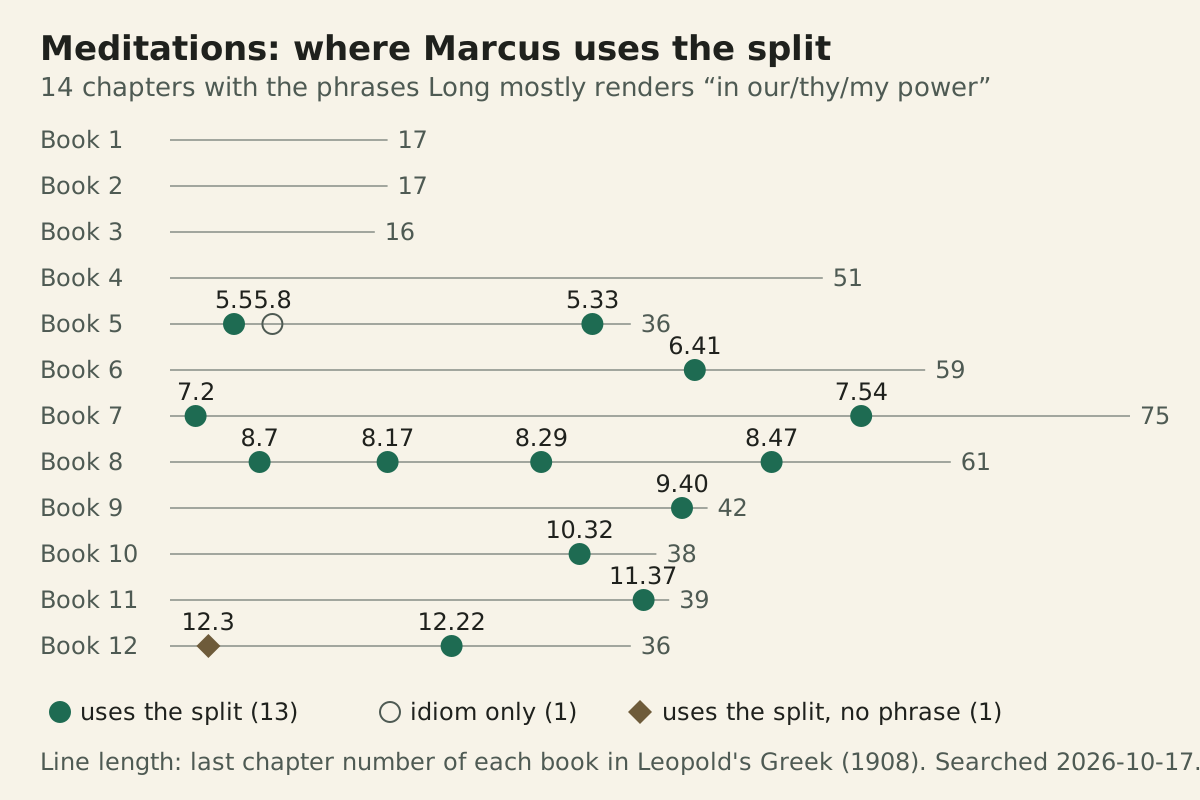
Marcus also places the body, in a chapter the phrase search does not catch. He divides himself into a little body, a little breath and intelligence: "Of these the first two are thine, so far as it is thy duty to take care of them; but the third alone is properly thine" (Meditations 12.3, Long translation — verified). The chapter list (CSV, dichotomy-control-meditations.csv) gives Long's wording for all 15 chapters and marks 14 as using the split: the 13 above and 12.3.
The line "You have power over your mind, not outside events" (Meditations 8.47, nearest passage — paraphrase) is graded a paraphrase in the Stoic Quote Ledger. The ledger uses the five verdicts explained on the method page. Its nearest passage is 8.47, where Long has "it is in thy power to wipe out this judgment now" (Meditations 8.47, Long translation — verified).

What does the productivity version leave out?
This site's view, which you are free to reject, is that the productivity version keeps Epictetus's sorting and drops what the sorting was for. In Encheiridion 1.3, treating the second list as your own leads to being hindered, lamenting and blaming gods and men. Chasing office and wealth as well, 1.4 warns, means failing in the things "through which alone happiness and freedom are secured" (Encheiridion 1.4, Long translation — verified).
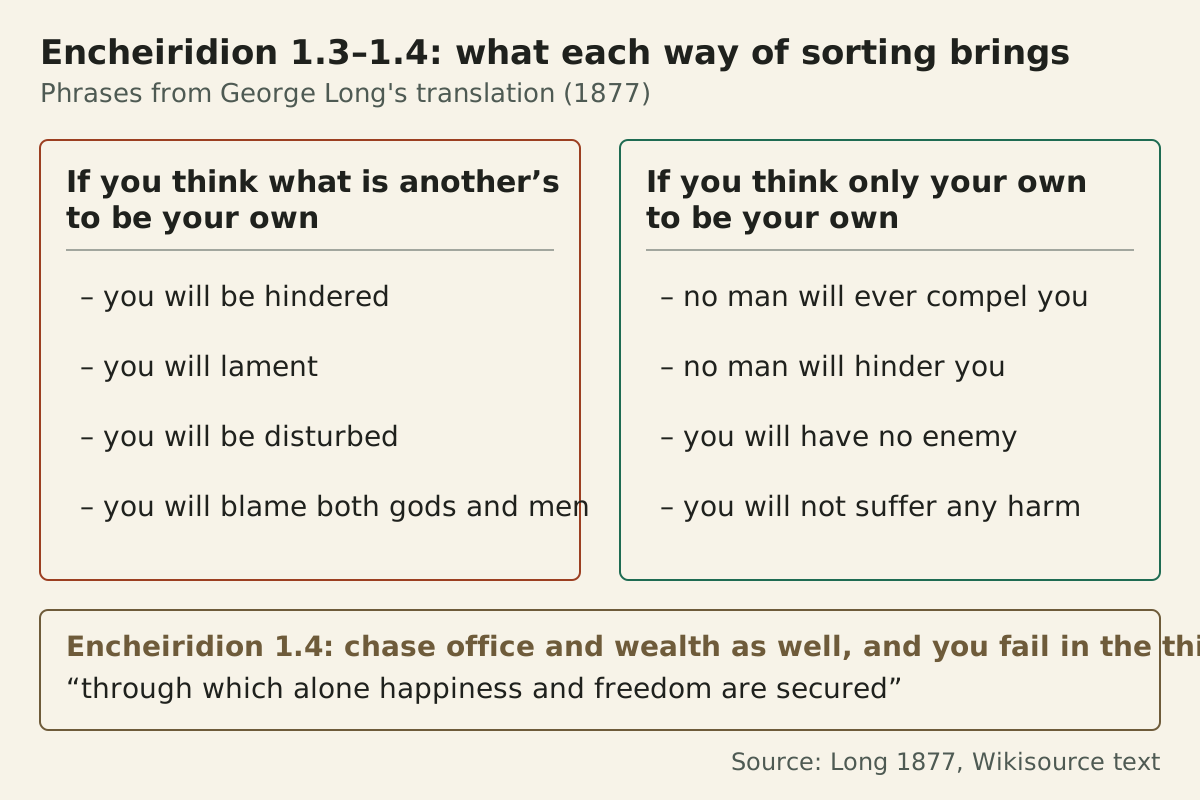
Marcus draws the same ethical line in 6.41: "if we judge only those things which are in our power to be good or bad, there remains no reason either for finding fault with God or standing in a hostile attitude to man" (Meditations 6.41, Long translation — verified). Graver's entry calls the line between what lies inside and outside the sphere of volition "the foundation of Epictetus’s system of value." The sorting decides where good and bad can be found. None of the passages quoted here is about getting more done.
Knowing the two lists and sorting an ordinary day by them are different tasks. The distance between them is what this site calls the armchair gap. The next step is to run that sort once, on paper.
Practice
Off the page:
Treat this as one drill, done within 24 hours, with a pen:
- Copy the two lists of Encheiridion 1.1 onto one page, using Long's wording from the passage table.
- During the day, write down five things that took your attention, one line each.
- Beside each, write which list it belongs to by Epictetus's items. For anything on the second list, your body included, add one line on the part that is your own act: your opinion, desire or aversion about it.
- Read Discourses 1.1.23 and write one sentence on what the speaker keeps when the leg is chained.
- Before you sleep, set your record beside the Stoic evening routine, then read Bhagavad Gita 2.47 and note which of its words you would place on each list.
Sources
- [1] Epictetus, Dissertationes ab Arriano digestae and Enchiridion, ed. Heinrich Schenkl, editio maior (Leipzig: Teubner, 1916); digital editions urn:cts:greekLit:tlg0557.tlg001.perseus-grc2 and tlg0557.tlg002.perseus-grc2, Perseus Digital Library, PerseusDL/canonical-greekLit (GitHub, commit 0189b9c) github.com/PerseusDL/canonical-greekLit/tree/0189b9c8d8d1f148133f2f0af309b4ee90ea4332/data/tlg0557 Consulted: full Greek text of the Discourses (Books 1–4) and the Encheiridion Text licence: CC BY-SA 4.0
- [2] Epictetus, The Discourses of Epictetus; with the Encheiridion and Fragments, trans. George Long (London: George Bell and Sons, 1877); Wikisource en.wikisource.org/wiki/The_Discourses_of_Epictetus;_with_the_Encheiridion_and_Fragments Consulted: Long's introduction (Epictetus), Book 1 chapter 1, Book 2 chapter 5 and the Encheiridion, chapters 1–2
- [3] Epictetus, All the Works of Epictetus, Which Are Now Extant, trans. Elizabeth Carter (first published 1758; Dublin: Hulton Bradley, 1759); Wikisource en.wikisource.org/wiki/All_the_Works_of_Epictetus,_Which_Are_Now_Extant Consulted: Book 1 chapter 1 and the Encheiridion, chapter 1; the whole volume searched for words
- [4] Epictetus, The Works of Epictetus: His Discourses, in Four Books, the Enchiridion, and Fragments, trans. Thomas Wentworth Higginson (first published 1865; New York: Thomas Nelson and Sons, 1890); digital editions urn:cts:greekLit:tlg0557.tlg001.perseus-eng4 and tlg0557.tlg002.perseus-eng4, Perseus Digital Library, PerseusDL/canonical-greekLit (GitHub, commit 0189b9c) github.com/PerseusDL/canonical-greekLit/blob/0189b9c8d8d1f148133f2f0af309b4ee90ea4332/data/tlg0557/tlg002/tlg0557.tlg002.perseus-eng4.xml Consulted: Enchiridion, chapter 1; the Discourses and the Enchiridion searched for words Text licence: CC BY-SA 4.0
- [5] Epictetus, The Discourses of Epictetus, with the Encheiridion and Fragments, trans. George Long (London: George Bell and Sons, 1890 printing); digital editions urn:cts:greekLit:tlg0557.tlg001.perseus-eng3 and tlg0557.tlg002.perseus-eng3, Perseus Digital Library, PerseusDL/canonical-greekLit (GitHub, commit 0189b9c) github.com/PerseusDL/canonical-greekLit/tree/0189b9c8d8d1f148133f2f0af309b4ee90ea4332/data/tlg0557 Consulted: the Discourses and the Encheiridion with Long's notes, searched for words Text licence: CC BY-SA 4.0
- [6] Epictetus, The Discourses and Manual, together with Fragments of His Writings, trans. P. E. Matheson, 2 vols. (Oxford: Clarendon Press, 1916) archive.org/details/epictetus02epicuoft Consulted: vol. 2, Manual chapter 1 (pp. 213–214); both volumes searched for words
- [7] Epictetus, The Discourses as Reported by Arrian, the Manual, and Fragments, trans. W. A. Oldfather, Loeb Classical Library, 2 vols. (London: Heinemann, 1925 and 1928; reprinted 1956 and 1959) archive.org/details/epictetusdiscour02epicuoft Consulted: vol. 2, The Encheiridion, chapter 1; both volumes searched for words
- [8] Marcus Aurelius, Ad Se Ipsum (Meditations), ed. J. H. Leopold (Leipzig: Teubner, 1908); digital edition urn:cts:greekLit:tlg0562.tlg001.perseus-grc2, Perseus Digital Library, PerseusDL/canonical-greekLit (GitHub, commit 0189b9c) github.com/PerseusDL/canonical-greekLit/blob/0189b9c8d8d1f148133f2f0af309b4ee90ea4332/data/tlg0562/tlg001/tlg0562.tlg001.perseus-grc2.xml Consulted: full Greek text, Books 1–12, searched for the phrases that Long usually renders "in our power," "in thy power" and "in my power" Text licence: CC BY-SA 4.0
- [9] Marcus Aurelius, Thoughts of Marcus Aurelius Antoninus, trans. George Long (1862); Project Gutenberg eBook #15877 www.gutenberg.org/ebooks/15877 Consulted: full text of the translation, Books 1–12; chapters 5.5, 5.8, 5.33, 6.41, 7.2, 7.54, 8.7, 8.17, 8.29, 8.47, 9.40, 10.32, 11.37, 12.3 and 12.22 read
- [10] Margaret Graver, "Epictetus," Stanford Encyclopedia of Philosophy (first published 2008-12-23; substantive revision 2025-07-16) plato.stanford.edu/entries/epictetus/ Consulted: sections 1–5 of the current entry
Cite this page
Virtue & Paradox. “Dichotomy of Control: Your Body Is on Epictetus's Other List.” Published 2026-10-17; last substantive revision 2026-10-17. https://virtueandparadox.com/stoicism/dichotomy-control/. Accessed (the date you read it).