Yoga PhilosophyClose reading of a source text
Bhagavad Gita 2.47: It Also Forbids Clinging to Inaction
Source card
Texts this entry reads, by coordinate and edition.
- Bhagavad Gita 2.47Devanagari text with Annie Besant's translation, 4th edition (Madras, 1922), p. 35Source [1] · open the text
- Bhagavad Gita 2.47 and Telang's note on inactionKashinath Trimbak Telang translation, Sacred Books of the East 8 (1882), p. 48Source [2] · open the text
- Bhagavad Gita 2.47Charles Wilkins translation (1785), 1867 New York reprint, p. 32no verse numbers on the pageSource [3] · open the text
- Bhagavad Gita 2.47Edwin Arnold, The Song Celestial, chapter II, 1900 New York printingArnold does not number versesSource [4] · open the text
- Bhagavad Gita 2.39, 2.48, 2.50 and 3.8Annie Besant's translation, 1922 printing, pp. 32, 36 and 48Source [1] · open the text
Show 2 more, VI–VIIHide VI–VII
- Enchiridion 1.1George Long translation (1877), p. 379Source [5] · open the text
- Summary, section 2 and section 9Shyam Ranganathan, Internet Encyclopedia of Philosophy entry, accessed 2026-10-17Source [6] · open the text
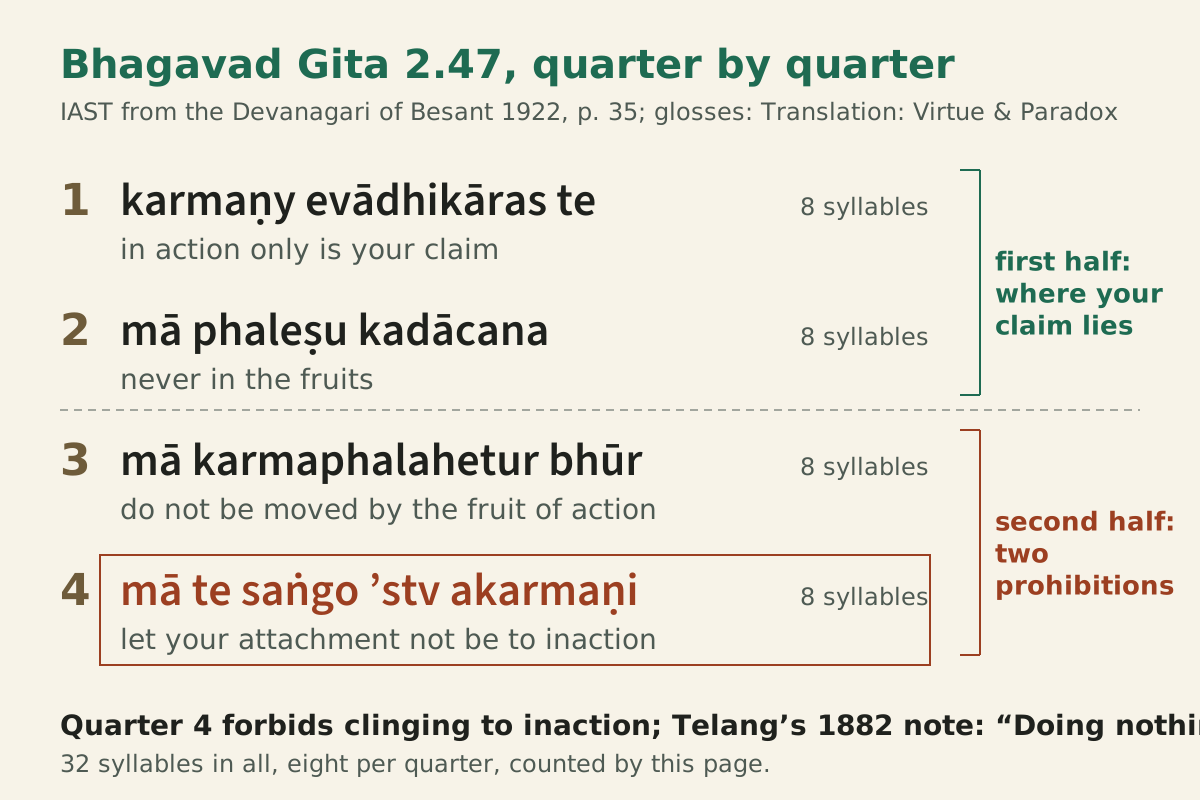
Arjuna tells Krishna he will not fight, then falls silent. That moment is verse 2.9, and thirty-eight verses later, inside Krishna's reply, comes Bhagavad Gita 2.47, a verse of four quarter-lines: your claim is on the action, never on its fruits; do not make the fruit your motive; do not cling to inaction. Read only the first half and the verse can sound like permission to stop caring. The second half pushes back on that reading, because it also forbids clinging to inaction.
Kashinath Trimbak Telang's prose translation of 1882, made for the Sacred Books of the East series, gives the whole verse in three sentences:
"Your business is with action alone; not by any means with fruit. Let not the fruit of action be your motive (to action). Let not your attachment be (fixed) on inaction."
Telang's translation of Bhagavad Gita 2.47 (1882, p. 48) — verified
Telang folds the first two quarters into one sentence and gives each of the last two a sentence of its own. The rest of this page follows that split: half claim, half prohibition.
What does Bhagavad Gita 2.47 say, word by word?
Besant's 1922 Madras edition prints the verse in Devanagari on page 35. In IAST, a standard way of writing Sanskrit in roman letters, it reads "karmaṇy evādhikāras te mā phaleṣu kadācana / mā karmaphalahetur bhūr mā te saṅgo 'stv akarmaṇi" (Bhagavad Gita 2.47, transliterated from the Devanagari of the Besant 1922 printing, p. 35) — verified. Each line holds two quarters, or pādas, and by this page's count every quarter has 8 syllables, 32 in all. Typed without diacritics, the opening can appear as "karmanye vadhikaraste"; the "e" at the end of karmanye is really the first letter of eva, "only."
Word by word, in a literal rendering (Translation: Virtue & Paradox): karmaṇi "in action," eva "only," adhikāraḥ "claim" or "right," te "your"; mā "not," phaleṣu "in the fruits," kadācana "ever"; mā "not," karmaphalahetuḥ "one moved by the fruit of action," bhūḥ "become"; mā "not," te "your," saṅgaḥ "attachment," astu "let it be," akarmaṇi "in inaction." Read together, that gives "in action only is your claim, never in the fruits; do not be moved by the fruit of action; let your attachment not be to inaction."
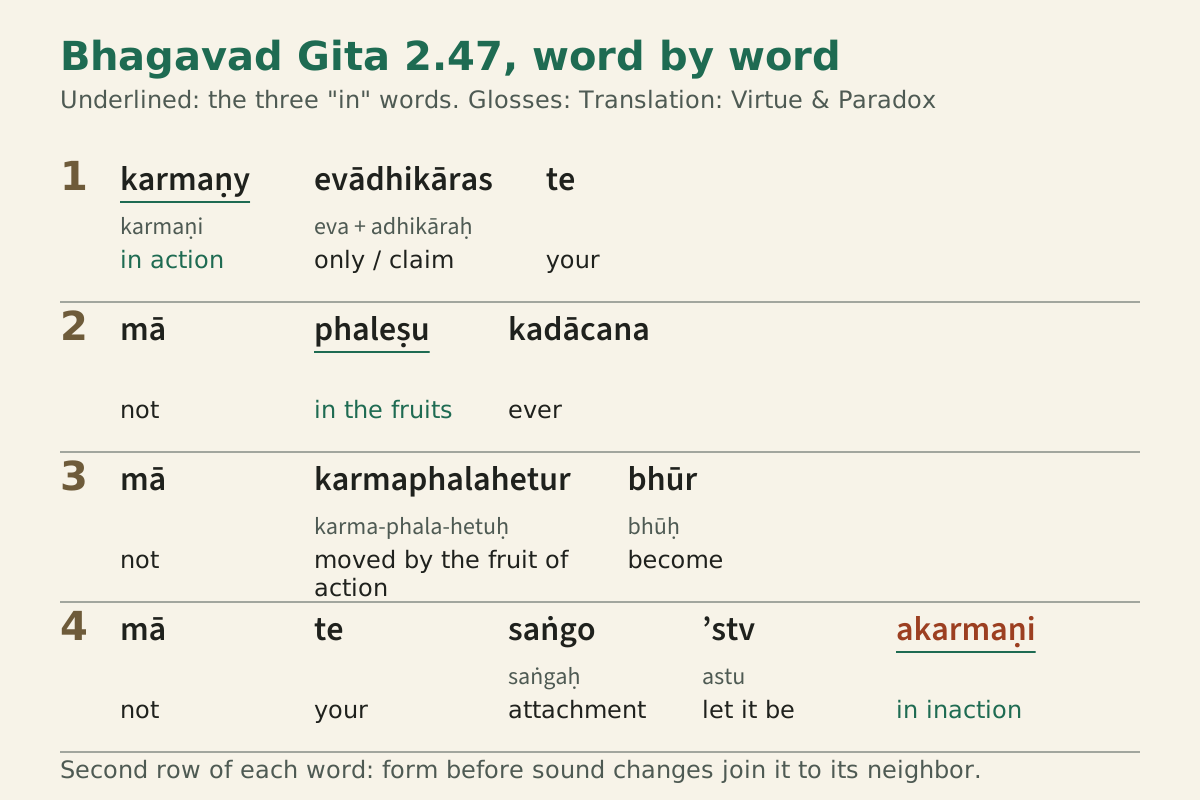
Three of the words are locatives, the Sanskrit case that answers "where": karmaṇi, in action; phaleṣu, in the fruits; akarmaṇi, in inaction. The verse puts your claim in the first, refuses it in the second and forbids your attachment in the third. Telang and Besant both render adhikāra as "business." Shyam Ranganathan, writing in the Internet Encyclopedia of Philosophy, paraphrases Krishna's point in chapter 2 as "we have a right to do what we ought to do, but not to the further outcomes of activity," citing verses 2.46–67.
Download the word-by-word table (CSV) (CSV, bhagavad-gita-2-47-words.csv) to check the glosses against the two translations above.
How did four translators render it, 1785 to 1922?
Charles Wilkins's translation was printed in London in 1785, and an 1867 New York reprint reproduces his title page. His version of 2.47, with the old long s modernized, keeps three sentences too:
"Let the motive be in the deed, and not in the event. Be not one whose motive for action is the hope of reward. Let not thy life be spent in inaction."
Wilkins's translation of Bhagavad Gita 2.47 (1785; 1867 reprint, p. 32) — verified
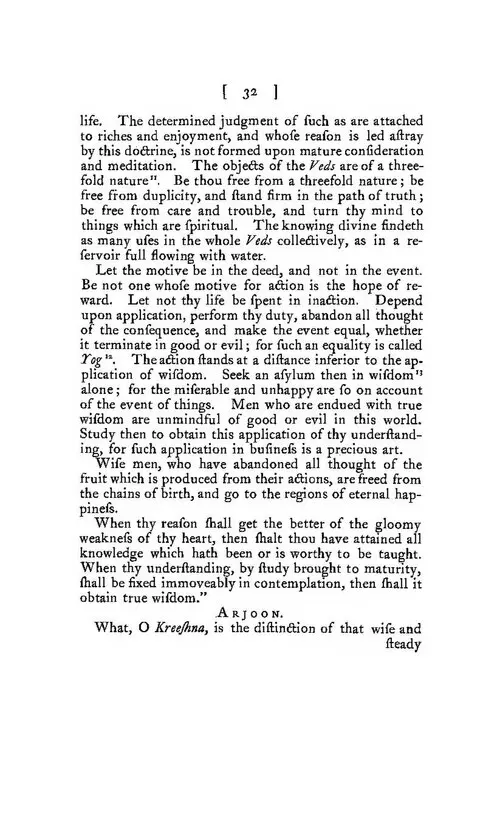
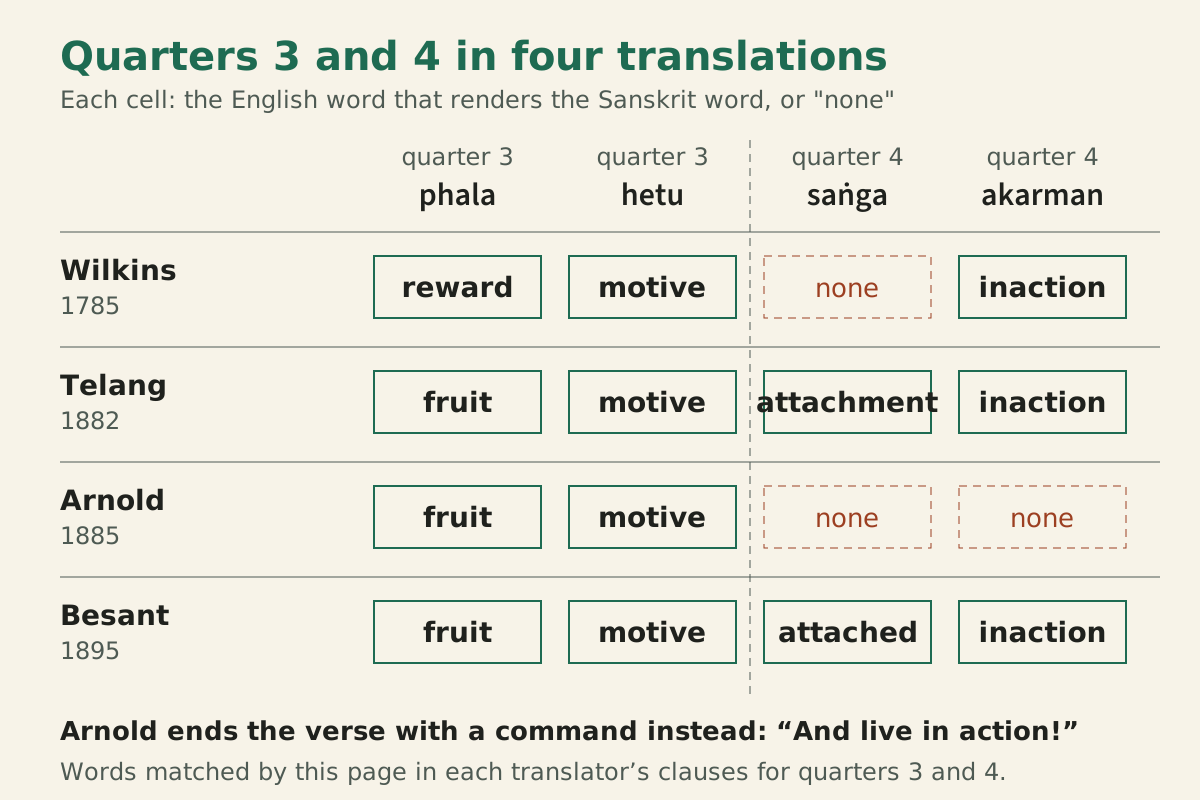
Wilkins keeps the motive and the inaction but has no word for attachment, so his last sentence is about how a life is spent. Edwin Arnold's verse translation, dated 1885 in Wikisource's list of English translations and quoted here from a 1900 New York printing, goes further:
"But thou, want not! ask not! Find full reward / Of doing right in right! Let right deeds be / Thy motive, not the fruit which comes from them. / And live in action!"
Arnold's The Song Celestial, chapter II, lines matching Bhagavad Gita 2.47 — verified
Arnold turns the fourth quarter into a command to act. He does not number his verses, and Wilkins's page 32 prints no verse numbers either, so the match between their lines and 2.47 is this page's alignment.

Besant's translation, dated 1895 in the same Wikisource list, is quoted here from the 1922 Madras printing. It keeps the attachment and puts it last: "nor be thou to inaction attached" (Bhagavad Gita 2.47, Besant 1922 printing, p. 35) — verified.
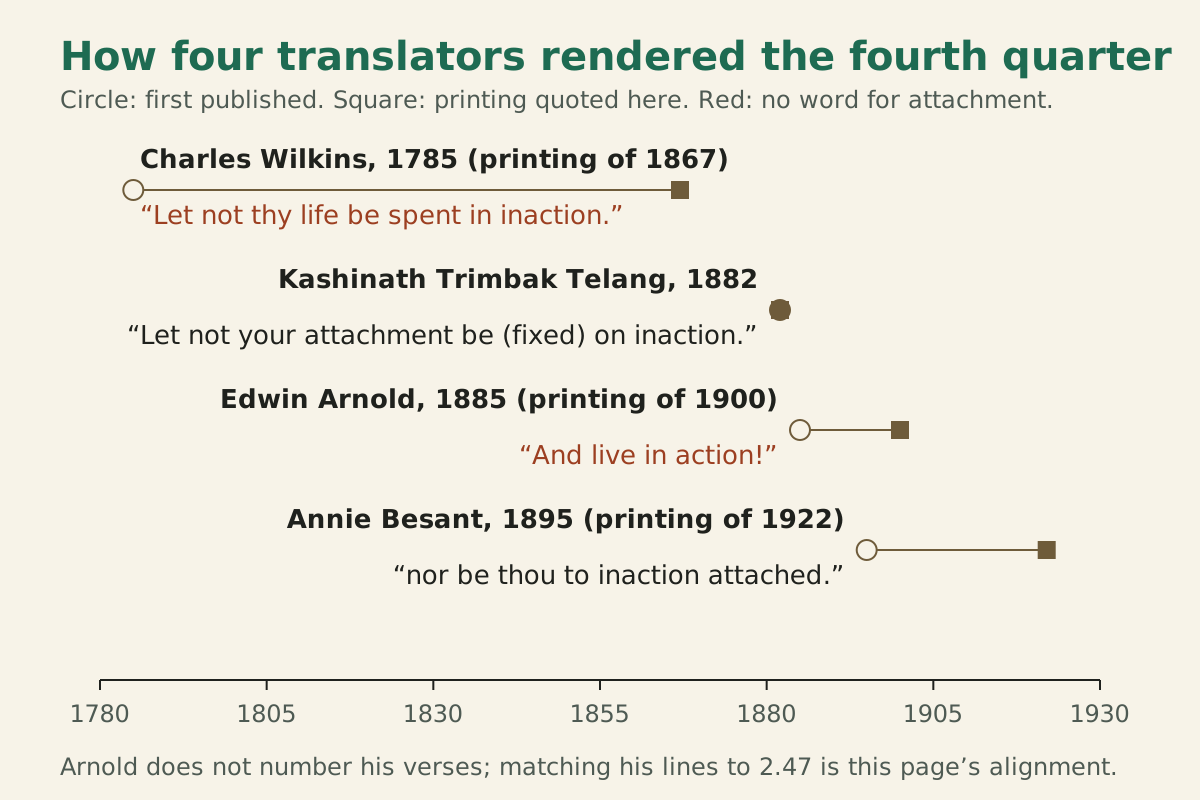
Download the four translations, clause by clause (CSV) (CSV, bhagavad-gita-2-47-translations.csv). The Wilkins row gives his coordinate and matched words but not his sentences, because his wording is quoted here from the printed page. Every quotation from a translation on this page names its edition and its page or chapter, which is how this site tests a quotation.
Does Gita 2.47 mean you shouldn't care about results?
Not if that means doing nothing. In 2.47 the third quarter rules out making the fruit your motive. The fourth rules out clinging to inaction, which Telang's footnote glosses as "Doing nothing at all" (Telang's note to Bhagavad Gita 2.47, 1882, p. 48) — verified.
 Generated illustration
All four translations keep a word for the fruit and the word "motive" in the third quarter. In the fourth, only Telang and Besant keep the attachment; Wilkins and Arnold drop it and say, in effect, act.
The next verse agrees. Verse 2.48 tells Arjuna to perform action while renouncing attachments, and Besant ends it with "equilibrium is called yoga" (Bhagavad Gita 2.48, Besant 1922 printing, p. 36) — verified.
Chapter 3 says it outright. Verse 3.8 uses a form of the same noun that closes 2.47: "karma jyāyo hy akarmaṇaḥ", in Besant "action is superior to inaction" (Bhagavad Gita 3.8, Besant 1922 printing, p. 48) — verified.
Ranganathan's entry says chapter 2 gives the first formulations of karma yoga, which it describes as "Deontology formulated as doing duty without the motive of consequence," and it cites 2.47 in that account. Deontology judges an act by the duty it fulfills, not by what it brings about. That is one scholar's reading of the poem. The verse itself gives Arjuna reasons inside a story, not a method for easing worry.
The verse's split between the act and its fruit is easy to state. Acting on it is another matter, and this site calls the distance between understanding an idea and being able to do it the armchair gap. If you meet the first half on its own, check it as the Stoic Quote Ledger checks a Stoic line: coordinate first, whole passage second, wording last.
Who speaks verse 2.47, and where does it sit in chapter 2?
Krishna speaks verse 2.47 to Arjuna. Ranganathan's entry places the Bhagavad Gita at the start of the sixth book of the Mahābhārata and names its lead characters as "the warrior Arjuna and his royal cousin, Kṛṣṇa, who offered to be his charioteer."
In Besant's 1922 printing, chapter 2 has 72 numbered verses. By this page's count, the narrator Sañjaya speaks 3 of them (2.1, 2.9 and 2.10), Arjuna 6 (2.4 to 2.8 and 2.54), and the speaker Besant labels "The Blessed Lord" 63, including the long run from 2.11 to 2.53 that holds 2.47. The closing line of the chapter in Besant's text names the dialogue's speakers as Sri Krishna and Arjuna.
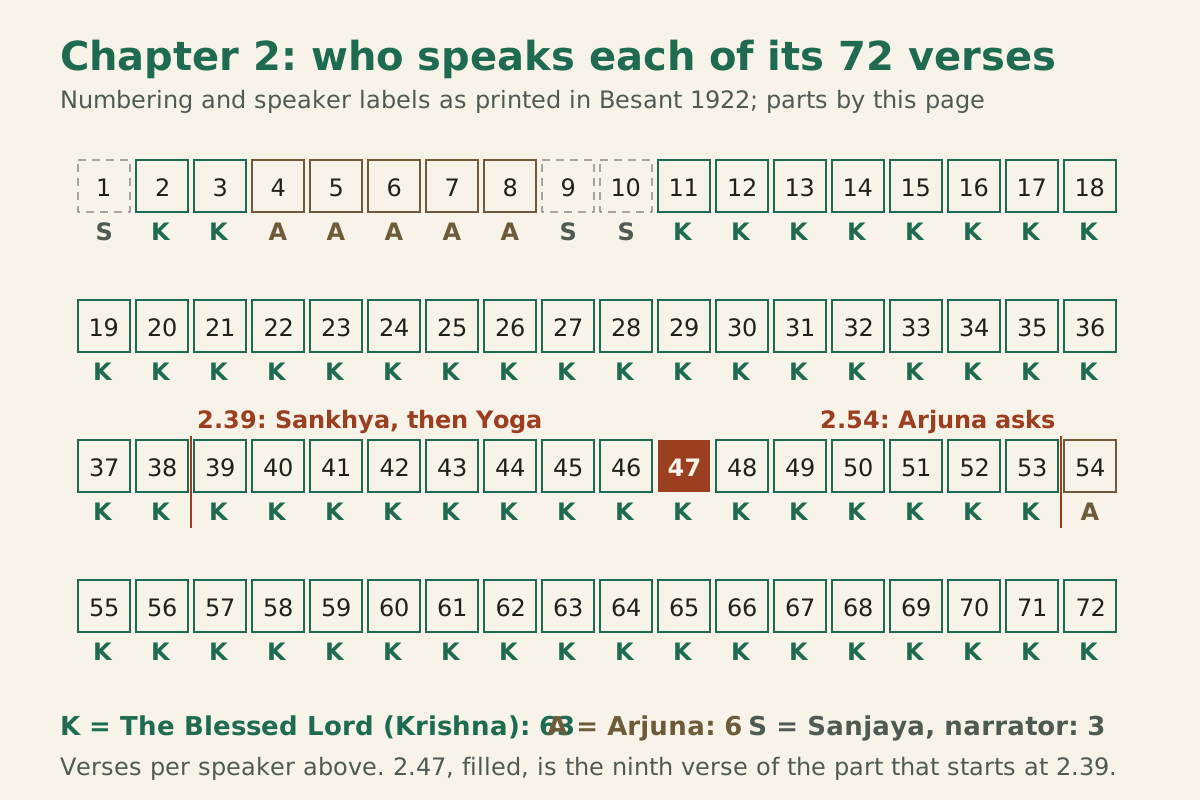
At 2.39 Krishna says that the teaching so far follows Sāṅkhya, which Besant's footnote calls one of the six systems of Indian philosophy. Besant has him add "hear it now according to the Yoga" (Bhagavad Gita 2.39, Besant 1922 printing, p. 32) — verified. Verse 2.47 is the ninth verse of that second part, which runs until Arjuna's question at 2.54.
Three verses after 2.47, verse 2.50 adds a second definition of the key word: "yoga is skill in action" (Bhagavad Gita 2.50, Besant 1922 printing, p. 36) — verified. So the part that holds 2.47 is also where the chapter says what it means by yoga.
The setting is the eve of a battle, and 2.9 is Arjuna refusing to fight. This page reads the verse's words and leaves the ethics of that war aside. Download the verse-by-verse speaker list for chapter 2 (CSV) (CSV, bhagavad-gita-2-47-chapter-2.csv).
How does 2.47 compare with Epictetus's two lists?
The Enchiridion of Epictetus also opens by sorting. In George Long's 1877 translation the first sentence of chapter 1 reads "Of things some are in our power, and others are not" (Enchiridion 1.1, Long translation, 1877, p. 379) — verified. Long's first list then names opinion, movement towards a thing, desire and aversion, which he sums up as one's own acts; the second names the body, property, reputation and offices.
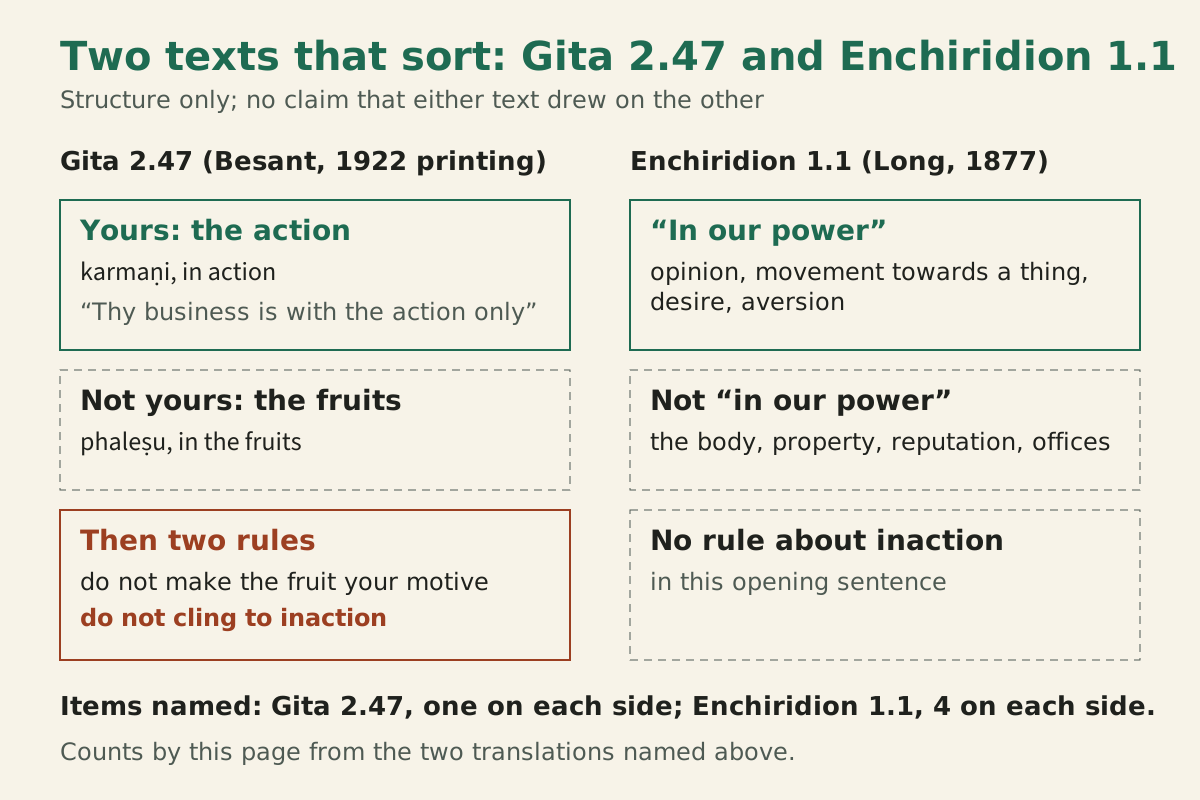
Both texts split a field in two and hand one side to the reader. The contents differ: 2.47 names one item on each side, action and its fruits, while Epictetus names four on each and puts the body among the things outside a person's power. Verse 2.47 then adds a rule against clinging to inaction, and the opening sentence of Enchiridion 1 has no clause like it. This is a likeness of structure, not a claim that either text drew on the other.
The Epictetus passage gets its own close reading under the dichotomy of control, the split between what is up to you and what is not. To test the likeness yourself, set Long's passage beside Telang's translation and sort every noun into one of two columns, as step 5 of the drill below sets out.
Practice
Off the page:
Treat this as one set of reps in reading by quarters. You need paper, a pen and this page.
- Copy the four IAST quarters from the diagram at the top of this page, one per line, and number them 1 to 4.
- Under each line, write the clause from Telang and the clause from Arnold that matches it.
- Circle any English word with no partner in the word-by-word glosses, and mark any quarter that a translator leaves without a clause of its own.
- Write the fourth quarter once in your own words, without using "attachment" or "inaction."
- Open the Epictetus passage in the dichotomy of control, set it beside Telang's translation, and sort the nouns of both into two columns headed with Long's phrases, "in our power" and "not in our power."
- Compare your page with the word-by-word reading of three sutras in Yoga Sutras on Postures, and write one line on which text tells its reader more about what to do.
Sources
- [1] The Bhagavad-Gita, or The Lord's Song, with the text in Devanagari and an English translation by Annie Besant, 4th edition (Madras: G. A. Natesan, 1922). en.wikisource.org/wiki/Bhagavad-Gita_(Besant_4th) Consulted: title page; Discourse 2 in full (pp. 18–45) and Discourse 3 (pp. 46–60), with pp. 35 and 48 compared on the printed page
- [2] Kashinath Trimbak Telang (trans.), The Bhagavadgîtâ, with the Sanatsugâtîya and the Anugîtâ, Sacred Books of the East 8, ed. F. Max Müller (Oxford: Clarendon Press, 1882). en.wikisource.org/wiki/Sacred_Books_of_the_East/Volume_8/1882/Bhagavadg%C3%AEt%C3%A2_Translation Consulted: translation of chapter 2, with p. 48 and its footnotes compared on the printed page
- [3] Charles Wilkins (trans.), The Bhagvat-Geeta, or Dialogues of Kreeshna and Arjoon (London: C. Nourse, 1785); reprinted New York: G. P. Philes, 1867. commons.wikimedia.org/wiki/File:The_Bha%3F%3Fgva%3F%3Ft-ge%3F%3Fe%3F%3Fta%3F%3F,_or,_Dialogues_of_Kre%3F%3Fe%3F%3Fshna%3F%3F_and_A%3F%3Frjo%3F%3Fo%3F%3Fn_(IA_cu31924023202363).pdf Consulted: p. 32 and the two title pages of the 1867 reprint, on the printed page
- [4] Edwin Arnold (trans.), The Song Celestial; or, Bhagavad-Gîtâ (from the Mahâbhârata) (New York: Truslove, Hanson & Comba, 1900); Project Gutenberg eBook #2388. www.gutenberg.org/ebooks/2388 Consulted: chapter II in full
- [5] George Long (trans.), The Discourses of Epictetus; with the Encheiridion and Fragments (1877). en.wikisource.org/wiki/The_Discourses_of_Epictetus;_with_the_Encheiridion_and_Fragments/The_Encheiridion_or_Manual Consulted: Encheiridion, chapter 1 (pp. 379–380)
- [6] Shyam Ranganathan, "The Bhagavad Gītā," Internet Encyclopedia of Philosophy, ISSN 2161-0002. iep.utm.edu/bhagavad-gita/ Consulted: the opening summary, section 2 (The Eighteen Chapters of the Gītā) and section 9 (Kṛṣṇa's Response)
- [7] "The Bhagavad Gita," list of English-language translations, Wikisource. en.wikisource.org/wiki/The_Bhagavad_Gita Consulted: the list of English translations with their dates
Cite this page
Virtue & Paradox. “Bhagavad Gita 2.47: It Also Forbids Clinging to Inaction.” Published 2026-10-17; last substantive revision 2026-10-17. https://virtueandparadox.com/yoga-philosophy/bhagavad-gita-2-47/. Accessed (the date you read it).